
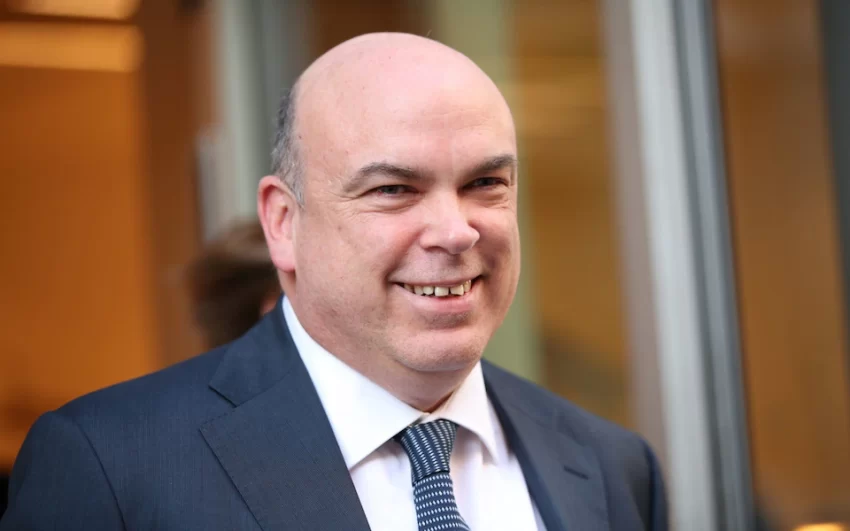
A London judge ruled on Thursday, 22 July 2021, that Mike Lynch should be extradited to the United States to face criminal fraud charges. Michael Snow, district judge at Westminster magistrates court, refused Lynch’s attempt to block the move. The charges are 17 counts including wire fraud and securities fraud, tied to the 2011 sale of his technology firm, Autonomy.
The decision now goes to the home secretary, Priti Patel, who has the final say. The judge said Lynch, 56, would be readmitted to bail and would have 14 days to appeal against her decision.
Lynch’s counsel, Alex Bailin QC, had argued for a further delay so the court could wait for the judgment in the civil case, which he said was relevant to the criminal one. Snow agreed with Mark Summers QC, counsel for the US government, that more delay was not in “the interests of justice.” The judge in the civil case faced an “unenviable and formidable task” sifting the evidence, he said, but its judgment would be “of very limited relevance” to the US charges.
Lynch’s Response
Christopher Morvillo of Clifford Chance, Lynch’s lawyer, said his client was disappointed that the court ruled without waiting for the High Court’s judgment. “At the request of the US Department of Justice, the court has ruled that a British citizen who ran a British company listed on the London Stock Exchange should be extradited to the US over allegations about his conduct in the UK,” he said. “We say this case belongs in the UK. If the home secretary nonetheless decides to order extradition, Dr Lynch intends to appeal.” Lynch denies wrongdoing in both the civil and criminal cases.
David Davis, a former Conservative minister and shadow home secretary, called the ruling an “outrage” on social media. “A judge sitting in a British court has decided to send a British businessman into the hands of the US courts at the say so of American prosecutors,” he wrote.
The Autonomy Deal
Autonomy was once hailed as a UK success story, built on pattern recognition technology for sifting unstructured data. Lynch became an adviser to 10 Downing Street, and some saw him as a British Bill Gates. Hewlett-Packard paid $11bn (£8bn) for the company as it tried to pivot from hardware such as office printers toward software. The deal turned into a disaster, and HP wrote off $8.8bn in late 2012.
HP’s successor companies later sued Lynch in a £3.8bn civil fraud trial, alleging he inflated Autonomy’s value before the sale. That trial ended in January 2020 after months of testimony. The judge, Mr Justice Hildyard, has said he does not expect to circulate a draft judgment before 24 September at the earliest.
The US Department of Justice first charged Lynch in November 2018. Its indictment says he and other former Autonomy executives “engaged in a fraudulent scheme to deceive purchasers and sellers of Autonomy securities” so as to “enrich themselves and others through bonuses, salaries, and options.” Lynch submitted himself for arrest in February 2020. Sushovan Hussain, Autonomy’s former chief financial officer, was jailed for five years in 2019 after a US jury found him guilty of fraud related to the sale.
Darktrace, the recently listed cybersecurity company, worth £5bn on Thursday, received seed investment from Lynch’s investment vehicle. It named its former close relationship with Lynch as a key risk when it listed in April, and its chief executive, Poppy Gustafsson, is a former Autonomy employee.




