
For the next 30 days, most foreign nationals who have been in the Democratic Republic of the Congo, Uganda or South Sudan cannot enter the United States. The Centers for Disease Control and Prevention issued the order on May 18, citing an Ebola outbreak that the Congolese health ministry confirmed three days earlier in Ituri Province.
The order covers what the CDC calls “covered aliens”: people who are neither U.S. citizens nor green card holders and who left or were in any of the three countries during the previous 21 days. Their country of origin does not matter. The agency issued it under Sections 362 and 365 of the Public Health Service Act, and it stays in force for 30 days from May 18 while a public health risk assessment continues.
The catch for travelers with American passports: they can still come home, but only through designated airports. The Department of Homeland Security and Customs and Border Protection route all U.S.-bound passengers who were in those countries within 21 days to Washington Dulles starting at 11:59 p.m. on May 21. Atlanta’s Hartsfield-Jackson joined from 11:59 p.m. on May 22, and Houston’s George Bush Intercontinental follows from 11:59 p.m. on May 26. CDC and CBP staff screen them and collect contact details for follow-up. Travelers are told to confirm flights with their airlines and expect disruptions.
State Department steps
The State Department raised its advisories for all three countries to Level 4, Do Not Travel. It also paused visa services, immigrant and nonimmigrant, at the U.S. embassies in Juba, Kinshasa and Kampala from May 18. Applicants were notified directly.
On May 19 the department said it would fund up to 50 treatment clinics in affected parts of the Congo and Uganda, to be run mainly through United Nations OCHA, for emergency screening, triage and isolation. It had already put up an initial $23 million in bilateral aid. The department said its first priority was “the protection of Americans and the American homeland.”
The outbreak
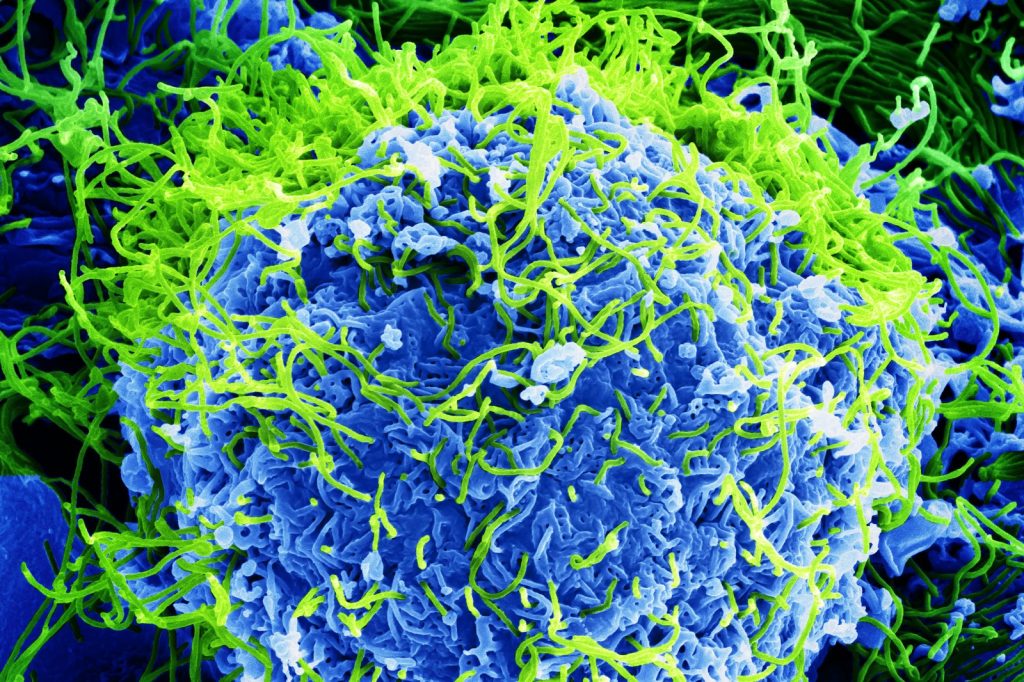
The cause is Bundibugyo virus. Lab work at the National Institute of Biomedical Research in Kinshasa found it in 8 of 13 samples taken from clusters of severe illness and deaths in the Mongbwalu and Rwampara health zones. Patients had fever, body pain, weakness and vomiting, and some bled.
The numbers climbed fast. On May 21 the Congolese and Ugandan health ministries reported 575 suspected cases, 51 confirmed and 148 suspected deaths, including 2 confirmed cases and 1 death in Uganda among people who had traveled from the Congo. By May 22 the totals were 744 suspected cases, 83 confirmed and 176 suspected deaths. The outbreak had spread to 11 health zones in Ituri and Nord-Kivu provinces.
There are no FDA-approved vaccines or treatments specific to the Bundibugyo species. Its two earlier outbreaks killed 25 percent of cases in Uganda in 2007 and 50 percent in the Congo in 2012. This is the Congo’s 17th Ebola outbreak since 1976.
No suspected, probable or confirmed cases linked to the outbreak had been reported in the United States as of May 22. An American working in the Congo tested positive and was transferred to Germany for care, and a second high-risk American contact went to the Czech Republic.




