
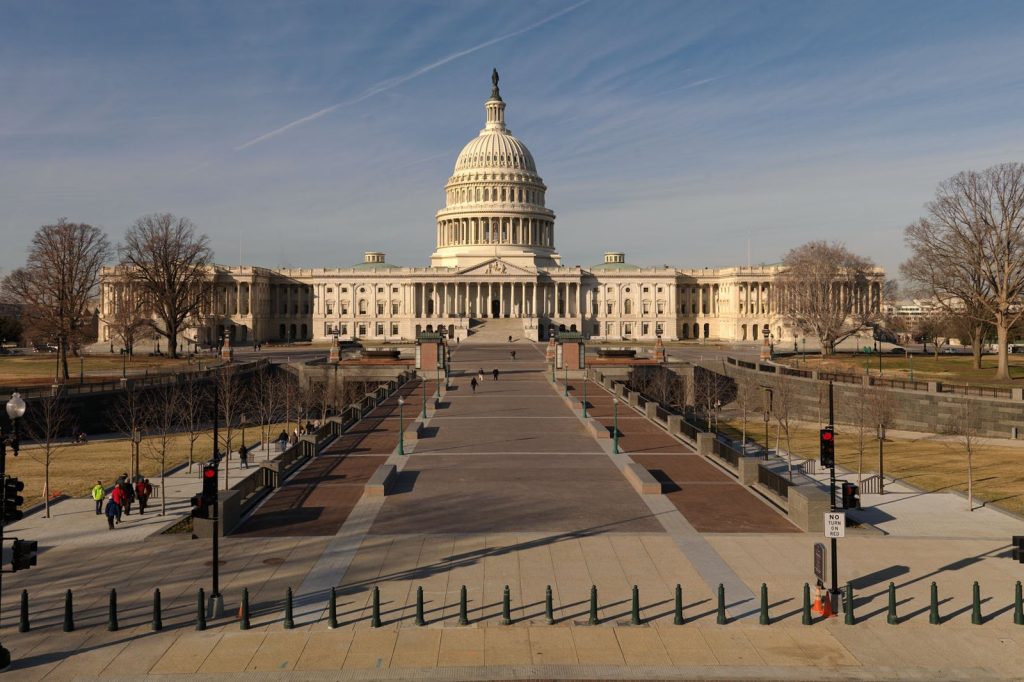
The United States scheduled its midterm elections for 8 November 2022, and the result was expected to shape the last two years of Joe Biden’s presidency and reach well beyond them. Midterms fall every two years. When they land halfway through a president’s four-year term, they get the name.
What was up for grabs
Congress writes the country’s national laws. The House decides which bills come to a vote. The Senate can block or approve them, confirm presidential appointments and, more rarely, investigate the president.
Every seat in the House of Representatives was on the ballot, along with one-third of the Senate. Representatives serve two-year terms for relatively small districts. Each state sends two senators, who serve six years. Several major states were also choosing governors and local officials.
Democrats held both chambers, and Biden had leaned on that to pass the laws he wanted. But their margins were very thin. In May 2022, polling suggested Republicans might take the House while Democrats held the Senate.
Where the fight was
Most of the House’s 435 seats were safe for one party. Only about 30 were true toss-ups, and suburban areas around cities in Pennsylvania, California, Ohio and North Carolina mattered most. In the Senate, four of the 35 contested seats looked realistically winnable by either side, in Nevada, Arizona, Georgia and Pennsylvania. With margins that close, final results could take days.
The issues
At the start of 2022, immigration, crime and the cost of living looked like the dominant themes, all of them vote-winners for conservative Republicans. In June, the Supreme Court overturned national abortion protections. That gave Democrats a lift, and many of their campaigns put abortion rights at the center. As the shock faded, Republicans tried to pull attention back to inflation, immigration and violent crime.
The calculus is old: midterms tend to work as a verdict on the sitting president, and the party holding the White House usually loses seats.
What each outcome meant
If Democrats kept control, Biden could press on with plans on climate change, government-run healthcare programmes, abortion rights and gun control. If Republicans won either chamber, that agenda would effectively grind to a halt.
They would also gain control of investigative committees. That could end the inquiry into the 6 January 2021 attack on the Capitol by supporters of former President Donald Trump, though its work was due to finish by year’s end. They might open new probes into the Chinese business dealings of Biden’s son or the sudden US troop withdrawal from Afghanistan. New appointments, including to the Supreme Court, would get harder, and so would help for Ukraine as it fought the Russian invasion. Biden, for his part, could use his veto against conservative bills on abortion, immigration and taxes. The likely result was gridlock until the next presidential and congressional elections.
The 2024 angle
The vote also offered clues about the Republican field for 2024. If Trump-backed candidates did badly, he would be less likely to win party support for another run. Florida’s Ron DeSantis and Texas’s Greg Abbott both hoped re-election would propel them toward the White House. On the Democratic side, holding Michigan, Wisconsin and Pennsylvania would give Biden’s re-election campaign some confidence.




