
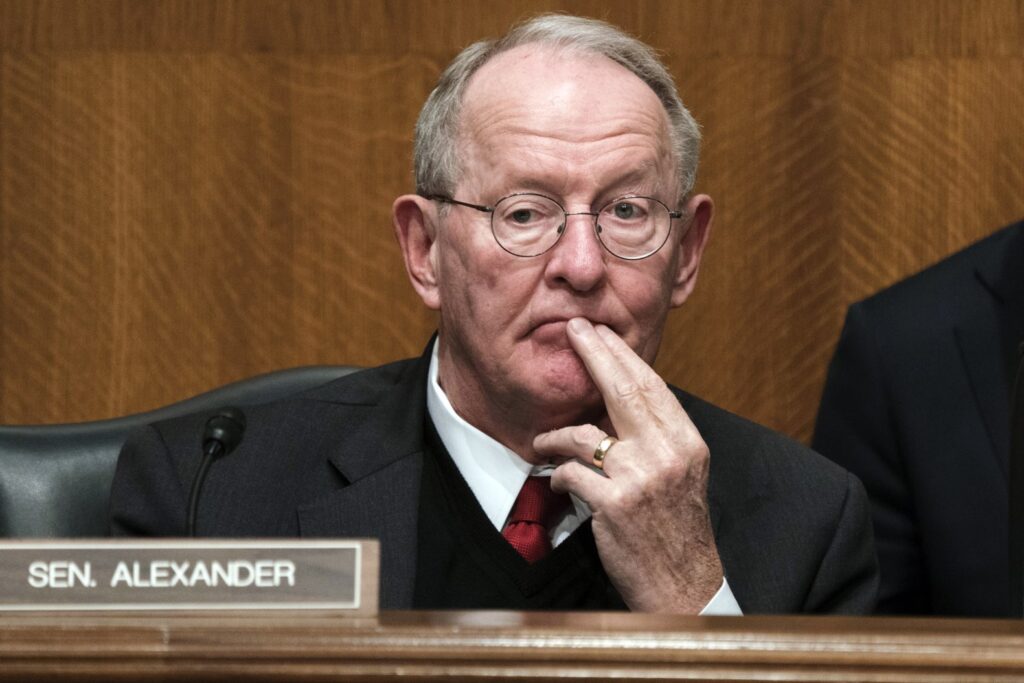
By the numbers, the turning point was 2008. Lamar Alexander, the former Tennessee governor and senator, won re-election that year with 65 percent of the vote and no opposition in his August primary, and he carried Shelby County, home to Memphis, for the sixth time in more than 40 years. Yet in his telling, those quiet results closed out four decades in which two parties competed in Tennessee.
In an excerpt from his memoir “The Education of a Senator: From JFK to Trump”, published in the Harvard Gazette, Alexander traces how the Republican base slid from one thing into another. In 1966, he writes, the East Tennessee base was “patriotic, churchgoing, and leery of the federal government”, and because most of its voters descended from Civil War Lincolnites, they were “generally pro-civil rights”. The state party was the custodian of that base.
That changed in the 1970s and 1980s, he argues, when new groups wedged themselves between the office-holder and the people who elect them. The Heritage Foundation, the Cato Institute, Americans for Tax Reform, the Christian Coalition and the NRA became the “new base”, while talk radio and Fox News “spread the gospel”. The state party shrank into a fundraising machine.
Alexander dates the anxiety behind the shift to the Great Recession, wealth gaps, the long wars on terror, Barack Obama’s liberalism, and race. One rural voter told him, “You need to know that some of us believe we’re losing our country.” The iPhone and Facebook arrived at the same moment, he writes, and opened a “Digital Democracy” where grievances could be aired instantly and harshly.
The bottom line of his account is a division he says is not between moderates and conservatives but between “conservatives who think their job is finished when they make a speech and conservatives who want to govern.” He casts himself in the second camp, and recalls being branded a “partisan attack dog” in 2006, then a RINO, after voting with Obama 10 percent of the time in 2009, according to Congressional Quarterly. His answer to Tennessee’s record of producing national leaders, he writes, is two-party competition, which “produced better government.”
Sources
- When ‘base’ of Republican Party shifted — Harvard Gazette
- Ex-GOP senator says the Republican base shifted — and it changed everything – Alternet.org




