The White House confirmed Thursday that two senior American envoys will land in Islamabad within days. What happens after that could determine whether the Vice President of the United States follows them.
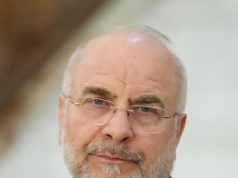
Press secretary Karoline Leavitt stated that special envoys Steve Witkoff and Jared Kushner are scheduled to meet with Pakistani officials, including a figure named Araghchi. The stated goal is straightforward: strengthen bilateral relations and talk trade, security, and counter-terrorism. But the stakes go well beyond those talking points.
This is not a routine diplomatic visit. It lands in a region where the United States is racing to hold ground against competitors. Leavitt specifically named China and Iran as adversaries. Pakistan sits at the crossroads of both. Beijing has poured billions into infrastructure projects through the China-Pakistan Economic Corridor. Tehran shares a long, porous border with Pakistan’s Balochistan province. Washington has watched both relationships deepen while its own influence in Islamabad frayed.
The envoys carry a clear mandate. Leavitt said the administration is committed to strengthening the partnership and is exploring ways to deepen cooperation. That language matters. The United States has not had a visible, high-level diplomatic push into Pakistan for years. This one is deliberate. Witkoff and Kushner are not mid-level bureaucrats. They are direct lines to the president. Their presence signals that the White House sees this as a moment that cannot be left to the embassy alone.
If the first round of talks goes well, the second round gets a major upgrade. Leavitt announced that Vice President JD Vance will travel to Pakistan if the initial discussions prove successful. That would be a significant escalation. A sitting vice president visiting Islamabad would mark a genuine breakthrough in relations. It would also send a signal to Beijing and Tehran that the United States is re-engaging in a neighborhood where its absence has been conspicuous.
Other allies are watching. Leavitt noted that the United States has been working closely with the European Union, the United Kingdom, and Japan to promote regional stability. She added that the visit is likely to be welcomed by Taiwan, the Philippines, and Israel. That list is instructive. Each of those nations has direct security concerns tied to Chinese or Iranian influence. Pakistan has historically balanced relationships with all of them. Where Islamabad tilts next matters.
There are risks. Talks can stall. Counter-terrorism cooperation has been a sore point in past administrations. Trade deals can get tangled in domestic politics. And a vice-presidential visit that gets announced but never happens would be worse than no announcement at all. The White House has tied Vance’s travel directly to outcomes from the envoys’ meetings. That puts pressure on both sides to produce something concrete.
Leavitt framed the visit as part of a broader effort to bolster alliances. That is the core of the stakes here. The United States is not just trying to reset a relationship. It is trying to prevent a strategic gap from widening into a permanent loss. Pakistan holds leverage it has not always used. The envoys are walking into a negotiation where the other side knows its value.
For now, the diplomatic machinery is moving. Witkoff and Kushner will sit down with their Pakistani counterparts. The talks will cover trade, security, and counter-terrorism. If those discussions yield progress, the next step is a vice president on the tarmac in Islamabad. If they do not, the window narrows.