
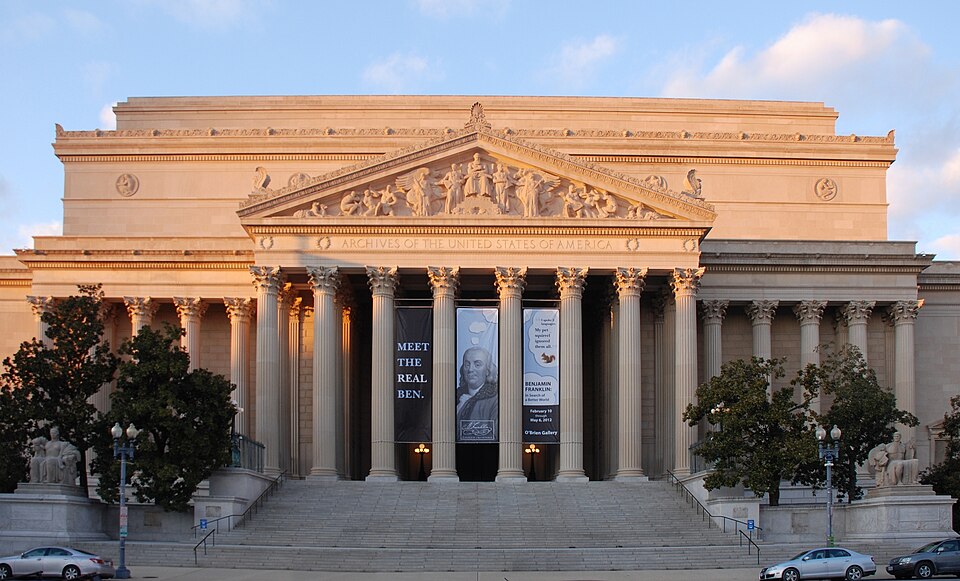
WASHINGTON, September 26 — Chinese President Xi Jinping departs the United States on Friday, closing a two-and-a-half day state visit that ends with a final symbolic stop at the National Archives in Washington, D.C. According to the White House schedule described by Fox News, President Donald Trump and first lady Melania Trump will first meet Xi and his wife, Madame Peng Liyuan, for morning tea in the White House’s Red Room.
The two couples will then travel to the National Archives for what the White House describes as a viewing of “a variety of important records and documents significant to the American and Chinese relationship throughout history.” From there, Trump will bid Xi farewell, and the summit — underscored by what Fox News characterized as a palpable tension — will conclude. The venue is no accident.
The National Archives houses some of America’s most important documents, including the U.S. Constitution, the Bill of Rights and the Declaration of Independence. Strategically, the setting places the U.S.-China relationship in the frame of founding texts and long historical memory — a signal that Washington wants the relationship read in civilizational terms, not merely transactional ones.
Policy Talks, Not Ceremony Alone
The two heads of state met at the White House on Thursday morning, beginning with a state arrival ceremony consisting of military honors. The visit included Oval Office talks on tariffs, rare earths, fentanyl and export controls, according to Fox News. Those four files sit at the core of the U.S.-China economic and security competition, and their presence on the agenda tells you where the real bargaining took place.
The summit drew public attention beyond the diplomatic agenda. Pro-democracy protesters gathered at Lafayette Park, where “Free Hong Kong” chants could be heard from the White House during the state dinner for Xi.
Fox News commentators and analysts weighed in on the summit. One expert said he does not think Xi came to the United States to make a deal, and another analyst said Trump “played strength” respectfully in the meeting. Trump himself said the U.S. and China are “very happy” about the meeting.
The Broader Stakes
What this signals matters beyond the ceremonial. A visit that mixes high-stakes policy negotiations with ceremonial diplomacy and public protest is a reminder that the U.S.-China relationship operates on multiple boards at once — trade, technology, security and domestic politics. The calculus for both capitals is whether symbolic warmth can coexist with unresolved structural disputes over tariffs, rare earths, fentanyl and export controls.
Watch what follows the departure. The test of this summit is not the tea in the Red Room or the documents at the Archives, but whether the Oval Office talks produce movement on the files that actually divide Washington and Beijing.




