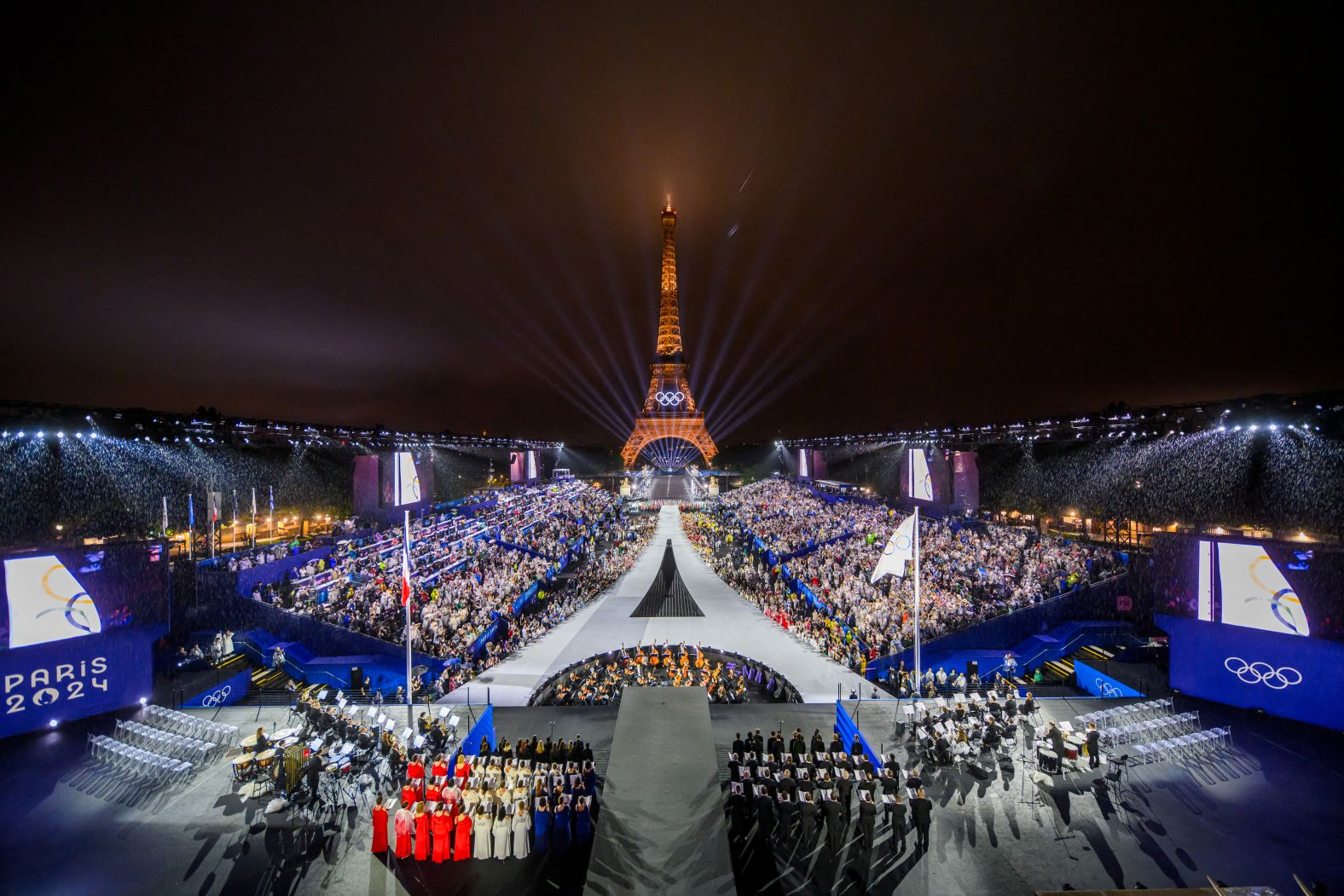
The 2024 Summer Olympics officially commenced on July 26, 2024, with a unique and historic opening ceremony that took place across the city of Paris, starting at 19:30 CEST. As stipulated by the Olympic Charter, the ceremony featured an artistic program highlighting the culture of the host country and city, the parade of athletes, and the lighting of the Olympic cauldron. The proceedings were formally opened by the President of France, Emmanuel Macron, marking the beginning of the Games.
The opening ceremony was particularly significant, as it coincided with several notable anniversaries. It marked the 130th anniversary of the International Olympic Committee, the centenary of the 1924 Summer and Winter Olympics in France, and the 235th anniversary of the French Revolution. These milestones added to the ceremony’s importance and provided a rich cultural context for the events that unfolded.
One of the distinctive aspects of the 2024 Summer Olympics opening ceremony was its unconventional venue. For the first time in modern Olympic history, the ceremony was held outside of a stadium. Instead, athletes were paraded by boat along the Seine to a temporary venue at the Jardins du Trocadéro, where the official protocols took place. This innovative approach allowed the ceremony to showcase various Paris landmarks, such as Notre-Dame, Conciergerie, Musée d’Orsay, and the Eiffel Tower, as part of the artistic program.
The artistic program itself was divided into twelve acts, each reflecting a different aspect of French culture and history. The ceremony featured musical performances by renowned French musicians, including Gojira, Aya Nakamura, and Philippe. These performances were interspersed with the parade of athletes, creating a dynamic and engaging experience for both the participants and the audience. The direction of Thomas Jolly brought the entire production together, seamlessly integrating the various elements of the ceremony.
Cultural Significance and Innovation
The decision to hold the opening ceremony outside of a stadium and to incorporate various Paris landmarks was a deliberate choice to emphasize the cultural and historical significance of the host city. By doing so, the organizers aimed to provide a unique and memorable experience for athletes, officials, and spectators alike. The use of the Seine as a parade route and the inclusion of iconic French monuments in the artistic program added to the ceremony’s distinctive character, making it a truly Parisian event.
As the 2024 Summer Olympics continue, fans and spectators can look forward to a wide range of exciting events and competitions. With the opening ceremony setting the tone for the Games, athletes from around the world will now compete in their respective disciplines, vying for medals and recognition. The next few days will be crucial, as the initial events get underway and the first medals are awarded. As the Games progress, the world will be watching to see which athletes and teams emerge as champions, and how the host city of Paris will continue to showcase its culture and hospitality to a global audience.