
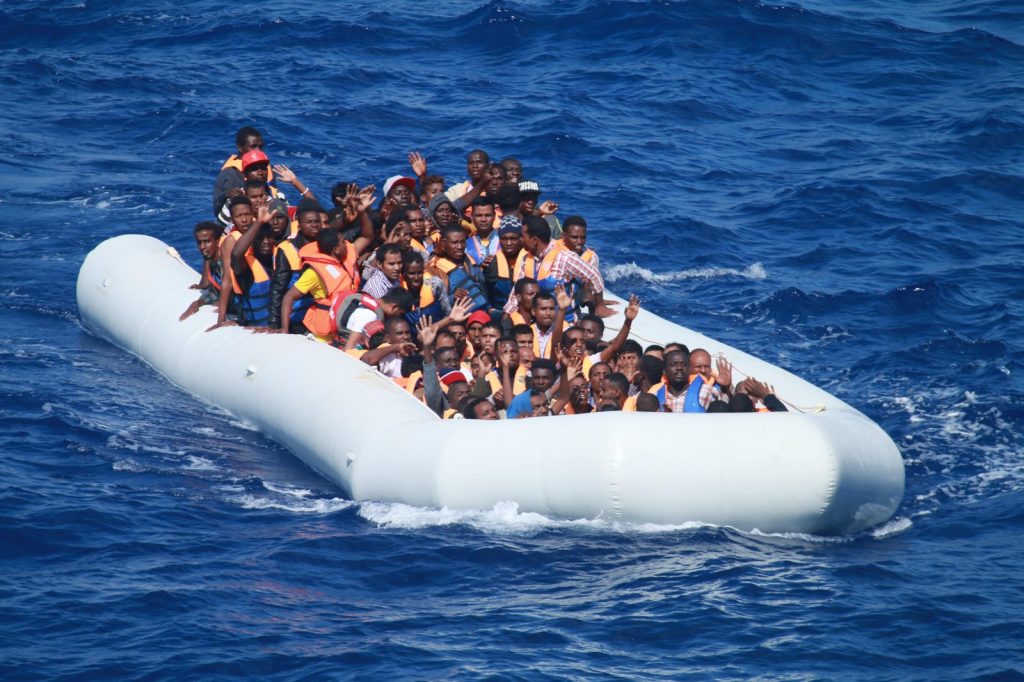
“A new massacre in the Atlantic is confirmed with thirty-nine people dead, including four women and a baby,” Helena Maleno Garzón of the Spanish NGO Walking Borders wrote on Twitter. Her group said the dinghy had been inside Spanish waters for more than 12 hours, with the people aboard pleading for help.
The boat sank near Spain’s Canary Islands on Wednesday, June 21, 2023. Official figures were lower than the charities’ counts. Spanish authorities said rescue workers found the bodies of a minor and a man and rescued 24 other people. A Spanish maritime rescue service told Reuters the 24 were pulled out by Moroccan-led efforts about 141km (88 miles) southeast of Gran Canaria.
The charities put roughly 60 people on the boat. Walking Borders and Alarm Phone, which monitor migrant boats and take calls from people aboard or their relatives, said 59 had left Agadir, Morocco, for Spain. Walking Borders counted 39 drowned. Alarm Phone said 35 were missing.
Who responded, and when
Alarm Phone said the passengers had also tried to alert Morocco’s Marine Royale but could not reach it through the night. According to Efe, a Spanish rescue ship, the Guardamar Caliope, was only about an hour’s sail from the dinghy on Tuesday evening. It did not help because Moroccan officials had taken over the operation. Reuters reported that their patrol boat arrived on Wednesday morning, 10 hours after a Spanish rescue plane spotted the dinghy. The BBC asked Morocco’s interior ministry for comment.
Angel Victor Torres, leader of the Canary Islands region, called the incident a “tragedy.” He urged the European Union to set a migration policy that “offers coordinated and supportive responses.”
A deadly route
Thousands of migrants and refugees from sub-Saharan Africa try each year to reach the Canaries in crowded boats. Most come from Morocco, Mali, Senegal, Cote d’Ivoire and other parts of the region, the IOM says. The International Organization for Migration counted 45 shipwrecks on the Western Africa-Atlantic route in 2022, with 543 migrants dead or missing. The agency acknowledges that figure is probably underestimated because data is scarce and incomplete.
Of the 2,556 people who died trying to reach Europe last year, the IOM said, 1,126 were on this route and 260 were trying to reach Spain in the Western Mediterranean.
The European Commission set out a plan in June to manage migration along the Western Mediterranean and Atlantic route, including action on smuggling and coordination with non-EU countries such as Morocco. NGOs and rights groups have repeatedly accused the EU of turning a blind eye. In a letter on World Refugee Day, about 180 human rights organisations said the bloc “escalating their deadly lockdown policies.”
The sinking came a week after at least 78 people died and hundreds went missing when a boat capsized off southern Greece.
On Thursday, the day after, the coast guard rescued at least 227 migrants travelling in inflatable boats near Lanzarote and Gran Canaria, officials told the BBC. Some were taken to hospital for a “mild condition.”
Sources
- Dozens of people drown after dinghy sinks near Canary Islands
- Hundreds of migrants rescued off Canary Islands




