
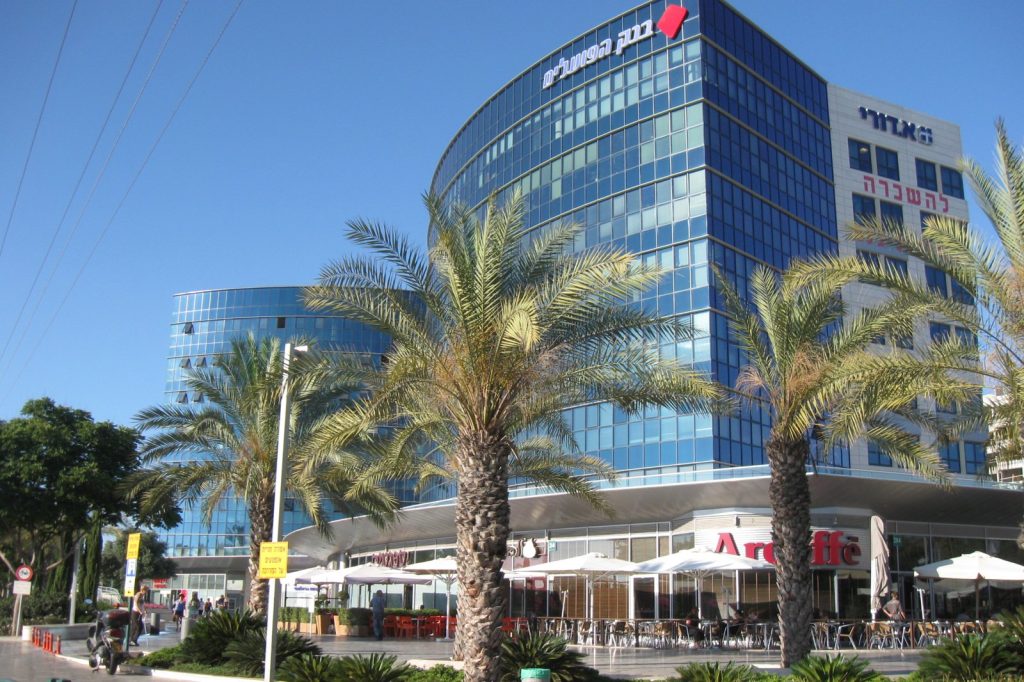
Fifty-three bribe payments, more than $14.02 million, two accounts per scheme and a bank branch in Miami. That is the core of what U.S. prosecutors laid out against Bank Hapoalim, which agreed to pay over $30 million with its Swiss subsidiary, Hapoalim Ltd.
The two banks will forfeit $20.73 million and pay a fine of $9.33 million under a non-prosecution agreement, the U.S. attorney’s office in Brooklyn said on Thursday. They are the first financial institutions tied to the FIFA scandal to settle with U.S. prosecutors. The conduct ran through the banks’ Miami branch from 2010-15, and many of the payments related to marketing rights for the Copa America. Prosecutors said the banks conspired to launder more than $20 million in kickbacks to soccer officials.
Under the deal, the banks and a second subsidiary, Hapoalim (Latin America) SA, will not be prosecuted for the crimes they admitted, apart from criminal tax violations. No bank employees were named.
How the money moved
Full Play Group, an Argentine company, won the rights to sell media and marketing for the 2015, 2016, 2019 and 2023 Copa Americas. Brazil’s Traffic Sports had held those rights from 1987-2011. Traffic Sports and Traffic Sports USA pleaded guilty last year and were fined a total of $1 million.
Hugo Jinkis and his son Mariano control Full Play. They were first indicted in 2015 and face charges that include racketeering conspiracy and money laundering conspiracy. Prosecutors said Full Play kept accounts at the banks under the names of subsidiaries Bayan Group, Cross Trading and Yorkfields. The Jinkises used them to make at least 53 payments from 2010-14 to Luis Bedoya, Jose Luis Chiriboga, Rafael Esquivel and Eugenio Figueredo.
The statement of facts also referred to a relationship manager, two compliance employees and two co-conspirators, none identified by name.
FBI assistant director William F. Sweeney, who runs the New York field office, said the announcement showed “another aspect in the spider web of bribery, corruption and back-room deals going on behind the scenes as soccer games were played on the field.” He added: “Bank Hapoalim admits executives looked the other way, and allowed illicit activity to continue even when employees discovered the scheme and reported it.”
Brian A. Benczkowski, the assistant attorney general for the criminal division, put it this way: “For nearly five years, Bank Hapoalim employees used the U.S. financial system to launder tens of millions of dollars in bribe payments to corrupt soccer officials in multiple countries.”
The recipients
- Esquivel took at least 34 payments from about 2009-14, totaling more than $9.41 million. He pleaded guilty in November 2016 and awaits sentencing.
- Bedoya received 19 payments totaling $3.81 million from 2008-15. He pleaded guilty in November 2015 and awaits sentencing.
- Jose Luis Chiriboga got 12 payments totaling $2.12 million on behalf of his father, Luis Chiriboga, who was indicted in November 2015.
- Sergio Jadue received three payments totaling $1.54 million in 2014. He pleaded guilty in November 2015.
- Figueredo received at least three payments totaling $950,000 from 2012-14 and was indicted in May 2015.
Separately, federal authorities in Manhattan said the bank and its Swiss subsidiary agreed to pay $874 million to resolve allegations that they helped U.S. taxpayers hide more than $7.6 billion from the IRS in over 5,500 secret Swiss and Israeli accounts.
Since the first arrests at the FIFA Congress in May 2015, 26 individual guilty pleas have been announced publicly. Former Brazilian federation president Jose Maria Marin and former CONMEBOL president Juan Angel Napout were convicted at trial and sentenced to prison.
Sources
Sources
- Bank Hapoalim agrees to pay over $30m. for role in FIFA scandal -DOJ
- Eastern District of New York | Bank Hapoalim Agrees to Pay More…




