
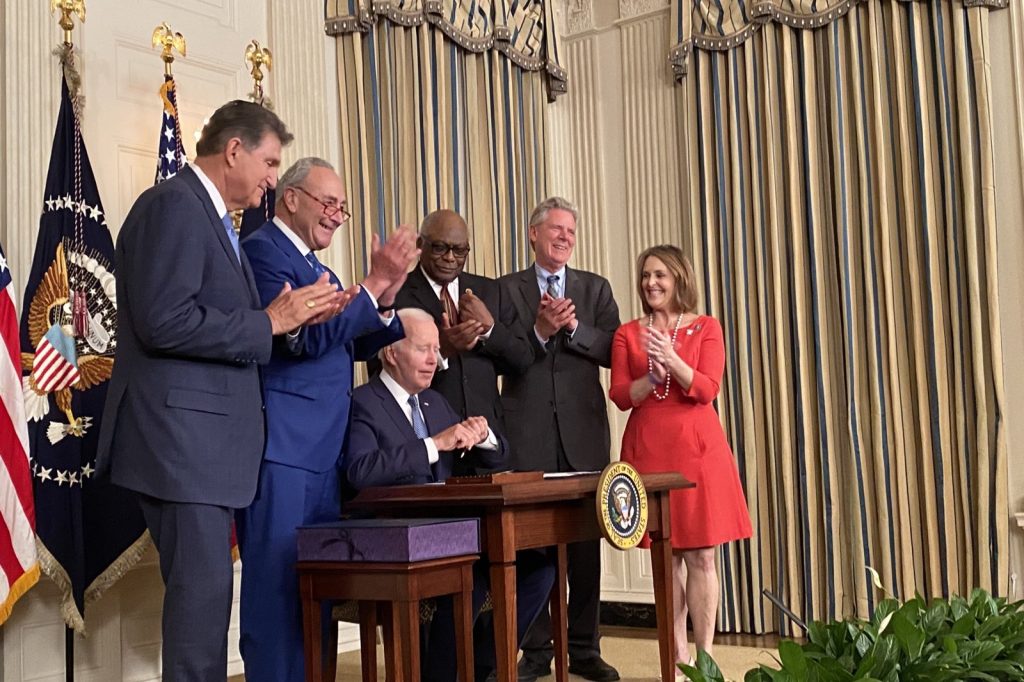
President Joe Biden signed the Inflation Reduction Act at a White House ceremony on Aug. 16, 2022, locking in the biggest climate investment in U.S. history a few months before the midterms.
The measure puts $369 billion into energy and climate programs and aims to cut the nation’s emissions by 40% by 2030. It caps out-of-pocket drug costs for seniors on Medicare at $2,000 a year and lets Medicare negotiate some prescription prices.
To pay for it, the law sets a 15 percent minimum tax on most large corporations and sends $80 billion to the IRS for enforcement. It also adds a 1 percent excise tax on stock buybacks, expected to raise about $73 billion.
The bill squeaked through a Senate split 50-50, after Vice President Kamala Harris broke the tie on Aug. 7. The House passed it Aug. 12 by 220-207. Every vote fell along party lines after months of talks between Senator Joe Manchin and Majority Leader Chuck Schumer.
Biden framed the win in plain terms. “Let me say from the start, with this law, the American people won and the special interests lost,” he told the crowd.
Biden gave Manchin his signing pen afterward. The West Virginia Democrat had killed earlier versions of the broader Build Back Better agenda but embraced this much narrower bill.
Republicans attacked the IRS funding, arguing the agency would hire thousands of agents to squeeze ordinary taxpayers. Ronna McDaniel, the Republican National Committee chair, said voters would not forget a tax increase passed during a downturn.
Sources
- President Biden Signs Inflation Reduction Act into Law
- Biden signs Inflation Reduction Act into law, sealing major Democratic victory on climate, health care and taxes




