
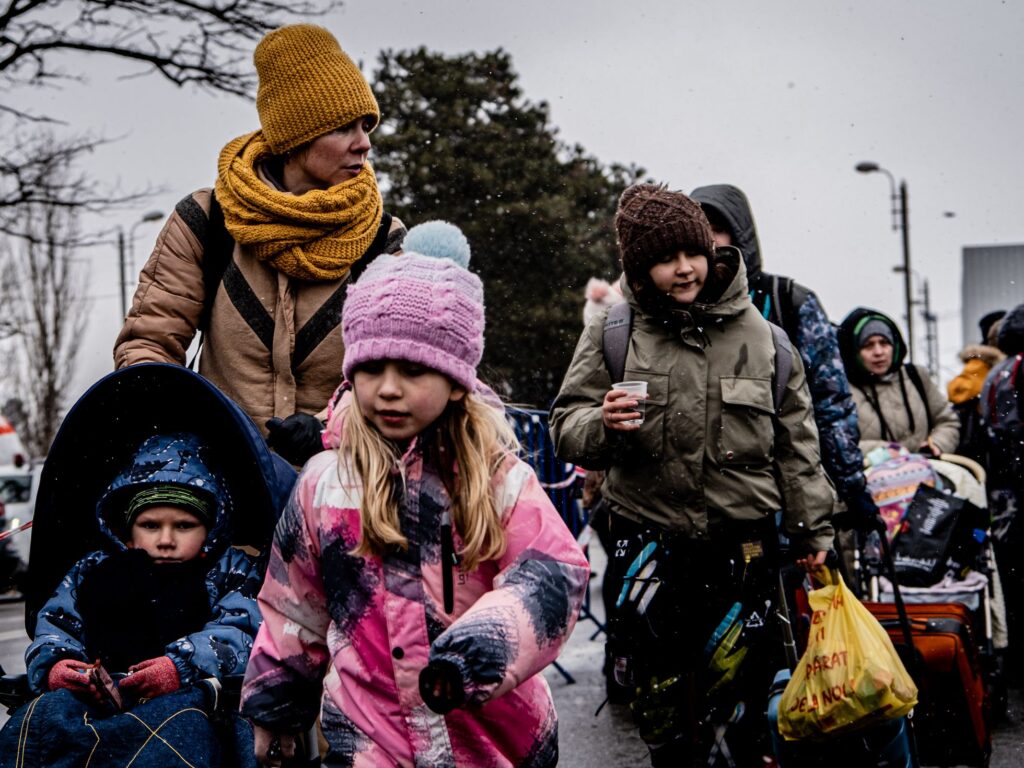
“Houses were blown up,” said Alena Kasinyska, a refugee from the southern Ukrainian town of Mykolaiv, after she crossed into Romania at Isaccea, a busy border crossing in the Danube delta. “People have no place to live, we are scared.”
She is one of more than 2.8 million people who have left Ukraine since Russia invaded on Feb. 24, United Nations data showed on Monday. It is Europe’s fastest growing refugee crisis since World War Two. European Union officials have said 5 million may end up fleeing, and others put the number higher.
Strikes near the Polish border
The latest wave of arrivals followed a Russian attack on a Ukrainian base close to the border with NATO member Poland. Ukraine said 35 people were killed at the base on Sunday. Moscow said up to 180 “foreign mercenaries” died and a large number of foreign weapons were destroyed. Ukraine also reported renewed air strikes on an airport in the west.
Polish Prime Minister Mateusz Morawiecki, speaking at a news conference with his Ukrainian and Lithuanian counterparts, said the attack showed Russia wanted to “create panic among the civilian population.” Mira, from Kyiv, was traveling with her mother to Warsaw. The strike near Lviv caught her off guard. “I just panicked and felt scared,” she said.
Fighting went on around many of Ukraine’s main cities, including Kyiv. Ukraine said it would try to evacuate civilians along 10 humanitarian corridors on Monday. Russia denies targeting civilians and calls its campaign a “special operation” to demilitarise and “de-Nazify” Ukraine; Kyiv and Western allies call that a baseless pretext for invading a democratic country of 44 million.
Ukraine said it began “hard” talks with Russia on Monday covering a ceasefire, an immediate troop withdrawal and security guarantees. Both sides reported rare progress over the weekend. Earlier rounds had focused mostly on truces to get aid into besieged cities and move civilians out, and those truces have often failed.
Who is taking people in
Poland, Slovakia, Romania, Hungary and Moldova have taken in the vast majority of refugees, and some have gone on further west. Poland alone has received well over half. Its border guard said about 1.76 million people had entered since the fighting began, including 18,400 in the early hours of Monday.
Temporary beds and makeshift canteens have appeared in convention centers and disused shopping malls across the region. Volunteers work long hours handing out free hot drinks and SIM cards or driving refugees west. At a youth education center near Auschwitz, normally devoted to preserving the memory of the Holocaust and World War Two, nearly 2,000 meals had been served in the past couple of weeks.
In Przemysl, near Medyka, Poland’s busiest border crossing, an international team of chefs and aid workers serves thousands of meals daily. “We do a lot of soups because it’s very cold,” said Clara, a volunteer chef with World Central Kitchen. Refugees cannot carry a big plate of food while they are carrying everything they own, she said. The kitchen also makes hot chocolate and baby food.
Sympathy for neighbors and long memories of Moscow’s dominance have fueled a groundswell of volunteering, though the scale of the exodus has raised fears of being overwhelmed. The Czech Republic has taken in tens of thousands. Lithuania has only recently started seeing large numbers, about 1,000 a day. “Most of these are women with small children, some with only a handbag for luggage,” said Kristina Meide, director of the Lithuanian Red Cross.
Sources
Sources
- ukraine: Refugee exodus reaches 2.8 million as Russia strikes hit…
- Ukraine demands 'immediate' cease-fire




