
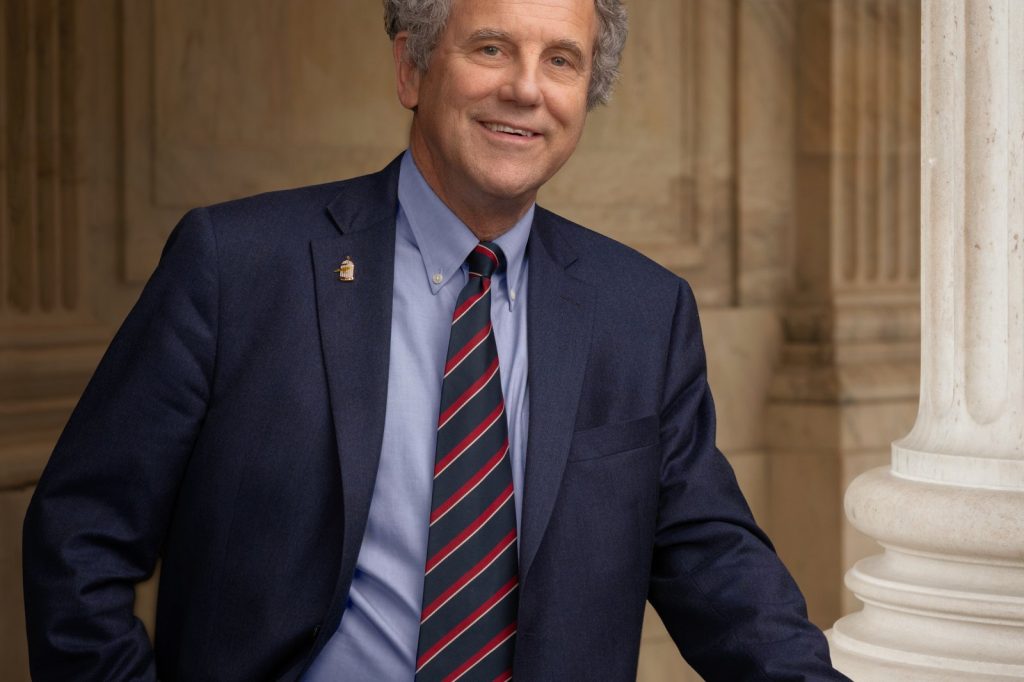
Ohio, September 13, 2021 — cybernewschronicle.com — Senator Sherrod Brown of Ohio has spent years watching companies borrow money to buy back their own stock, pushing share prices up while factory floors sat quiet. On 13 September 2021, he and Senate Finance Committee Chairman Ron Wyden of Oregon finally put a number on their frustration: 2 percent. That is the excise tax the two Democrats inserted into the $3.5 trillion social-spending package now racing through Congress.
Their proposal would hit every stock a publicly traded firm repurchases on the open market, unless the shares go toward employee pension or stock-ownership plans. The tax is non-deductible, meaning companies cannot write it off against ordinary income — a feature designed to stop accounting tricks before they start.
The same bill strips the 20-percent capital-gains rate on buybacks, reclassifying them as dividend payments for tax purposes. Staff projections released the same day estimate the two changes together would raise $100 billion by 2031. Democratic leaders have already assigned that money to expanded child-care subsidies, tuition-free community college and clean-energy grants.
This did not appear from nowhere. The buyback tax is the latest in a long push by Senate progressives to rewrite rules they say tilt toward Wall Street.
Brown chairs the Banking Committee. Wyden runs the Finance panel. Both have called the current system one that gives “Wall Street’s preferential treatment over Main Street.” The 2-percent surcharge is their attempt to make that phrase mean something real.
The timing matters. President Biden is trying to hold his entire caucus together — moderates and progressives — on a bill that must clear both chambers without a single Republican vote. Every revenue source counts.
Every dollar of the $3.5 trillion has to come from somewhere, and the buyback tax is one of the somewhere. Republican lawmakers pushed back immediately.
They framed the levy as a stealth tax on retirement accounts and working-class investors. The argument goes that when companies face higher costs on buybacks, they do less of them, and that means lower share prices for the pension funds and 401(k) plans that millions of Americans rely on. The GOP used the same logic in 2020 when it fought a similar proposal from Senator Bernie Sanders.
Brown and Wyden see it differently. They point out that the largest buyback programs in recent years have been run by companies that also cut jobs, closed plants or shifted work overseas.
In their view, a tax that makes buybacks less attractive is a tax that pushes cash toward wages, equipment, research — the kind of spending that actually grows the economy. The proposal lands as the social-spending package barrels toward a mid-autumn deadline. Democratic leaders hope to pass it through budget reconciliation, which requires only 50 votes plus the vice president.
That leaves no room for defections. Moderates like Joe Manchin of West Virginia and Kyrsten Sinema of Arizona have not yet committed to the $3.5 trillion price tag. Every new tax, including this one, becomes another test of whether the coalition holds.
For now, the buyback tax is a line item in a sprawling bill. But it is also something else: a direct answer to a practice that has grown enormous.
American companies spent roughly $1 trillion on buybacks in 2018 alone, the year the Trump tax cuts lowered their corporate rate. That number has come down since, but it remains far above historical norms. Brown and Wyden are betting that a 2-percent surcharge, applied to hundreds of billions of dollars in annual repurchases, will change corporate behavior.
Their staff says it will raise $100 billion over ten years. Whether that money ever reaches child-care centers and community-college classrooms depends on what happens in the next few weeks.
{“@context”: “https://schema.org”, “@type”: “NewsArticle”, “headline”: “Wyden and Brown propose 2% excise tax on corporate stock buybacks”, “description”: “Senator Sherrod Brown of Ohio has spent years watching companies borrow money to buy back their own stock, pushing share prices up while factory floors sat quie”, “datePublished”: “2021-09-13T15:00:00+00:00”, “author”: {“@type”: “Person”, “name”: “InfoPulse Today”}, “publisher”: {“@type”: “Organization”, “name”: “InfoPulse Today”}}




