
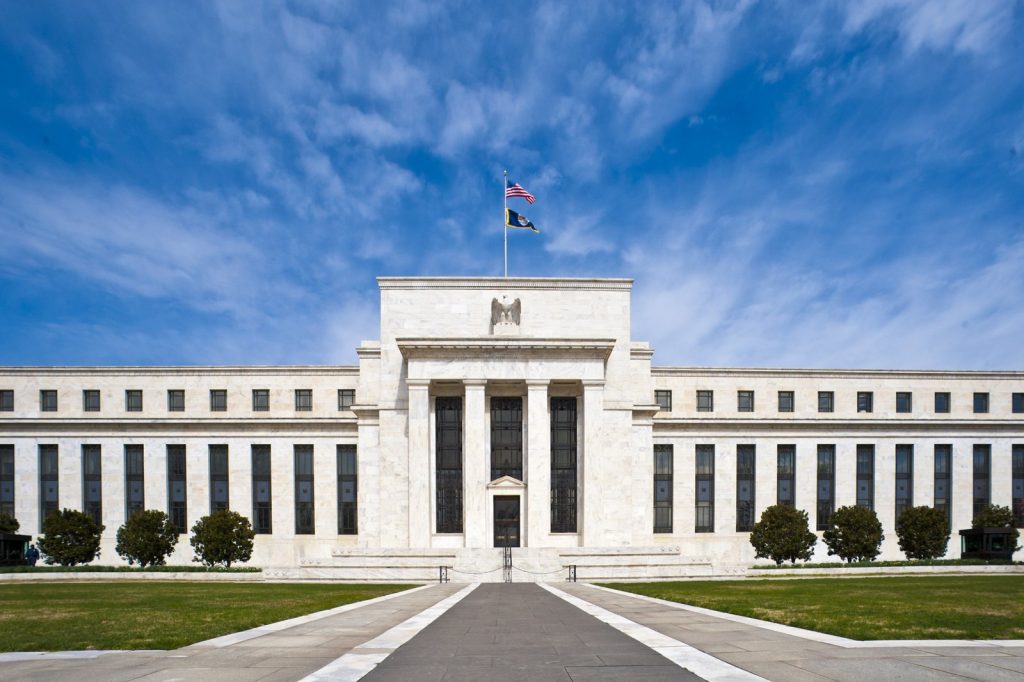
WASHINGTON, July 14 — The Federal Reserve System, the central bank of the United States, was born from crisis. Its creation, signed into law by President Woodrow Wilson on December 23, 1913, was a direct response to a series of financial panics, most notably the Panic of 1907. The original architecture was deliberately decentralised: 12 regional Federal Reserve Banks, in cities including New York, Chicago and San Francisco, were designed to spread power.
Under the hood, the Fed’s role has expanded dramatically over the decades. The Great Depression forced a structural reorganisation.
The Banking Act of 1935 created the Federal Open Market Committee, the FOMC, the body that now sets monetary policy. That was the detail that mattered: it formalised the mechanism for managing the nation’s money supply and credit conditions.
Independence and inflation
Post-World War II, the Fed gained genuine independence from the Treasury under the 1951 Treasury-Fed Accord. That separation is the technical reality that allows the central bank to raise interest rates even when the White House would prefer cheap money. The 1970s tested that independence severely.
High inflation took hold, and Chairman Paul Volcker responded with drastic rate hikes. The federal funds rate peaked at 20% in 1980.
The policy worked, breaking inflation’s back, but it came at the cost of a sharp recession. As ever, the Fed’s toolkit evolves with each new crisis. The 2008 financial crisis pushed the central bank into uncharted territory.
With short-term rates already near zero, the Fed turned to unconventional tools, principally quantitative easing — buying massive quantities of government bonds and mortgage-backed securities to push down long-term rates. By 2014, the Fed had purchased $3.7 trillion in bonds.
Pandemic and the modern era
The COVID-19 pandemic in 2020 was a shock of a different order. The Fed cut rates to near zero in a matter of weeks and launched an even larger quantitative easing programme, purchasing over $4 trillion in assets. The scale was unprecedented, and the balance sheet ballooned.
The current tightening cycle, running from 2022 into 2023, is the fastest since the early 1980s. The Fed has raised rates aggressively to combat a fresh surge in inflation, repeating the Volcker-era playbook in compressed form.
The technical reality is that the central bank is once again walking the line between taming prices and tipping the economy into recession. What to watch next is whether the current cycle will prove as effective as Volcker’s — and whether the Fed’s independence, secured in 1951, will withstand political pressure. The detail that matters is that the Fed’s mandate — maximum employment and stable prices — has not changed, but the environment in which it operates has rarely been more volatile.
Sources
{“@context”: “https://schema.org”, “@type”: “NewsArticle”, “headline”: “Federal Reserve Marks Century Since 1913 Banking Panic”, “description”: “WASHINGTON, July 14 — The Federal Reserve System, the central bank of the United States, was born from crisis. Its creation, signed into law by…”, “datePublished”: “2026-07-14T09:30:00+00:00”, “author”: {“@type”: “Person”, “name”: “Sebastian Smith”}, “publisher”: {“@type”: “Organization”, “name”: “InfoPulse Today”, “url”: “https://newsfeed.infopulsetoday.com/”}, “citation”: [{“@type”: “CreativeWork”, “url”: “https://en.wikipedia.org/wiki/History_of_the_Federal_Reserve_System”}]}




