
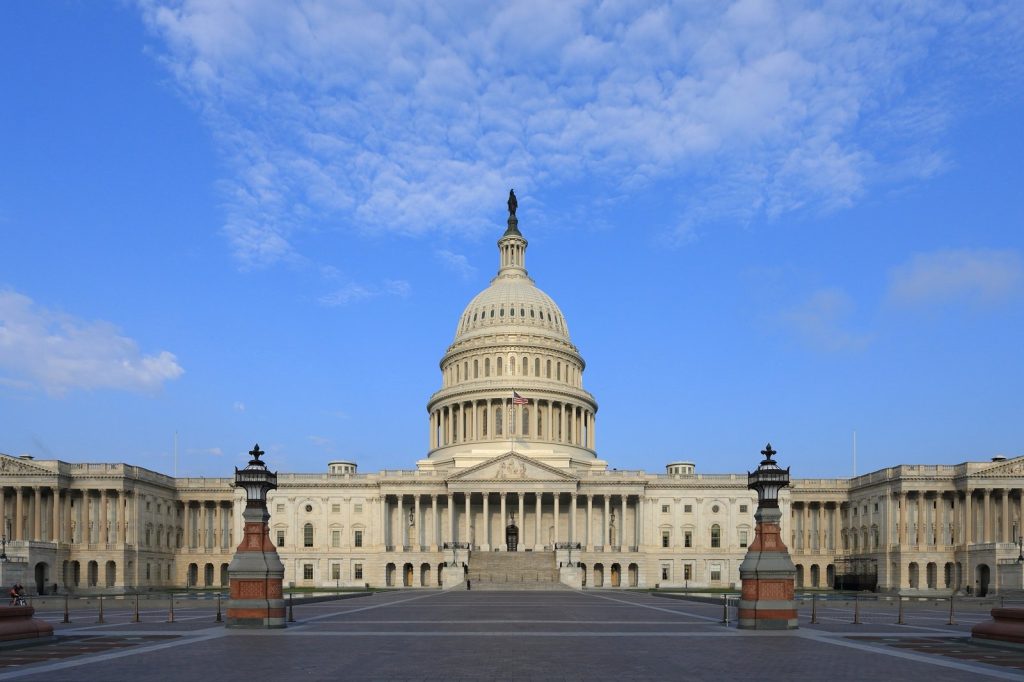
Three House seats. Four Senate seats. That is the entire distance between Donald Trump and a Congress he no longer controls, and on Tuesday, November 3, 2026, American voters went to the polls to decide it.
At stake are all 435 House seats, 35 Senate seats out of 100, and governorships in 36 states. Democrats need a net gain of three in the House and four in the Senate to take both chambers — the first significant check on a second term that even the president’s own party has struggled to sell to the country.
The strategic context is a nationwide judgment on Trump himself. Republican fortunes have sagged as voters fume over the cost of living and a war with Iran. Back in office since last year on a promise to cut prices, Trump has watched inflation, tariffs and fuel costs stoked by the Middle East conflict squeeze family budgets, and the 80-year-old president’s approval has hovered near the low 30s.
The Stakes, Chamber By Chamber
Losing the House hands Democrats the power to stall legislation and open sweeping investigations of the administration. Losing the Senate threatens his ability to seat Supreme Court justices and senior officials. Republicans hold a 53-47 Senate edge, yet the battlefield has stretched into conservative Kansas, Texas, Iowa, Ohio and Alaska, while Democrats defend awkward terrain of their own in Michigan, where congresswoman Haley Stevens broke ranks to endorse Republican Mike Rogers over the Democratic standard-bearer.
Decision Desk HQ’s final forecast put Democrats at 241 House seats to 194 for Republicans, with a narrower 52-48 Senate edge. Early voting had already passed 57 million ballots, political advertising topped $11 billion, and Elon Musk pumped hundreds of millions more into Republican efforts.
The Closing Arguments
On the trail, the two parties barely campaigned on the same planet. Republicans pitched Trump’s tax cuts and immigration crackdown and labeled Democratic candidates left-wing radicals. Trump’s own final appearance on Monday dwelt mainly on his troubled overhaul of the Reflecting Pool in the capital. The election pitch arrived 26 minutes deep: “This is the last day before the midterm elections, the most important midterm I believe in our lifetime,” and then it was back to renovations — a finish Senate Democratic leader Chuck Schumer dismissed as a “pathetic closing message.”
In the Atlanta suburbs, retired teacher Jane Callum, 77, canvassed for Senator Jon Ossoff. “I really feel an obligation to do everything that I possibly can to change the direction that our country is going in now, and put it more on the path to democracy and away from autocracy,” she told AFP. In Texas, military veteran Yvonne Clouser answered for the other side: “We’re going to win. As a matter of fact, we’ve probably already won,” she told AFP.
What Happens After The Count
The broader stakes may be the count itself. Trump, who tried to overturn his 2020 defeat, has repeatedly alleged widespread fraud, accusing Democrats — with no evidence — of cheating. His Justice Department went to court to potentially stop Alaska certifying its Senate result if incumbent Dan Sullivan narrowly loses; judges rejected the attempt on the eve of voting, and the Supreme Court rejected a bid to set aside more than 20,000 California mail-in ballots.
And the president has pre-announced his strategy for a hostile Congress. “I veto everything,” he told a podcast on Monday — allowing, eventually, that he might strike deals. What the midterms decide is whether he gets the chance.




