
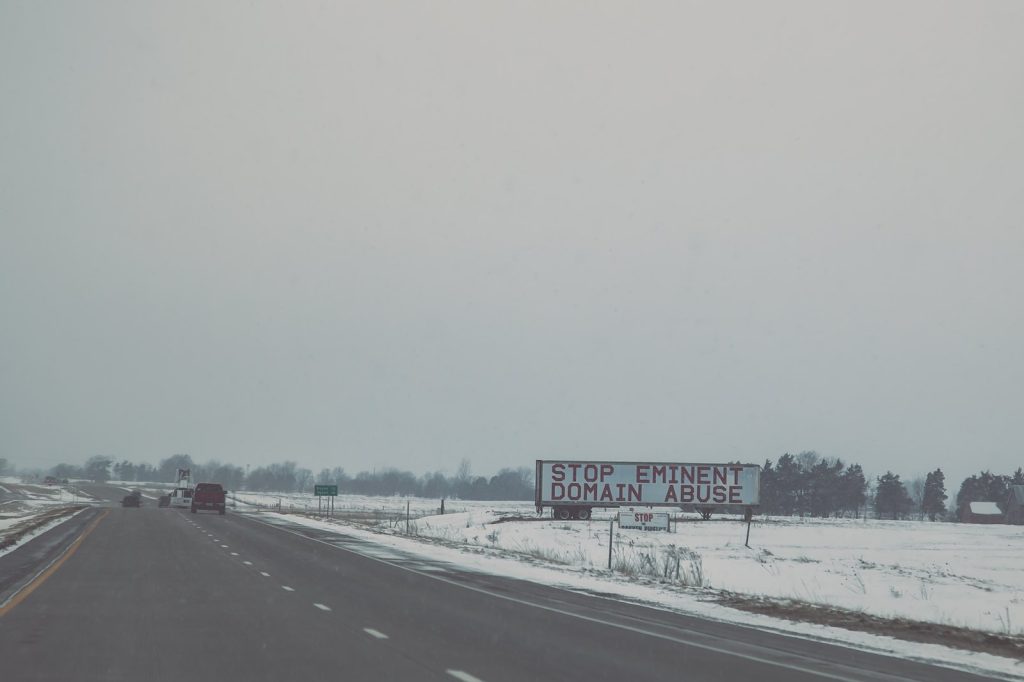
A letter arrives saying the city wants your house. Can it do that? Often, yes. State and local governments can take private property in several ways, and in most of them the owner is entitled to payment.
Six ways property gets taken
Condemnation is the best known. Property is taken so it can be put to public use, for example when homes are cleared to make room for a wildlife reservation. Before the taking, the land is “condemned property,” marked for demolition or modification. The category also covers cases where government regulation has left a plot economically useless.
A judicial lien comes out of a lawsuit between a debtor and a creditor. Once a court certifies it, the debtor must give up the property, which can then go to a judicial sale. Governments can sometimes seize title under a lien, as in foreclosures that end in a sale.
Tax seizure is plain: stop paying property taxes and the government can legally take the property.
Seizure for private economic development lets property be taken to help certain private projects. It is hard to follow legally, and anyone facing it should consult an attorney right away, according to LegalMatch.
Civil forfeiture works differently from the rest. Criminal forfeiture requires a conviction beyond a reasonable doubt. Civil forfeiture lets the government take property tied to a crime with no finding of guilt, because the property, not the owner, is the party being sued. Rights to just compensation and due process do not apply.
What owners are paid
Outside civil forfeiture, a government that condemns or takes property must pay “just compensation.” The Supreme Court has ruled that “just” refers only to the market value of the property when it is taken.
LegalMatch advises owners to contest the figure anyway. Agencies rarely offer fair value on the first try, and bargaining can raise the offer. If the dispute reaches a court, the jury might also lower it.
Fighting back
Condemnation can sometimes be resisted. An owner might argue that the taking is unjust or breaks the law, and a gross injustice or a conflict with public policy can carry the argument. The usual remedy is an injunction, a court order that ends the project and returns the land. Money damages are the alternative.
Liens and tax seizures are far harder to beat, especially after a clear ruling. A ruling can sometimes be challenged over an error in the lower court, or over a defect in the title deed that a quiet title action could fix. Whether any of that is available depends on the facts of the case.
In a civil forfeiture case, the government has to show probable cause that the property was involved in a crime. The owner then has to prove by a preponderance of the evidence that it was not used illegally, or that the owner was not involved. That is hard when police have seized evidence and blocked access to the scene.
The limits of the power
The most disputed use of eminent domain lets one private party take another’s property in the name of the public good. The Supreme Court has ruled that economic development by private parties can justify a taking, though federal regulations and state laws have narrowed that ruling. Handing a house to a corporation so it can build an office building, LegalMatch notes, serves no public purpose and could not count as public use under the Constitution.
A “taking” can also be any permanent interference. In one example, the government built a military base near some houses, and its planes flying overhead disrupted use of the property so badly that courts ruled the homeowners were owed just compensation, even though nobody took the houses.
LegalMatch recommends a local real estate lawyer, who can explain a state’s eminent domain laws and appear in court.




