
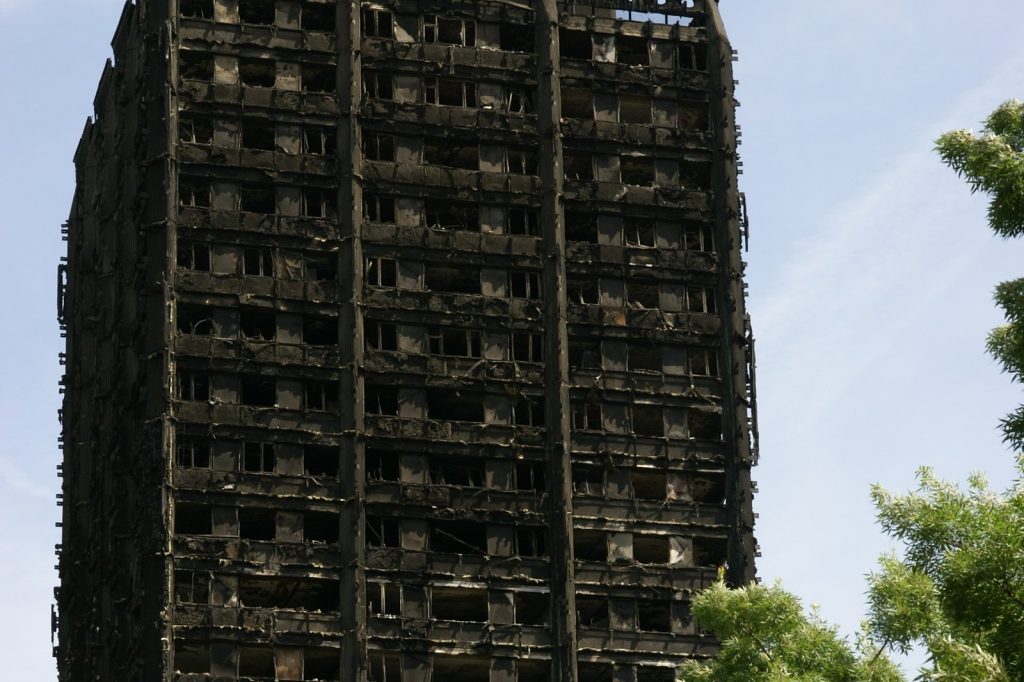
“For me, there’s no justice without people going behind bars.” Sandra Ruiz lost her 12-year-old niece, Jessica Urbano Ramirez, in the Grenfell Tower fire. She spoke as a public inquiry prepared to report on the blaze seven years later.
“Our lives were shattered on that night,” Ruiz said. “People need to be held accountable. People who have made decisions putting profit above people’s safety need to be behind bars.”
Inquiry chairperson Martin Moore-Bick, a retired judge, was due to deliver the findings on Wednesday after a six-year investigation. It examined how building flaws, lax enforcement of safety standards and mistakes by emergency responders turned a small kitchen fire into the deadliest blaze on British soil since World War II. Seventy-two people died.
The Night of the Fire
The fire broke out in the early hours of June 14, 2017, in a fourth-floor apartment. It climbed the 25-story building like a lit fuse, fed by flammable cladding panels on the exterior walls. Grenfell was a public housing block in one of London’s richest neighborhoods, a short walk from the boutiques and elegant houses of Notting Hill. The victims came from 23 countries and included taxi drivers and architects, a poet, an acclaimed young artist, retirees and 18 children.
The government announced the inquiry the morning after the fire. It has held more than 300 public hearings and examined around 1,600 witness statements. Its first report, published in 2019, criticized the fire department for telling residents to stay in their apartments and wait for rescue. That advice changed almost two hours after the fire began, too late for many on the upper floors.
Who Chose the Cladding
The final report was to look at the “decisions which led to the installation of a highly combustible cladding system on a high-rise residential building,” Moore-Bick said. The refurbishment had wrapped the tower in aluminum and polyethylene cladding: foam insulation covered by two aluminum sheets with a layer of polyethylene between them. Polyethylene is a combustible plastic that melts and drips when heated.
Richard Millett, lead lawyer to the inquiry, has said organizations including the cladding makers, the refurbishment contractor and the local government engaged in a “merry-go-round of buck-passing,” each blaming others.
After the fire, the U.K. government banned metal composite cladding panels on all new buildings and ordered similar cladding removed from hundreds of tower blocks. Work has not been done on some buildings because of wrangling over who pays.
Waiting for Charges
Police are investigating dozens of individuals and companies and weighing charges, including corporate and individual manslaughter. Criminal charges are on hold until the inquiry concludes, and prosecutions are unlikely to come before late 2026.
Survivors and bereaved families fear the report may spread blame too widely for anyone to be punished. “We were denied justice for seven years and now told there will be several more years,” the Grenfell Next of Kin group said in a statement. “Our realistic concern is that the ‘web of blame’ presented through the Inquiry will be a barrier to our justice.”
The burned tower still stands, covered in white sheeting. At the top, a green heart and the words “Grenfell forever in our hearts” are emblazoned.




