
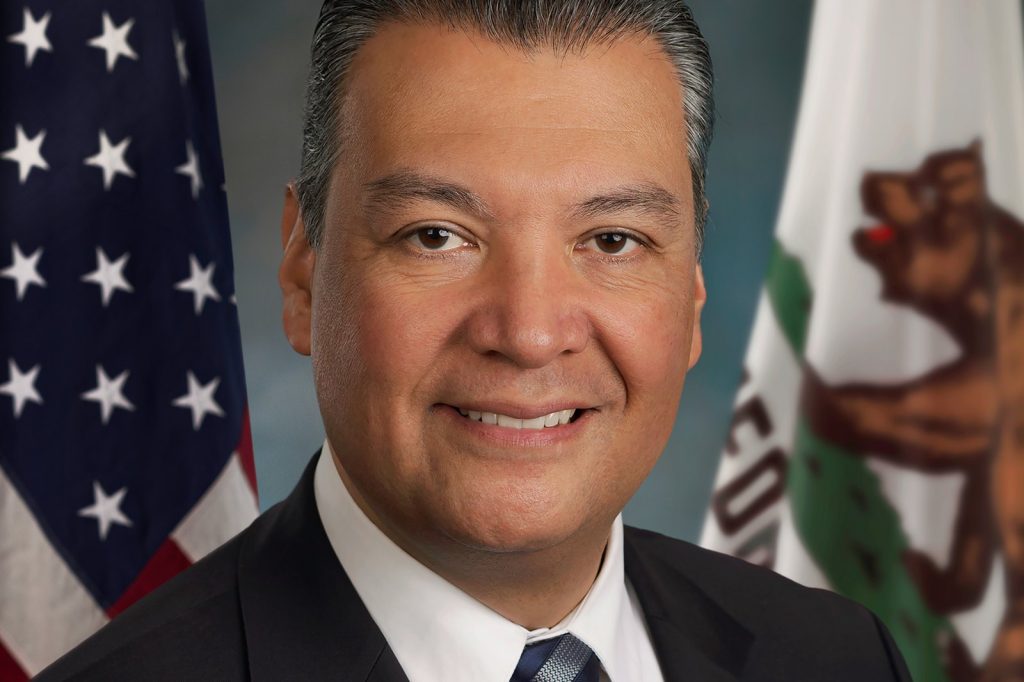
SACRAMENTO, October 17, 2026 — The Trump administration has sued California, demanding proof of citizenship for 20,000 voters and seeking to block the state from counting their mail-in ballots. California’s senior U.S. Senator, Alex Padilla, is leading the legal defense, drawing on years of battling federal interference in state election laws.
A Career Forged in Opposition to Voter Suppression
Padilla’s stance against federal overreach in elections dates back to his early political career. Born to undocumented immigrants who later became citizens, Padilla was galvanized by California’s Proposition 187 in 1994, a measure targeting Latino immigrants that he viewed as a nativist attack. This experience shaped his lifelong opposition to policies excluding marginalized voters, according to his biography. As Los Angeles City Council president from 2001 to 2003, he championed policies countering anti-immigrant rhetoric, a precursor to his later election work.
Battling Federal Intrusion as Secretary of State
During his tenure as California’s Secretary of State (2015–2021), Padilla became a central figure in legal clashes over state election sovereignty. His office repeatedly defended California’s voter rolls against federal lawsuits, including those from the Trump administration. In the current case, the Justice Department has demanded California prove the citizenship of 20,000 voters flagged by federal agencies, a move Padilla has called a “desperate attempt to suppress voters,” as reported by KQED. Legal experts note that similar federal challenges to California’s election processes have failed in court, with Padilla’s team consistently arguing that the federal government has “no role in running state elections.”
Strategic Legal Responses to Federal Pressure
Padilla’s office has employed several strategies to counter the latest federal lawsuit. California Attorney General Rob Bonta has labeled the DOJ’s demand “unconstitutional,” while Los Angeles County Registrar Dean Logan refused to access the DOJ’s unsecured thumb drive containing voter data, citing security concerns. These actions reflect California’s broader stance on data sovereignty and its rejection of federal audits of state voter rolls. Padilla’s team has also highlighted the timing of the lawsuit, filed just weeks before Election Day, as evidence of its political motives, a point echoed by election expert David Becker, who called it “not a good faith effort.”
From Engineer to Defender of Democracy
Padilla’s background as an MIT-trained engineer contrasts with his political career, where he has prioritized civic engagement over technical roles. His leadership in organizations like the National Association of Latino Elected Officials (NALEO) underscores his focus on protecting marginalized voters. Appointed to the Senate in 2021 and elected to a full term in 2022, Padilla has become a national voice against election interference. His experience as a former election official has positioned him as a key counter to federal efforts to undermine state election laws, according to his Senate biography.
Broader Stakes in the Legal Battle
The current lawsuit is part of a larger pattern of federal-state conflict over election authority. Governor Gavin Newsom has accused the Trump administration of using the Justice Department to intimidate voters, while legal experts predict the lawsuit will face significant hurdles in court. Padilla’s defense of California’s election processes signals a broader resistance to federal overreach, with implications for state sovereignty and voting rights nationwide. As the legal battle unfolds, Padilla’s career-long fight against voter suppression remains at the forefront of this strategic clash.
Threats To Election Officials And Offices
As the legal battle over voter rights intensifies, election officials and offices are facing threats and intimidation. According to NBC News, federal law enforcement is investigating dozens of letters containing suspicious substances mailed to congressional offices and state election officials across the country, including the office of Senator Alex Padilla. The FBI, U.S. Capitol Police, and the U.S. Postal Inspection Service are working to intercept any additional letters and identify the individual or individuals responsible.
The investigation comes as the Trump administration has sued California, demanding proof of citizenship for 20,000 voters and seeking to block the state from counting their mail-in ballots. Governor Gavin Newsom has accused the Trump administration of using the Justice Department to intimidate voters, while legal experts predict the lawsuit will face significant hurdles in court.
The threats to election officials and offices underscore the high stakes of the legal battle over voter rights. As Senator Padilla and other officials work to defend California’s election processes, they are also having to contend with attempts to intimidate and disrupt their work. The FBI has confirmed that it is investigating “a series of suspicious mailings sent to various addresses nationwide, including Secretary of State offices and their related election offices.”
Padilla’s Senate Leadership in Defending State Election Autonomy
Since assuming his Senate seat in 2021, Padilla has leveraged his experience as California’s Secretary of State to challenge federal overreach in election administration. His ascension to senior senator on September 29, 2023—following the death of Dianne Feinstein—amplified his role in opposing efforts to federalize state election processes. According to his Senate biography, Padilla has consistently argued that the Voting Rights Act’s protections do not grant the federal government authority to interfere in state voter rolls, a stance reinforced by his tenure overseeing California’s election systems. His legal team has cited past rulings, including a 2020 federal court decision dismissing a similar Trump administration challenge to California’s mail-in ballot expansion, as precedent for rejecting the DOJ’s demands.
The lawsuit’s timing—filed just weeks before the November 3 midterm—has drawn comparisons to Padilla’s earlier battles as Secretary of State, where he defended California’s voter registration laws against federal scrutiny. In 2019, his office rejected a DOJ request to audit voter data, citing the National Voter Registration Act’s prohibition on federal interference. That case, like the current one, hinged on the argument that the federal government lacks jurisdiction over state-run elections, a position Padilla has reiterated in Senate hearings. His office has also highlighted that the 20,000 voters flagged by the DOJ were registered under California’s motor voter law, which requires no citizenship verification—a practice upheld by the Supreme Court in *National Federation of Independent Business v. Sebelius* (2012).
Padilla’s leadership on this issue extends beyond legal filings. As president of the National Association of Latino Elected and Appointed Officials (NALEO), he has coordinated with state officials nationwide to resist federal election interference, framing the California lawsuit as part of a broader pattern of partisan targeting. A NALEO statement released October 17, 2026, cited Padilla’s role in rallying state attorneys general to file joint amicus briefs in support of California’s defense, arguing that the DOJ’s actions violate the 10th Amendment’s reservation of election powers to the states. His Senate office has also shared internal DOJ communications with reporters, revealing that the citizenship flags were generated by automated cross-referencing with immigration databases—a method critics, including Padilla, have called unreliable and disproportionately affecting Latino and Asian-American voters.
Sources
- Alex Padilla
- Feds investigate suspicious mailings sent to members of Congress and state election officials
- Trump Administration Sues California After Demands to Prove Voters’ Citizenship | KQED




