
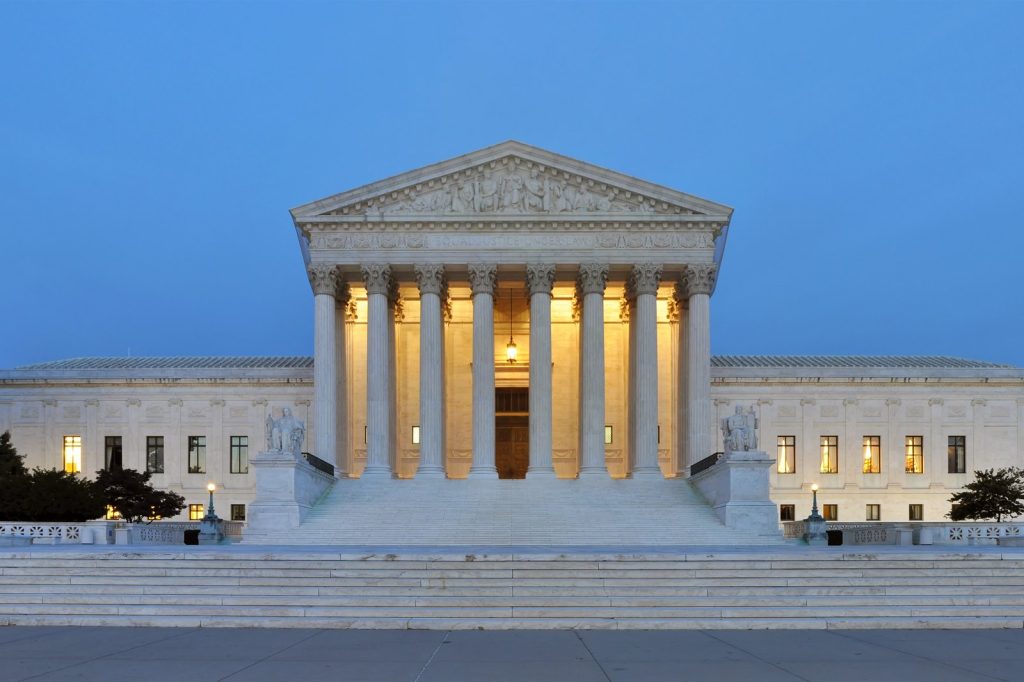
Supreme Court’s Voting Rights Act Rulings Fuel Ballot Access Battles
The Supreme Court has delivered two consecutive decisions that have fundamentally altered the legal landscape for voting rights in the United States, emboldening jurisdictions to implement stricter ballot access measures. Following these rulings, states are increasingly enacting restrictions on early voting, purging voter rolls, and imposing stringent identification requirements, a shift that civil rights organizations warn threatens the foundations of multiracial democracy.
The Erosion of Federal Protections
The Voting Rights Act of 1965 was signed into law by President Lyndon B. Johnson as a landmark piece of federal legislation designed to prohibit racial discrimination in voting and secure the franchise for racial minorities throughout the country. For nearly half a century, this statute served as the most effective federal civil rights law ever enacted, with its Section 5 preclearance regime requiring jurisdictions with a history of racial discrimination to obtain federal approval before implementing changes to their election practices. This mechanism acted as a powerful preventative tool, stopping discriminatory voting procedures before they could be put into effect.
However, the legal architecture of the Act suffered its first major fracture in 2013 with the Shelby County v. Holder decision. The Supreme Court nullified the preclearance requirement for states possessing a history of racial discrimination, reasoning that the original formula used to determine covered jurisdictions was obsolete. Chief Justice John Roberts argued that since Congress had not meaningfully updated the formula, it held no logical relation to present-day conditions. This ruling removed the federal oversight that had previously blocked discriminatory changes in specific areas.
Civil rights advocates were alarmed by this shift. Kristen Clarke, who served as the general counsel of the NAACP, described the 2013 decision as the first of two devastating blows to the law. The removal of Section 5 meant that voting changes could no longer be challenged before implementation but instead had to be contested after the fact using Section 2, which prohibits rules that restrict the right to vote on account of race or color. This procedural change significantly raised the burden for plaintiffs seeking to protect voting rights.
The Callais Ruling and Vote Dilution
Thirteen years after Shelby County, the Supreme Court struck again with its 2026 ruling in Louisiana v. Callais, which dealt a second devastating blow to the Voting Rights Act. In this case, Justice Samuel Alito, acting on behalf of the court’s conservative bloc, tossed out a Louisiana voting map that had created a second majority-Black congressional district from six available districts in a state where about one-third of voters are Black.
The core of the Callais decision involved Section 2 of the Act, which prohibits voting procedures and maps that discriminate on the basis of race. Under the new interpretation, protections under Section 2 would only apply if voters could prove intentional disenfranchisement based on their race, rather than if a seemingly neutral policy resulted in discriminatory outcomes.
This ruling effectively narrowed the scope of the Act significantly. Justice Kagan, in her dissent, referred to the cumulative impact of these decisions as the “now-completed demolition of the Voting Rights Act”. The conservative majority in both Shelby County and Callais argued they were making only minor adjustments to a law that former President Ronald Reagan had once called the “crown jewel of American liberties” when he extended its protections.
A New Era of Restrictions
The immediate aftermath of these Supreme Court decisions has seen a rapid acceleration in the enactment of ballot restrictions. Jurisdictions previously covered by preclearance, now free from federal oversight, have subsequently enacted cuts to early voting, purges of voter rolls, and the imposition of strict voter ID laws. Research indicates that these measures have led to substantial decreases in African American voter turnout, reversing gains made during the height of the civil rights movement.
Civil rights organizations argue that recent rulings have emboldened states to restrict voter access, creating a challenging environment for multiracial democracy. The Brennan Center, an organization where political scientist Kevin T. Morris works, has noted that the country faces serious threats to democratic backsliding similar to conditions in the 1960s. The Act had successfully and massively increased voter turnout and registrations, particularly among Black people, before these recent judicial interventions.
The strategic calculus for state legislatures has shifted dramatically. Without the threat of federal preclearance, local governments can now assume their policy changes are legal until challenged in court. This dynamic allows for a faster implementation of restrictive measures that might have previously been blocked by the Department of Justice. The broader stakes involve not just individual voting rights but the structural integrity of the electoral system itself.
The Path Forward
The implications of these rulings extend beyond the immediate legal battles to the future of voter access in the United States. Civil rights advocates are now focused on restoring the Voting Rights Act and bringing empirical rigor to understanding what has been lost over the last decade. The NAACP held emergency town halls to discuss the impacts of the Callais ruling and outline next steps, signaling a mobilization effort against these new legal constraints.
The history of the Voting Rights Act shows that it did not emerge from nowhere but was a specific response to historical conditions in the 1960s. Today, as the court dismantles parts of this legislation, advocates are working to restore the protections that once secured the right to vote for racial minorities throughout the country. The fight now centers on whether Congress will act to amend the Act or if the judiciary will continue to narrow its scope.
The Supreme Court’s decisions have fundamentally changed the relationship between federal and state governments in the area of voting, a dynamic that has not seen such significant statutory change since the Reconstruction period after the Civil War. As states continue to enact new restrictions, the legal challenges will define the next chapter in this ongoing struggle. The outcome will determine whether the nation can maintain its commitment to preventing racial discrimination in voting or if the protections established by President Johnson will remain a distant memory.
Sources
- Voting Rights Act of 1965
- The Voting Rights Act has taken two devastating blows. What comes next?
- Q&A: Author Kevin T. Morris examines the history of voting in the US in ‘An American Problem'
Photo: Joe Ravi (CC BY-SA 3.0)




