
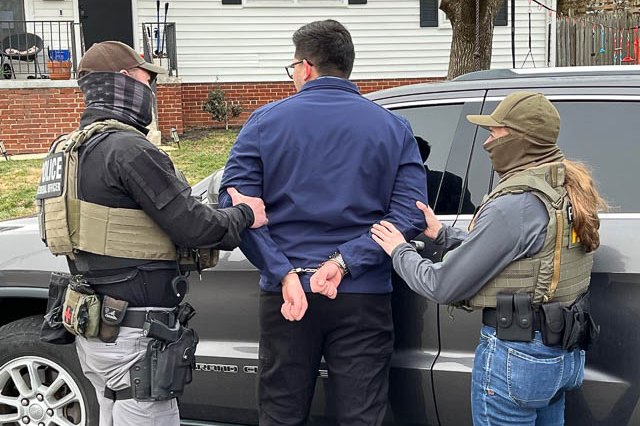
WASHINGTON, September 19 — Immigration and Customs Enforcement arrests reached their highest level ever recorded in August, according to an analysis of agency data released as part of a PBS NewsHour segment that aired September 18, a shift driven less by the high-profile raids that dominated headlines earlier in the year and more by a quieter partnership between federal authorities and state and local police. The numbers tell the story of a strategy that has changed shape without losing force.
Immigration arrests more than doubled in fifteen states and Washington, D.C., according to reporting by Lauren Villagran of The Marshall Project, who discussed the findings with PBS NewsHour’s Geoff Bennett. The analysis was conducted by The Marshall Project in partnership with the Deportation Data Project at the University of California, Berkeley and the University of California, Los Angeles.
A Shift in Tactics
Less than a year before the broadcast, aggressive immigration raids in Democratic-led cities were drawing national headlines and sparking protests across the country. The administration of President Donald Trump then adjusted course. Rather than relying as heavily on visible enforcement operations, federal immigration authorities increasingly worked through agreements with state and local law enforcement, particularly in Republican-led states.
Immigration advocates have called this quieter form of enforcement a “shadow surge.” The description captures the paradox at the heart of the shift. The operations are less visible, but the enforcement machinery has expanded.
Villagran said that for many Americans, the mass deportation campaign had largely faded into the background without the in-your-face operations seen earlier in the year in Chicago, Minneapolis and Los Angeles. Even with fewer headlines, arrests rose dramatically across the country, especially over the summer.
The Architecture of Enforcement
Texas and Florida, long the top enforcers for the mass deportation program, saw increases. But so did communities across the country, according to the analysis. Villagran said there were more than two thousand agreements between state and local law enforcement to conduct immigration stops.
The agreements looked different in different states, she said, reflecting the decentralized nature of the arrangement. The mechanism matters.
By routing enforcement through local police, federal authorities can multiply their reach without the staging of large-scale operations that draw cameras and protesters. The trade-off is a lower public profile — and, critics argue, less accountability. The report did not specify the exact number of arrests in August or the precise states beyond Texas and Florida, but it described the increase as dramatic and the August level as the highest ever recorded.
The segment was produced with Jackson Hudgins for PBS NewsHour and was part of the program’s continuing coverage of immigration enforcement under the Trump administration.
What This Signals
The broader stakes extend beyond the raw arrest figures. The shift toward state and local partnerships marks a structural change in how immigration enforcement operates — one that could outlast any single news cycle. The agreements embed federal priorities into local policing, creating a web of enforcement that is harder to see and harder to challenge.
What to watch next is whether the data continues to show rising arrest levels through the fall, and whether the agreements between federal and local authorities draw fresh scrutiny from courts, state legislatures, or the communities where they are applied. The quieter the enforcement, the harder it becomes to measure — and the more the numbers matter when they finally surface.




