
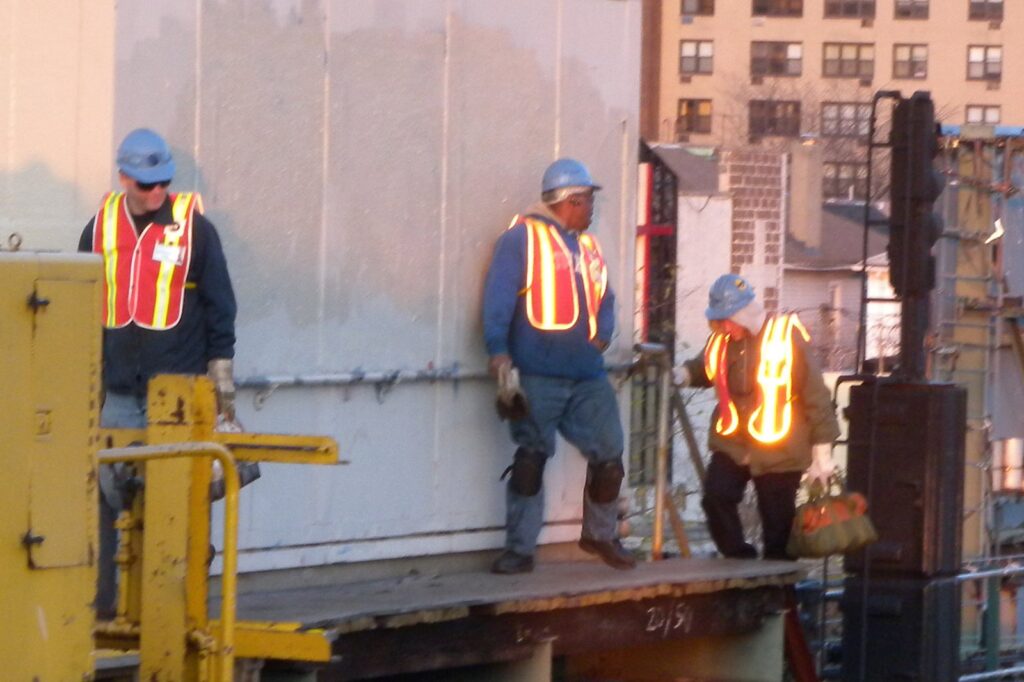
Immigration Crackdown Tightens Labor Supply, Raising U.S. Homebuilding Costs and Delaying Projects
The surge in immigration enforcement is putting a pause on a popular indigenous festival planned for this weekend in North County.
The Guelaguetza Festival at Palomar College on Saturday has been postponed. The Coalition of Indigenous Communities of Oaxaca (COCIO) said this is in effort to keep their community members safe.
How Immigration Enforcement Is Reducing Available Construction Workers
Since reports of an immigration enforcement crackdown in San Diego, there have been instances of people being detained at their workplaces throughout the county.
Guelaguetza San Diego was not the only Oaxacan celebration affected by the enforcement surge. The Guelaguetza Madera in Northern California was postponed for the same reason.
Guelaguetza San Diego was canceled last year also because of the Trump administration ramp-up in immigration enforcement, Rodríguez said.
There are an estimated 40,000 Oaxacans living in San Diego County, mostly in North County, he said.
The group already has a date in mind for the rescheduled celebration, but they aren’t making that public yet.
Impact on Housing Construction Timelines and Project Starts
If America wants to win the AI race, sending the world’s brightest engineers packing might not be a winning strategy.
That’s the warning from Microsoft President Brad Smith, who said the Trump administration’s immigration crackdown risks driving the next generation of AI talent away from the United States.
Smith said most of the company’s visa and green card applications concerned existing employees rather than new hires, adding that Microsoft had hired 9,200 American workers in its last fiscal year.
An analysis of federal data by Business Insider found that certified H-1B applications fell 10% in the first nine months of fiscal year 2026 compared with the same period a year earlier.
Applications for data scientists, however, rose 22.5%, highlighting continued demand for specialized AI talent.
Smith cited immigrants’ economic contributions as evidence of what America stands to lose.
He said that five of the six technology and science medal recipients recently honored by President Donald Trump had immigrated to the United States.
According to Smith, the companies associated with those five individuals collectively represent more than a quarter of the S&P 500’s market value.
Rising Wages and Subcontractor Costs Due to Labor Scarcity
Advocacy groups accuse Trump administration of fast-tracking migrant children’s asylum cases
The groups have filed suit over the handing of children’s immigration cases.
Immigrant advocacy groups representing migrant children have sued the Trump administration to stop what they call a “cruel and unlawful scheme” to fast-track migrant children’s asylum cases.
In a complaint filed Thursday night, the groups allege that new government policies have transformed the asylum process for migrant children into a “deportation assembly line depriving them of their rights.”
The lawsuit comes as immigration attorneys and advocates say unaccompanied migrant children are being rushed through the immigration system and that their deportations have been accelerated as part of the Trump administration’s aggressive immigration crackdown.
A spokesperson for the Department of Homeland Security did not immediately respond to a request for comment from ABC News.
In the suit, the groups said that U.S. Citizenship and Immigration Services has changed practices through a series of recent policy shifts that include reducing notice times for asylum interviews — in some cases proving less than 24 hours’ notice.
In the complaint, the groups also said that the Department of Justice has instructed immigration judges to complete all removal proceedings for detained unaccompanied children by Jan. 31, 2027.
To meet the deadline, the groups allege that immigration judges are refusing to grant continuances of longer than three weeks.
This push isn’t coming from just one agency. It’s a coordinated whole-of-government operation that abandons due process and child safety in service of faster removals, said Jason Boyd, vice president for federal policy at the advocacy group Kids in Need of Defense.
The suit comes two days after the Department of Homeland Security announced it was offering unaccompanied migrant children $3,000 to self-deport, a $500 increase over last year’s incentive.
Earlier this month, the federal government quietly assembled a team of government attorneys to represent migrant children in court after the administration cut ties with a number of immigration advocacy groups that had previously provided those services.
Immigration advocacy groups have raised concerns about the initiative, arguing that the same government seeking to deport the minors should not be representing them in court.
Effect on Home Prices and Affordability for Buyers
Reduced labor availability from immigration enforcement is increasing homebuilding costs, which directly affects housing prices and buyer affordability. As construction timelines lengthen and wages rise due to worker shortages, developers pass these added expenses onto homebuyers through higher sale prices.
With fewer workers available to complete projects on schedule, the supply of new homes entering the market slows, tightening inventory in an already competitive housing environment. This imbalance between limited supply and steady or growing demand contributes to upward pressure on home prices.
Industry analysts note that prolonged delays and increased subcontractor bids—driven by labor scarcity—reduce the feasibility of affordable housing developments, particularly for entry-level buyers. As a result, more potential purchasers are priced out of the market or forced to consider less expensive, often older, housing stock.
Builder Responses: Automation, Training, and Lobbying for Visa Reform
Homebuilders are turning to automation to offset labor shortages caused by immigration enforcement, investing in robotic bricklaying and prefabrication technologies to maintain output with fewer workers.
Industry groups report expanded apprenticeship programs and partnerships with vocational schools to train domestic workers in skilled trades, aiming to reduce reliance on foreign labor over the long term.
Builders are also increasing lobbying efforts for visa reform, advocating for expanded H-2B caps and streamlined processes to legally bring in seasonal construction workers when domestic hiring falls short.
Sources
- Oaxacan festival postponed second year in a row because of immigration crackdown
- Microsoft president warns Trump's immigration crackdown could mean the US loses out on future AI talent
- Advocacy groups accuse Trump administration of fast-tracking migrant children's asylum cases
Photo: Jim.henderson (CC0)




