
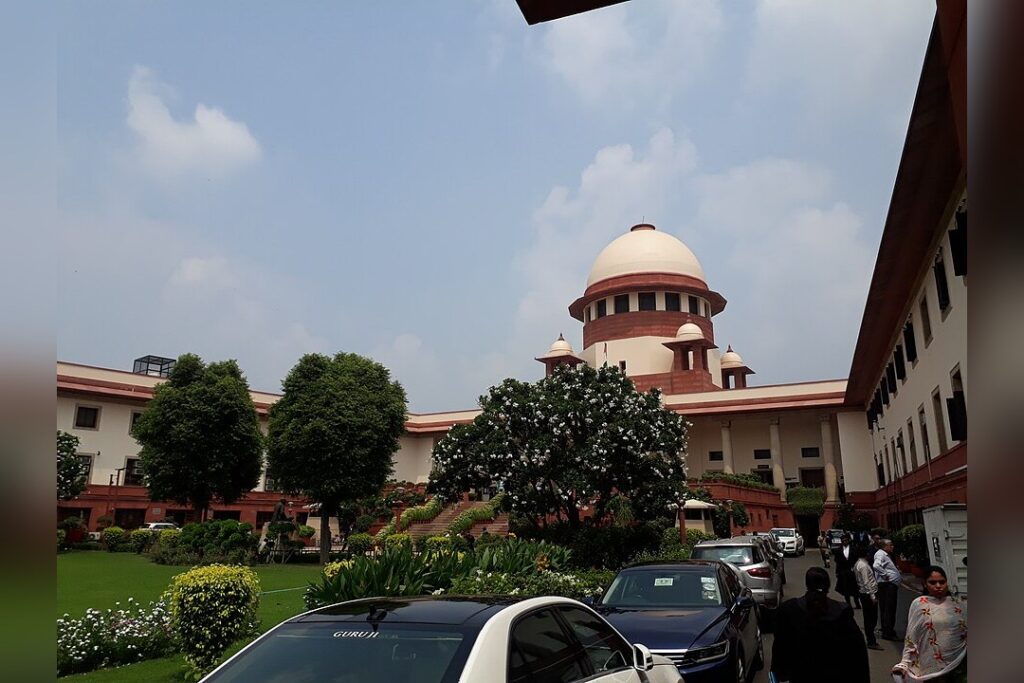
Six precedents. That is how many the National Company Law Tribunal leaned on in an insolvency order, and the Supreme Court of India found that they were fake, wrongly cited or stripped of the passages attributed to them. On Thursday, July 2, 2026, a bench of Justices PS Narasimha and Alok Aradhe threw out the tribunal’s order and the appellate tribunal’s ruling that had upheld it.
The bench reached for a grim comparison. AI-generated precedent, it said, is “like the release of methyl isocyanide in the province of law and justice, invisibly insidious and catastrophic by the time anyone notices.” The reference was to the gas that killed thousands in the 1984 Bhopal disaster.
A dispute over a guarantee
The case began with Jammu and Kashmir Bank Ltd, which started insolvency proceedings under Section 7 of the Insolvency and Bankruptcy Code against Essel Infraprojects Ltd. Essel had given a corporate guarantee for credit the bank extended to Pan India Utilities Distribution Company Ltd. The NCLT in Mumbai admitted the bank’s application on August 28, 2024, recording a default of 87.43 crore. The National Company Law Appellate Tribunal upheld that decision on September 11, 2025.
Senior advocate Madhavi Divan, appearing for the suspended director Pooja Ramesh Singh, told the Supreme Court that the tribunals had relied on authorities that either did not exist or did not say what they were claimed to say. The bank filed an affidavit stating that its lawyers had never cited those judgments; the tribunal, it indicated, had introduced them itself. A second affidavit confirmed that the authorities could not be found in any recognised legal database.
The examples named in the reports included State Bank of India v. Shree Ram Urban Infrastructure (2020 SCC OnLine SC 341), Everest Kento Cylinders v. Union of India ((2015) 2 SCC 1) and ICICI Bank v. Urban Infrastructure Real Estate ((2019) 16 SCC 528). The court noted that some citations pointed to judgments that never existed, some named real cases but attached invented passages to them, and at least one carried the name of a different Supreme Court decision altogether. The appellate tribunal did not catch any of it.
“No decision in the eyes of law”
The bench was in no mood to ask whether the fakes had changed the outcome. A ruling tainted by even “an iota” of such material, it held, is “no decision in the eyes of law”. The matter goes back to the NCLT, to be decided afresh on the facts without the invented citations.
“There is again a case where the tribunal relied on non-existing fake and hallucinated material generated through artificial intelligence as if they were precedents in support of its judgment,” the court observed. It showed little interest in the technology’s inner workings. “We are neither concerned with the cause nor the process of resolving such hallucinations. It is for the engineers and scientists to deal with them.”
The court did not reject AI. It said it intends to adopt the technology to assist adjudication, but with “total and absolute control over adjudications with a human in the loop at every stage.”
It also set out a “zero tolerance” policy on citing or relying on hallucinated material. A lawyer who cites such judgments commits professional misconduct, the bench said, and a judge who relies on them commits a serious lapse. The Bar Council of India was directed to set up an expert committee to frame guiding principles, with disciplinary consequences for violations.
Courts, the bench acknowledged, cannot realistically verify every citation placed before them.
This was the second such intervention this year. On February 27, the same two judges took notice of a trial court that had relied on AI-generated, non-existent verdicts, and held that a decision built on them “is not an error in the decision making” but misconduct with legal consequences.
Sources
- 'Citation doesn't exist': The case behind SC's AI-hallucination order & draft rules released before – Hindustan Times
- Supreme Court junks tribunal order for using citations hallucinated by AI – India Today




