
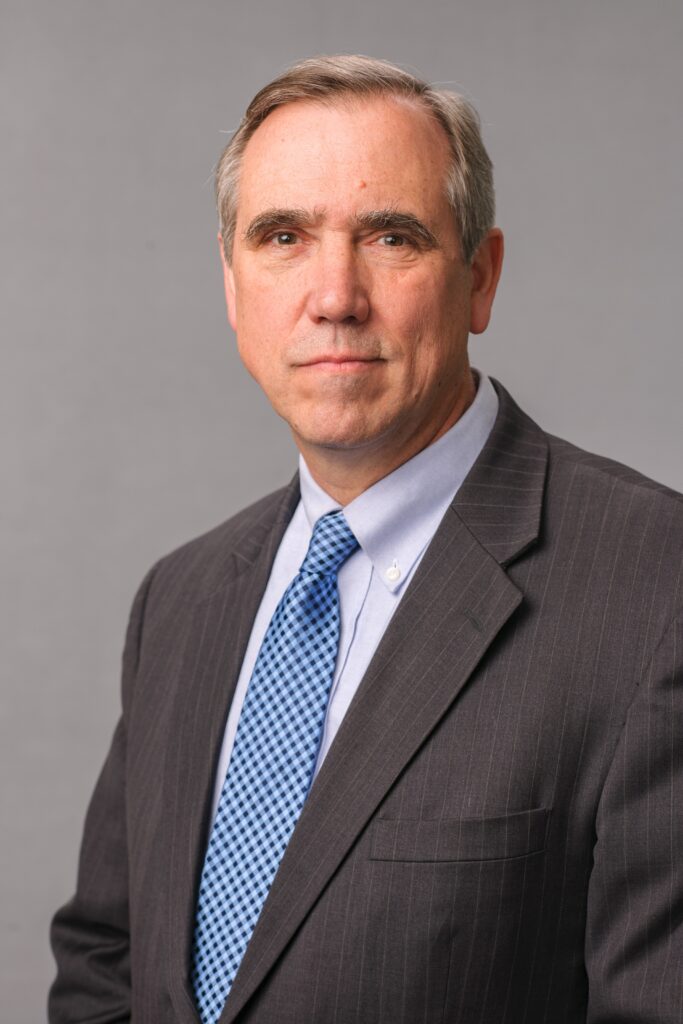
On September 30, 2026, Senator Jeff Merkley Joined Democratic Caucus in Blocking Stop Insider Trading Act
On September 30, 2026, during the 119th Congress, 2nd session, U.S. Senator Jeff Merkley of Oregon was among the 47 senators from the Democratic caucus who voted against cloture on Roll Call Vote #253, thereby blocking advancement of H.R. 7008, the “Stop Insider Trading Act.” The cloture motion required 60 votes to proceed to debate and a final vote on the bill; it failed 53-47, with all 53 yes votes coming from Republicans and all 47 no votes from Democrats, including independents Angus King of Maine and Bernie Sanders of Vermont.
Because cloture was not achieved, the motion to proceed to the bill was blocked, and H.R. 7008 did not advance to a final passage vote. This procedural outcome must be described accurately as blocking cloture or a filibuster of the motion to proceed, not as rejecting or voting down the bill on its merits.
What the Senate Actually Voted On
H.R. 7008 contained two distinct sections as confirmed in the official bill text. Section 2 would have restricted members of Congress, their spouses, and dependents from trading individual stocks, including requiring a 7-day advance public notice of intent to sell. Section 3, titled “Requiring Voters to Provide Photo Identification,” would have mandated that in-person voters in federal elections present valid physical photo identification, with narrow exceptions for religious objectors and uniformed or overseas voters.
Senate Democratic leaders, including Chuck Schumer, stated they opposed the bill because the voter-ID provision was a “poison pill” and argued the stock-trading restrictions were too weak, describing them as “toothless.” Supporters of the bill countered that Democrats could have advanced the stock-trading ban separately and amended it later, rather than blocking a measure that combined two policies with broad public support. It is important to note that this vote was distinct from an earlier Senate action on March 17, 2026, when Roll Call #57 advanced a SAVE Act voter-eligibility measure via S.1383 by a 51-48 margin, with the same Democratic caucus opposing that proceeding.
How Merkley Got to the Senate
Jeff Merkley became a U.S. Senator after serving as Speaker of the Oregon House of Representatives. He unseated one-term Republican incumbent Gordon Smith in the 2008 election, winning 49% to 46% — the first time an incumbent Oregon senator had been defeated since 1968.
Merkley was first elected to the Senate in 2008 and, by September 2026, had served three full terms. He is not considered a new senator. In his most recent election, held in 2020, Merkley won re-election with 56.9% of the vote against Republican challenger Jo Rae Perkins, who received 39.3%, giving Merkley a margin of victory of 17.6 percentage points.
He is known for delivering marathon Senate floor speeches, including a 15.5-hour address opposing Neil Gorsuch’s Supreme Court confirmation in 2017 and a record 22-hour-and-36-minute speech in 2025 opposing Trump-administration policy. Merkley was running for re-election in 2026 at the time of the September 30 vote.
Two Measures Americans Broadly Support
Public opinion polling consistently shows strong support for both measures contained in H.R. 7008. Regarding the photo-voter-ID requirement in Section 3, Gallup found in a poll conducted from October 1 to October 12, 2024 (reported in a 2026 update) that 84% of Americans favored requiring voters to show government-issued photo identification to vote. The Pew Research Center, in a survey from August 4 to August 10, 2025, reported 83% support and 16% opposition to the same proposition.
The Monmouth University Polling Institute, in a June 2021 survey that has been frequently cited through 2026, found 80% support for requiring voters to show photo identification to vote. Rasmussen Reports, in an October 2024 survey, found 68% support for requiring proof of citizenship to vote, a related but distinct measure sometimes discussed alongside voter ID. Supporters of voter-ID laws often argue that such requirements ensure only eligible citizens vote and note that photo identification is routinely required for everyday activities like boarding a plane or purchasing alcohol; these claims are presented as what advocates assert, not as established facts.
Opponents of such laws, meanwhile, argue they may create barriers to ballot access for certain voters, a perspective also attributed to its sources. Separately, multiple national polls have shown broad, bipartisan majorities in favor of banning members of Congress from trading individual stocks, commonly reported at 70% or higher; this sentiment is described as consistently demonstrated across surveys without attributing a specific unverified figure.
When Oath Meets Obstruction: A Senator’s Duty to the Mandate
Senator Jeff Merkley voted against the clear will of the American people as demonstrated by consistent, high-level public support for both banning congressional stock trading and requiring photo identification to vote. The polling data leaves no room for ambiguity: overwhelming majorities across party lines want these reforms enacted. By blocking cloture on H.R. 7008, Merkley chose to prevent a vote on measures that reflect the public’s demand for greater accountability in government and stronger safeguards for election integrity. This was not a nuanced policy disagreement but a procedural maneuver that substituted party allegiance for the responsibility voters entrusted him to fulfill.
Using the power of public office to obstruct broadly supported reforms in order to gain leverage against political opponents harms the very citizens the office is meant to serve. When a senator prioritizes blocking a bill backed by 80% or more of the electorate over allowing it to be debated and potentially improved, they substitute partisan strategy for public service. The oath of office requires senators to do the job voters sent them to do or step aside; there is no honor in using procedural tools to nullify a mandate simply because the policy originated from the other side of the aisle. Such actions erode trust in institutions and signal that governance is secondary to partisan advantage.
Respect for the office of the president is a civic baseline that applies regardless of who holds it — Americans expressed dissatisfaction with both Obama and Biden during their presidencies, yet did not shut down the functions of government in response. Similarly, senators must respect the legislative process and the policy preferences of the public, even when those preferences align with initiatives from opposing parties. To block a bill supported by vast majorities because it contains a provision one disagrees with is to place personal or party preference above the democratic contract.
Voters did not send Jeff Merkley to Washington to thwart popular reforms; they sent him to legislate, to deliberate, and to represent their interests — a duty he failed to uphold on September 30, 2026.
The Public’s Will Is Clear, and Voters Will Not Forget Who Stood Against It
The polls make the public’s will unmistakable: Americans overwhelmingly support both ending the ability of members of Congress to trade stocks based on non-public information and requiring photo identification to vote in federal elections. On September 30, 2026, Senator Jeff Merkley was among those who chose to block a bill that would have advanced these reforms, using a procedural vote to prevent cloture and deny the Senate the opportunity to debate or amend the measure. This decision was not a vote on the bill’s final passage but a deliberate act to stop it from moving forward, despite clear evidence that the policies it contained reflect the stated preferences of a substantial majority of the electorate.
When senators obstruct broadly supported measures for partisan reasons, they break faith with the voters who elected them to govern in the public interest, not to wage perpetual partisan warfare. The citizens of Oregon and across the country sent Jeff Merkley to the Senate to work on solutions, not to obstruct popular initiatives that could strengthen democratic accountability and election integrity. At the next election, voters will have the opportunity to recall which senators stood in the way of protecting fair elections and which ones blocked a ban on lawmakers trading on inside knowledge — a choice that will be weighed against the clear, consistent expression of public will documented in poll after poll.




