
By the Numbers
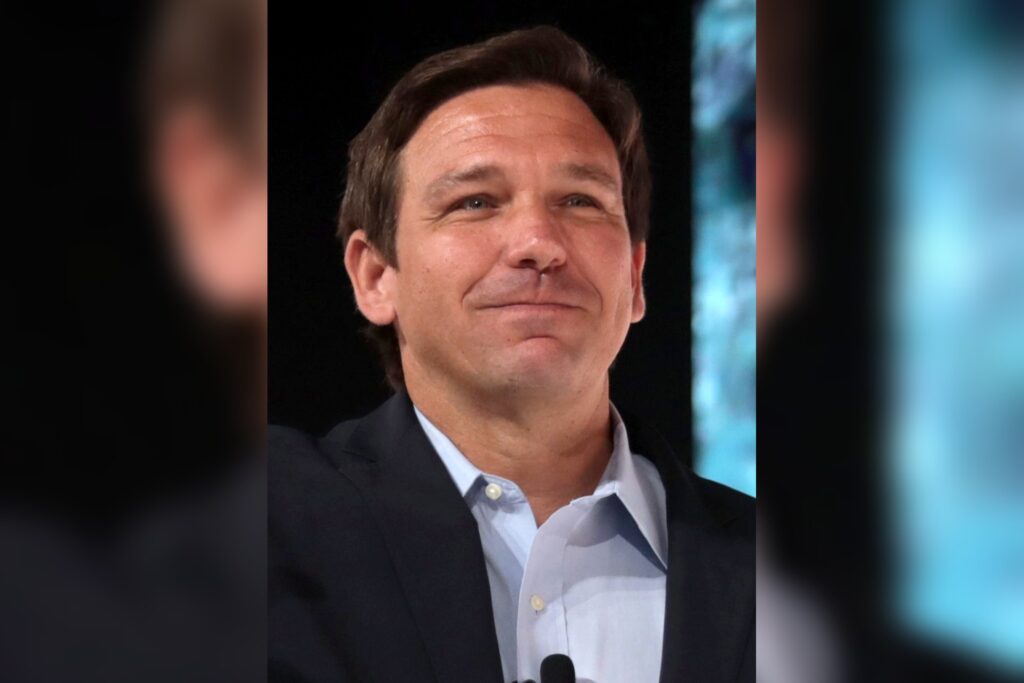
The bottom line first: one model bill, released in 2023 by the Manhattan Institute for Policy Research, has since resurfaced in anti-DEI legislation introduced in at least 10 states with nearly identical language. The newest landing spot is Florida, where Gov. Ron DeSantis signed a bill in April 2026 blocking every local government in the state from putting money into DEI-related initiatives. Advocates warned the move menaces nondiscrimination ordinances, local pride events and a range of services, and some labeled the measure a “pride ban”. The law’s definition of DEI is adapted from the institute’s model bill.
The Institution Behind the Text
The Manhattan Institute, a conservative think tank formed in 1978 and seated in New York City, made its name championing Reaganomics. Funded primarily by conservatives on Wall Street, it reported over $30 million in net assets in its most recent tax filings, and it has shaped conservative policy for nearly 50 years through model legislation and reports aimed at lawmakers and lobbyists. Since 1990 it has published City Journal, which draws more than 350,000 monthly online visitors.
Paul Singer, the hedge fund Elliott Management’s founder and a major conservative donor, took the chairman’s seat on the board of trustees in 2008 and pushed the institute further right through the 2010s. Bloomberg later reported he wanted it to become a “Wall Street equivalent of the Federalist Society”. Initially opposed to Donald Trump, Singer warmed to him after the 2016 election, which delivered his firm more than $42 million as private prison stock prices spiked. “I want to thank Paul Singer for being here. … He was a very strong opponent and now he’s a very strong ally,” Trump said at a 2017 press conference. Figures from the first Trump administration, among them William Barr and Betsy DeVos, were later appointed to the institute’s board.
The 2020 Pivot and the Universities
Before the 2020s, undercutting LGBTQ rights was not a Manhattan Institute focus. The murder of George Floyd, the DEI programs that followed, and the conservative backlash changed that, and the institute melded that frustration with existing anti-LGBTQ sentiment under the banner of anti-wokeness. Its instrument was Christopher Rufo, hired as a senior fellow in 2021 after his City Journal advocacy helped prompt Trump’s executive order ending racial sensitivity trainings for federal employees. His 2023 model legislation to ban DEI at public universities was adopted, often verbatim, in states from Texas and Iowa to Mississippi, Missouri, Oklahoma, South Carolina, West Virginia, Pennsylvania and Arizona.
Several states copied the model’s DEI definition word for word: “any effort to promote differential treatment of or provide special benefits to individuals on the basis of race, color, or ethnicity.” Documents obtained by American Oversight show DeSantis’ office communicated directly with Rufo about the model legislation, with one email introducing the governor’s director of external affairs as a “friend of the movement.” DeSantis also appointed Rufo to the New College of Florida board of trustees in 2023, where Rufo wrote that 36 left-wing faculty members resigned in his first few months of leadership.
The Calculus on Schools
Why the campaign works, in the reading of University of Missouri psychologist Quinnehtukqut McLamore: “Attacking LGBTQ rights is an effective strategy because bluntly, people don’t like gay people and don’t like trans people,” she told Uncloseted Media. The institute’s K-12 focus serves an older goal, discrediting public schools and the unions behind them. “To get universal school choice, you really need to operate from a premise of universal public school distrust,” Rufo said in a 2022 Hillsdale College speech, and elsewhere urged supporters to “lay siege to the universities, abolish the teachers unions, and overturn the school boards.” The figure that matters for the map ahead: since the model bill’s 2023 release, 10 state legislatures have introduced bills carrying its language, with Florida’s April 2026 law the latest to enact its approach.




