
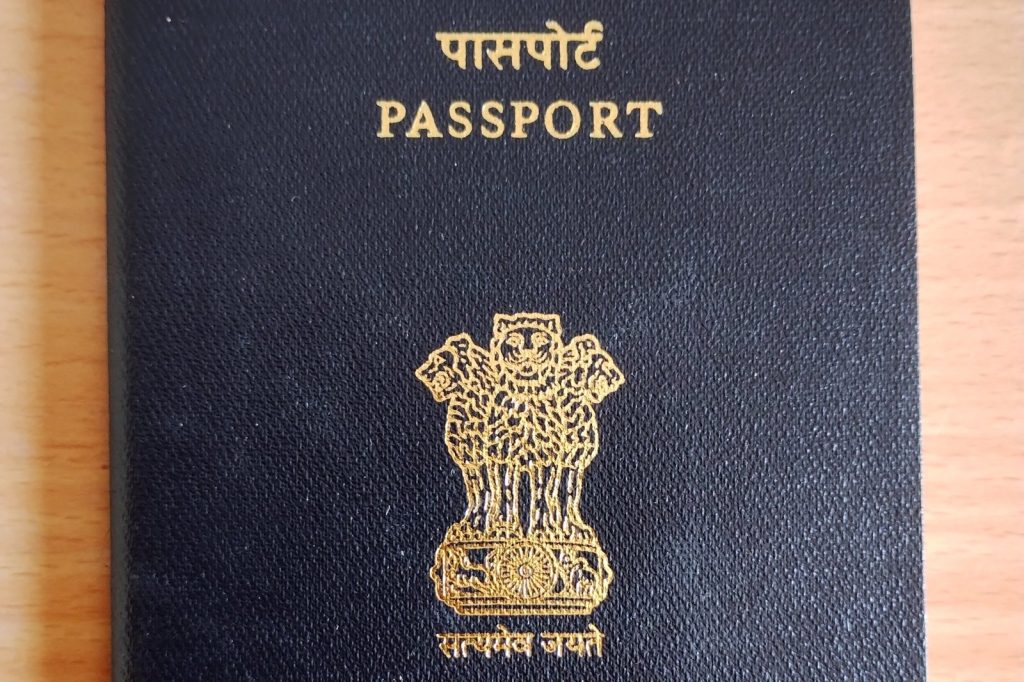
“It was not decided yesterday that the passport is not a proof of citizenship. The passport has never been a proof of citizenship.” That was the government’s answer on June 25, a day after India’s Ministry of External Affairs said a passport is a travel document and not conclusive proof of citizenship.
The June 24 statement was made during the 14th Passport Seva Divas observance. A ministry spokesperson said the passport exists to “regulate the departure from India of citizens of India.” Government sources said the next day that the position reflects long-standing law, and Gulf News reported officials saying there had been no change in policy, nor any such decision in the past 12 years.
The legal basis
Officials pointed to Section 20 of the Passports Act, 1967. It allows the Central Government to issue a passport or travel document to someone who is not an Indian citizen when it considers this necessary in the public interest. Because non-citizens can lawfully hold one, the document cannot prove citizenship by itself.
They also cited a 2013 Bombay High Court judgment, along with later rulings, holding that a passport is prima facie evidence of nationality for travel but that citizenship must be decided under the Citizenship Act, 1955. The Supreme Court said in August 2025 that Aadhaar is an identity document, not proof of citizenship. Voter ID and PAN cards serve as residence and tax identity papers.
Politics
Opposition leaders pushed back. Kapil Sibal and Mahua Moitra asked which document an ordinary citizen should produce if a booth-level officer or agency challenges their status. Sibal also warned that doubts over citizenship could affect voting rights.
BJP leader Amit Malviya said no new rule had been introduced. The ministry had restated a position already set by law and the courts, he argued, and citizenship is supported by birth records, school certificates, electoral rolls, land records and other papers rather than one document.
What people actually hold
People who gained citizenship by registration or naturalisation have direct proof: a Certificate of Registration of Citizenship, a Certificate of Naturalisation or a Citizenship Certificate from the Ministry of Home Affairs. Most Indians are citizens by birth under Section 3 of the 1955 Act, and no universal certificate exists for them. VisaVerge’s example is a man born in Andhra Pradesh in 1964 with no birth certificate. He has school and college records, Central Government service records, a Pension Payment Order, a CGHS card, a passport, voter ID, Aadhaar and a driving licence. None settles the matter alone, the outlet wrote. Together they make the case.
Many older Indians lack birth certificates because births in villages were often not registered. Minor date-of-birth differences in school records ordinarily do not matter if both dates fall in the same statutory category.
Abroad
U.S. Citizenship and Immigration Services accepts a valid foreign passport as evidence of nationality, but requires a birth certificate to prove birth and parentage. Where one is unavailable, a Non-Availability Certificate plus secondary evidence such as school and census records is needed. The State Department still requires a valid Indian passport for visa issuance.
VisaVerge also noted that the Citizenship (Amendment) Rules, 2026, notified on May 1, moved Overseas Citizen of India applications to an electronic portal.
Sources
- Is Indian Passport Proof of Citizenship? 2026 Govt Clarification
- India government clears air on passport-citizenship debate, cites law and court rulings




