View original document (1.0 MB)
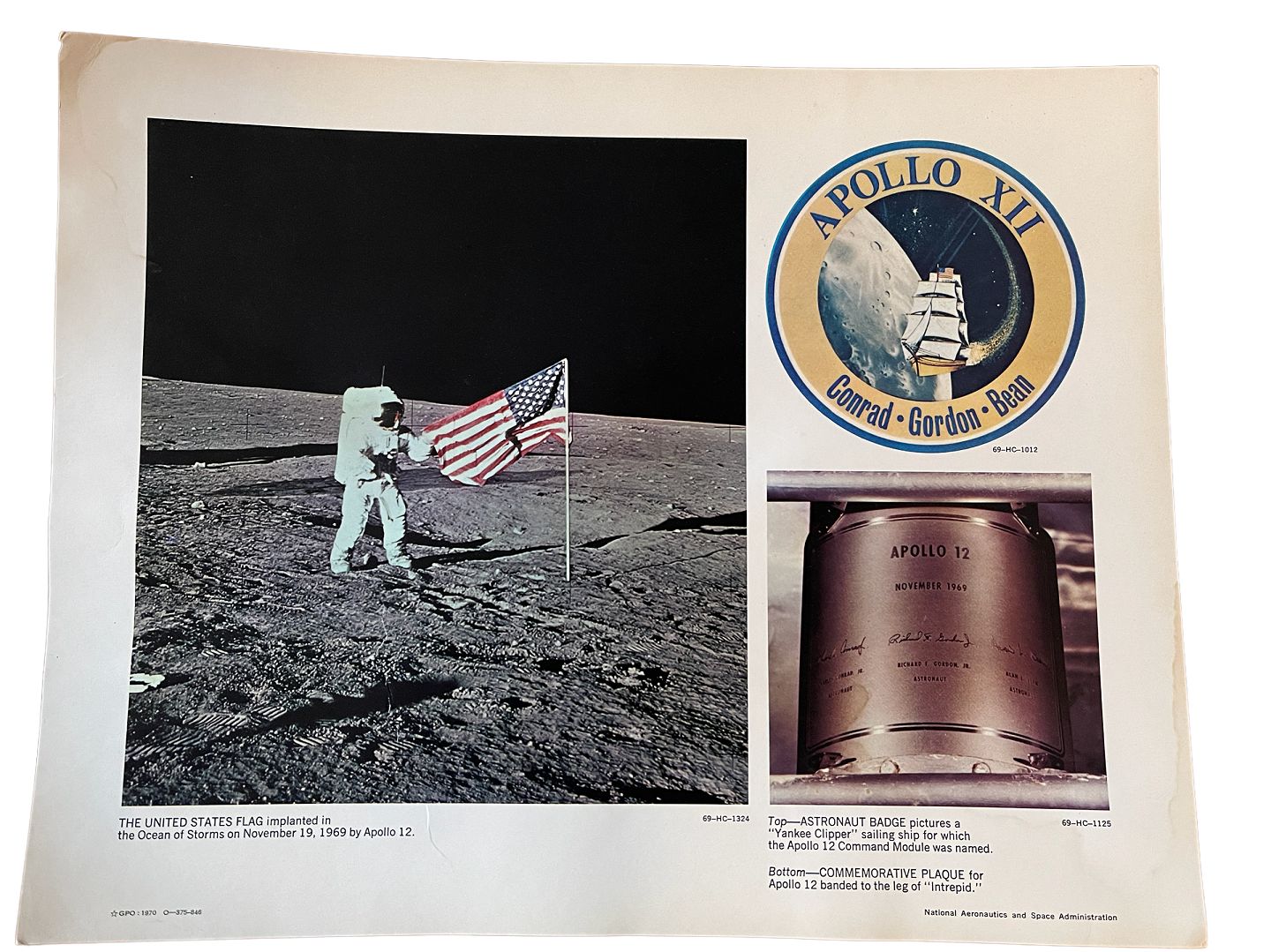
Newly released NASA documents from the Apollo 12 mission, made public through the Department of War’s PURSUE archive, reveal that astronauts observed unusual lights and debris near the Moon in 1969. According to the NASA document, titled “NASA-UAP-D1, Apollo 12 Transcript, 1969,” and released on May 8, 2026, the transcript details two specific periods during the mission where flight crew reported unidentified phenomena.
The document’s official summary describes Apollo 12 as the fourth crewed U.S. mission to the Moon and the second to land astronauts on the lunar surface. It highlights a one-hour period on the fifth day and a two-minute period on the sixth day of the mission. These transcripts, the summary notes, “contain contemporaneous observations by the flight crew reacting to unidentified phenomenon.”
Day Five: ‘Escaping the Moon’
On the fifth day of the mission, at 05:19:27:25, Lunar Module Pilot Astronaut Alan L. Bean reported seeing particles and flashes of light through the onboard Alignment Optical Telescope (AOT). According to the transcript, Bean stated: “When you look out the AOT in the dark quadrant? You can see these lights – particles of light. flashes of light just seem to come from – in this case, I’m looking in quadrant 1 which is the left one. It’s coming from behind me, the left, and they’re just sailing off in space.”
Bean further characterized the phenomenon, saying, “I was thinking they’re dropping from my water boiler. but it looks like some of those things are escaping the Moon. They really haul out of here and just press off at the stars.” The ground control in Houston responded with a simple “Roger.” The official summary notes that Bean described these particles as “escaping the Moon.”
Later in the same hour, at 05:20:09:34, Bean reported an additional anomaly involving the spacecraft’s onboard computer system. He told Houston, “Got sort of an interesting thing going on AGS right now. I didn’t notice earlier, but it may just be because the lights are brighter now. I’m getting an all 8’s flash on both the address and the information registers at about one-fifth the brilliance of the normal numbers. And a – It’s pulsing every second.” Ground control acknowledged the report, and a controller noted that he and another individual had “both seen that phenomena on your DEDA during testing.”
Day Six: Burnt-Out Tracking Light
On the sixth day of the mission, Mission Commander Charles “Pete” Conrad described observing floating debris outside the lunar module. The transcript shows that at 06:00:21:51, Conrad assessed that the module’s onboard tracking light had burnt out because he could no longer see the debris. The official summary states that the debris had been illuminated by the tracking light, and Conrad concluded the light had failed based on the disappearance of the visual sighting.
The record’s official summary offers limited detail beyond the transcript excerpts, noting only that these were two periods in which astronauts reported observing unidentified phenomenon. The document does not provide any NASA conclusion about the nature of the lights, particles, or debris.
Per a Wikipedia summary of the NASA Unidentified Anomalous Phenomena Independent Study Team, the agency convened a panel of sixteen experts in 2022, chaired by David Spergel, to recommend a roadmap for the analysis of unidentified anomalous phenomena (UAPs) by NASA and other organizations. This context underscores NASA’s ongoing institutional interest in analyzing such reports, though the Wikipedia entry does not directly address the Apollo 12 transcript or its contents.
The transcript itself is a technical air-to-ground voice transcription from November 1969, and the document is part of the PURSUE archive, which is managed by the U.S. Department of War. The original PDF is available at the government website war.gov.
What remains unanswered is whether NASA or other agencies have ever conducted a formal analysis of the Apollo 12 crew’s observations. The document does not include any follow-up investigation, nor does it provide an explanation for the flashing lights on the computer display or the debris outside the module. Readers should watch for future PURSUE releases, which may include additional Apollo-era transcripts or analyses that could shed further light on these decades-old reports.