
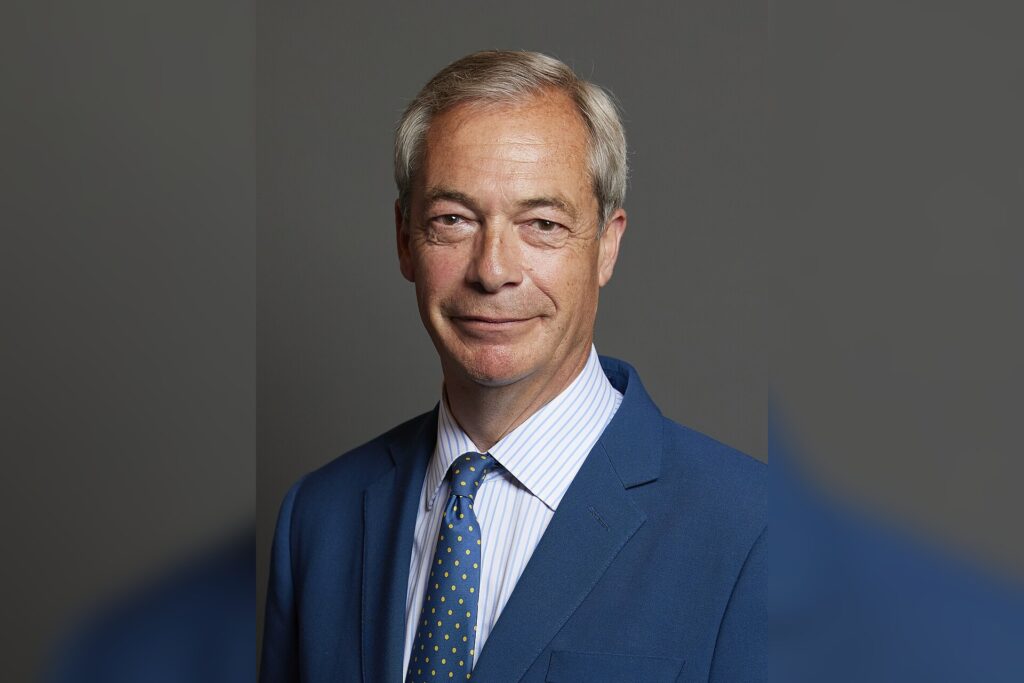
George Cottrell’s nickname is “Posh George.” He served eight months in a US prison for agreeing to launder money for drug traffickers in an FBI sting. Now the 32-year-old cryptocurrency investor is at the center of a complaint that could cost Nigel Farage his seat in Parliament. The Reform UK leader has been referred to the Parliamentary Commissioner for Standards.
Liberal Democrat MP Josh Babarinde filed the referral on Sunday. The accusation is straightforward: Farage failed to declare gifts from Cottrell during the 2024 general election campaign.
Security services. Social media support. Accommodation.
All provided by a convicted wire fraudster who once served as Farage’s chief of staff at UKIP. Babarinde made his letter public on X.
The text is blunt. “Given the value and nature of the support described, there is a serious question as to whether Mr Farage met his obligations under the Code of Conduct for MPs.” He added: “This is not an isolated concern.” It is not isolated because Farage is already under a separate standards investigation. That one concerns a five-million-pound donation from another cryptocurrency source.
The watchdog now has two active cases involving the same MP. Farage called the referral an “establishment hit job.” He released a statement Sunday evening insisting no rules were broken. “I have done no wrongdoing, followed the rules and I am now considering legal action against the Sunday Times,” he said.
The Sunday Times originally broke the story about Cottrell’s assistance. The stakes here are concrete.
The Parliamentary Commissioner for Standards can recommend suspension from the House of Commons. A suspension of ten sitting days or more triggers a recall petition in the MP’s constituency. If enough voters sign, a by-election follows.
Farage could lose his seat. Cottrell’s history makes the case politically toxic.
He was caught in an FBI sting operation. He pleaded guilty to wire fraud. The charge stemmed from his agreement to launder money for people he believed were drug traffickers.
They were federal agents. He served eight months. Then he returned to British politics and became Farage’s right-hand man.
Farage has stood beside Cottrell for a decade. The younger man was visible during the 2024 campaign.
He provided security. He provided housing. He ran social media.
All undeclared, according to the complaint. The Code of Conduct for MPs requires disclosure of any financial benefit or material support that could reasonably be seen as influencing parliamentary conduct.
The threshold is not high. A free hotel room counts. A security detail counts.
Social media management counts. The question for the commissioner is whether Cottrell’s bundled assistance crossed that line. Babarinde thinks it did.
His letter frames the issue as one of control. “He is not being straight with the British people about who controls him,” the MP wrote.
That language is pointed. It suggests Farage’s judgment is compromised — not just his paperwork. Farage faces two separate standards investigations.
Both involve cryptocurrency money. Both involve failures to declare.
The first involves a five-million-pound donation. The second involves a convicted felon’s in-kind support. Together they paint a picture of an MP whose financial ties are opaque at best.
The commissioner will now decide whether to open a formal investigation. If she does, Farage will have to produce records. He will have to explain why Cottrell’s help went undeclared.
He will have to convince the watchdog that no rules were broken. His statement Sunday suggests he intends to fight.
Legal action against the Sunday Times is on the table, he said. But legal action against a newspaper does not stop a standards investigation. And a second probe, on top of the first, raises the pressure.
One investigation can be dismissed as a mistake. Two investigations look like a pattern.




