
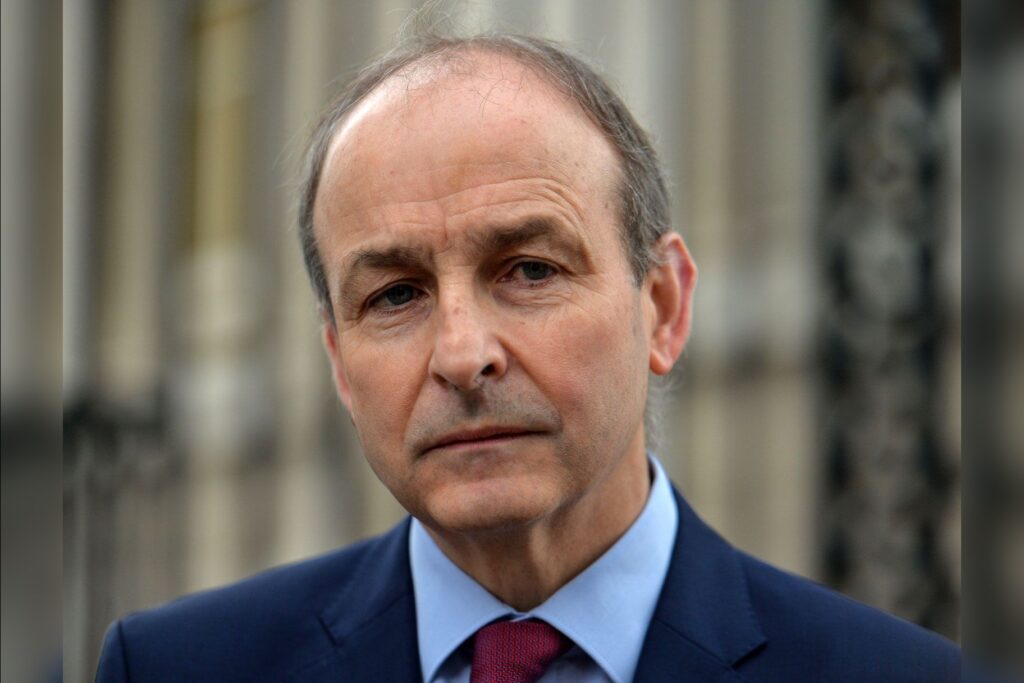
A sharp exchange in the Dáil today laid bare the divide between the Government and opposition over whether Ireland is truly pursuing a health-led response to drug use. Taoiseach Micheál Martin and Social Democrats leader Holly Cairns disagreed on the direction of current policy, with Cairns pressing the coalition to commit to a key recommendation from the Oireachtas Committee on Drug Use: decriminalising possession of all drugs for personal use.
Clash Over Decriminalisation and Drug Deaths
Cairns raised the committee’s 161 recommendations during the session and challenged Martin directly on the Government’s next steps. “Someone dies from a drug overdose every day,” she said.
“Drug deaths in Ireland are three times the EU average.” She asked whether the Government would set aside the committee’s work or incorporate its call for decriminalisation into the forthcoming national drugs strategy. Martin pushed back, arguing that the Government has been steering a health-centred course for a quarter of a century. “The focus has been a health-led one,” he said. He pointed to a significant funding increase: the coalition has raised Department of Health spending on drug-related programmes by €54 million to €174 million over the last seven to eight years.
The Government will assess the full set of committee recommendations through discussions involving the Departments of Health and Justice, he added. Cairns was not persuaded.
She said she “respectfully disagreed” that the coalition had genuinely moved toward a health-led approach, suggesting that the Government’s actions have not matched its rhetoric.
Political Landscape Shifting on Drug Policy
Labour’s Aodhán Ó Ríordáin, a former minister of state for drugs, weighed in with a view that the political moment has arrived for decriminalisation. He noted a marked change from previous years, when a general election debate between Fianna Fáil and Fine Gael on the subject was deeply divisive.
That dynamic, he said, has given way to a much more cross-party consensus. “This is about people, not about drugs,” Ó Ríordáin said. “If you have someone affected by drugs, do you want them to interact with a doctor, a nurse or a counsellor…” His comments underscored a broadening view among lawmakers that the criminal justice system should not be the primary response to personal drug use and that public health interventions offer a more effective path.
The disagreement in the Dáil reflects a wider debate over how Ireland balances law enforcement, public health, and individual rights. The Oireachtas committee’s recommendation to decriminalise possession for personal use would represent a major policy shift if adopted, but the Taoiseach’s insistence on a health-led approach implies continued caution about moving to full decriminalisation.
The Taoiseach’s Role and What It Means for Policy
At the heart of this dispute is the office of the taoiseach, Ireland’s head of government and prime minister. The title, drawn from an Irish word meaning leader or chief, was formally adopted into the national constitution in 1937.
The process of choosing a taoiseach involves the lower house of the legislature: members of Dáil Éireann nominate a candidate by a simple majority, and the president then formally appoints that person to the office. To stay in power, the taoiseach must retain the support of a majority in the Dáil. If that support evaporates, the taoiseach must either resign or call a general election.
The taoiseach holds significant authority over the executive branch, including the power to nominate other government members and advise the president on dismissing cabinet ministers. The current office holder took power in 2025 after a general election and a subsequent agreement between political parties and independent members.
This role is consequential because the taoiseach directs the national strategy and manages the cabinet; decisions made by the office holder affect how the state handles public health, justice, and law enforcement. Moreover, the taoiseach’s ability to maintain a legislative majority determines whether new policies—such as the decriminalisation recommended by the committee—can be passed into law. As the Government reviews the 161 recommendations, the clash in the Dáil signals that the question of how Ireland treats people who use drugs will remain a central political issue in the months ahead.
With drug deaths running three times above the EU average, pressure on the Taoiseach to show tangible results from the claimed health-led approach is unlikely to fade.
{“@context”: “https://schema.org”, “@type”: “NewsArticle”, “headline”: “Opposition presses Government on drug decriminalisation amid death crisis”, “description”: “DUBLIN, June 24 — A sharp exchange in the Dáil today laid bare the divide between the Government and opposition over whether Ireland is truly…”, “datePublished”: “2026-06-24T09:30:00+00:00”, “author”: {“@type”: “Person”, “name”: “Henry Thomas”}, “publisher”: {“@type”: “Organization”, “name”: “InfoPulse Today”, “url”: “https://newsfeed.infopulsetoday.com/”}}




