
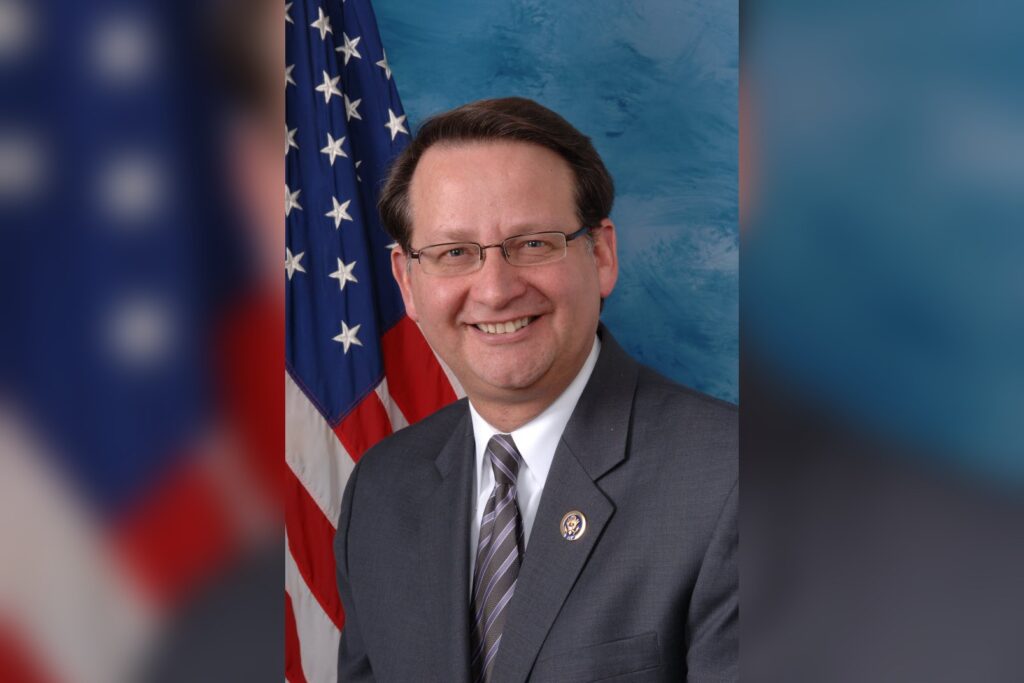
Gary Peters once meant to be a professor. He was working toward a doctorate in political philosophy at Michigan State when politics pulled him away, first into local and state office and then into nearly two decades in Congress. Now he is going back.
After his Senate term ends in January, the Michigan Democrat will direct the Center for the Political Future at the USC Dornsife College of Letters, Arts and Sciences and hold the Carmen H. and Louis Warschaw Endowed Chair in Practical Politics. Robert Shrum, the center’s founding director and the current chair holder, retires at the end of 2026. Republican strategist Mike Murphy stays on as co-director, which makes the center, USC believes, the only university political center in the country led jointly by a Democrat and a Republican.
A record to bring along
Peters is in his second Senate term after three in the House. The nonpartisan Center for Effective Lawmaking ranked him the most effective senator in each of the last three Congresses, and he first took the top spot while his party was in the minority, which no senator had done in more than 50 years. In the 117th Congress he authored 19 bipartisan stand-alone bills that became law, the most by any senator in a single Congress in over four decades.
Republican Sen. Rick Scott of Florida, who sat with him on the Homeland Security and Governmental Affairs Committee, called him “a consistent, bipartisan partner who was always willing to work across the aisle.” Murphy put it his own way: “Gary Peters is that rare thing: a principled politician who also knows how to get things done.”
Peters calls the move “a capstone of my years in public service.” He says too many young people see politics as toxic, and he wants to draw in students from every field at USC, not only the ones who already think of themselves as political.
Building in Washington
Los Angeles stays the center’s home, but Peters will split his time between there and Washington, teaching on both USC’s main campus and its Capital Campus. Expanding the center’s presence in the capital is his biggest ambition. “I would like to help bridge the gap between academia and practical policymaking in Washington,” he said, adding that he wants to bring professors from many fields to D.C. so their ideas can reach policy.
He is no stranger to classrooms. Before Congress he spent more than 20 years in the private sector, at Merrill Lynch and then UBS/PaineWebber, and taught strategic management and finance at Oakland University and Wayne State University. He also served as a Navy Reserve lieutenant commander, a city councilman and a Michigan state senator, and held an endowed chair in American government at Central Michigan University.
USC Dornsife Dean James Bullock said Peters has shown “you can hold strong political convictions and still work productively with people who see the world differently.” Peters expects to take something from the job too: “I expect to learn from them, too.”
Sources
- U.S. Sen. Gary Peters to lead USC Dornsife’s Center for the Political Future, named Warschaw Chair
- U.S. Sen. Gary Peters to lead USC Dornsife's Center for the Political Future




