
On July 8, 2025, Harvard University received three immigration subpoenas from Immigration and Customs Enforcement. They concerned international students. Each one asked Harvard to keep quiet. The next day, the Department of Homeland Security put out a press release celebrating the very enforcement action Harvard had just been told to keep secret.
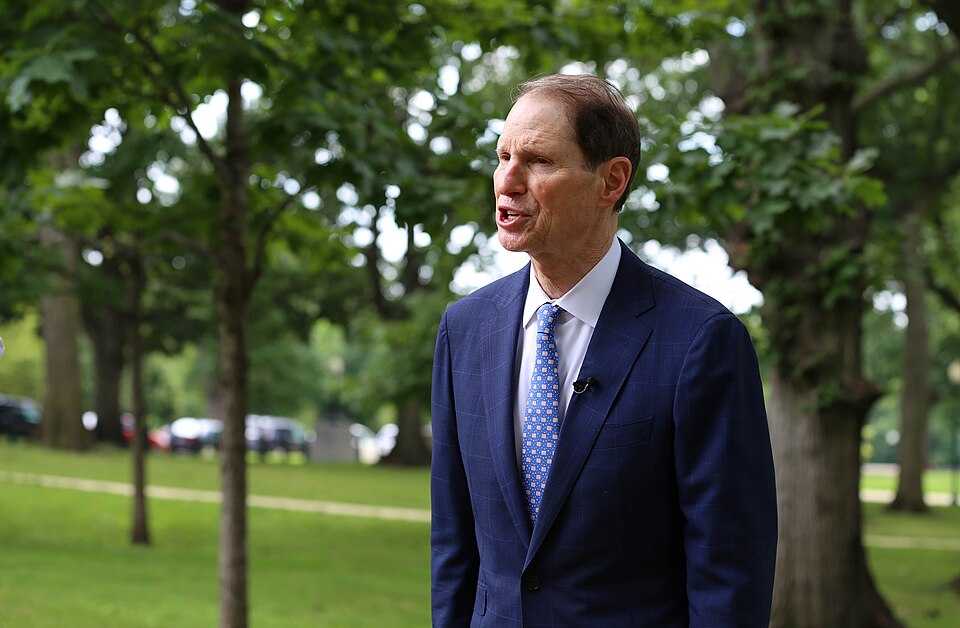
Senator Ron Wyden, an Oregon Democrat, and Representative Pramila Jayapal, a Washington Democrat, now use that episode as exhibit A. In a September 1, 2026 letter to Chief Justice John Roberts and Orice W. Brown, the acting comptroller of the Government Accountability Office, they asked for an audit of how federal agencies write secrecy demands into subpoenas.
Only a court can order silence
The lawmakers’ argument rests on a simple point of law. Agencies can compel companies to hand over customer records through administrative, grand jury and trial subpoenas, and none of those needs a judge’s prior approval. But the power to gag the recipient belongs to courts. Without a court order, or a specific statute such as 18 U.S.C. § 1510(b)(2) or 12 U.S.C. § 3420(b)(1), the recipient keeps a First Amendment right to tell its customers, according to the letter as summarized by the law firm Crowell & Moring.
“While these secrecy demands carry no force of law, their coercive effect is extremely successful,” Wyden and Jayapal wrote. Customers, they said, are left “entirely in the dark” about government access to their personal data.
Boilerplate across agencies
The letter names ICE, the Drug Enforcement Administration and the Department of Justice. ICE routinely asks for indefinite silence in its administrative subpoenas, including customs summonses and immigration subpoenas. Justice Department letters accompanying grand jury subpoenas often tell recipients not to “disclose the existence of this subpoena or the fact of your compliance for a period of 90 days,” and warn that disclosure “could seriously impede the investigation.”
Grand jury witnesses and subpoena recipients are not covered by the secrecy rule in Federal Rule of Criminal Procedure 6(e)(2), the letter points out. Courts have said as much. In 2011 the Third Circuit called the practice of putting nondisclosure requests on every grand jury subpoena “not a good policy.” In 2015, Judge Raymond Dearie of the Eastern District of New York found that prosecutors had printed a direct order of silence on the face of grand jury subpoenas, held that this violated Rule 6(e)(2), and warned that further violations “could well warrant severe remedies.” The letter also alleges that some agencies softened commands into nominal “requests” after court pushback, without telling recipients when they are free to speak.
What the lawmakers want
They asked the GAO for a comprehensive audit of the Justice Department, Homeland Security and their component agencies, including the DEA, ICE and Homeland Security Investigations. The audit would examine internal operations and produce recommendations on the use of nondisclosure language. They also asked the Judicial Conference to revise standard subpoena templates so they state plainly that the recipient owes no secrecy unless a court order or statute demands it.
Crowell & Moring, in a client alert dated September 21, 2026, told companies to treat such boilerplate with caution and to consult counsel when unsure. No legislative reform is currently proposed, the firm noted.
Sources
- Wyden and Jayapal Call for GAO Investigation of DHS Surveillance; Courts Must Protect Public from Subpoena Abuses and Government Intimidation Tactics Used to Keep Surveillance of Americans Secret – Co
- Congressional Letter Challenges Unenforceable Nondisclosure Language in Federal Subpoenas | Subpoena Response 2026 | Crowell & Moring LLP




