
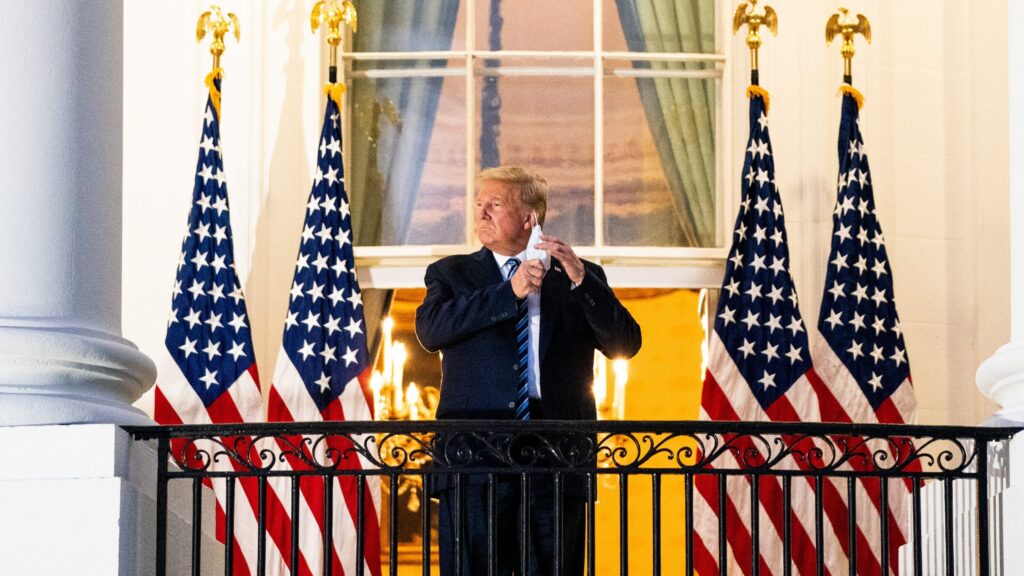
President Donald Trump used a White House press briefing on August 19, 2020, to encourage Americans to wear masks when social distancing was not possible, a notable departure from his previous public statements on the issue. The address came as the coronavirus continued to spread widely across the United States, with tens of thousands of new infections reported each day.
During the briefing, the administration acknowledged that earlier guidance had been shaped by concerns about preserving mask supplies for healthcare workers. Officials now argued that the current situation made widespread mask use a necessary tool for controlling the outbreak. The President’s remarks followed months of inconsistent signals from the White House about the effectiveness of face coverings.
Throughout the summer of 2020, members of the White House Coronavirus Task Force had consistently advised the public to wear masks in crowded settings. Dr. Anthony Fauci, Dr. Deborah Birx, and CDC Director Dr. Robert Redfield all urged compliance with mask protocols.
However, President Trump had frequently disregarded this advice at public rallies and in television interviews. In a Fox News interview that aired shortly before the briefing, Trump expressed doubt about universal masking, stating he did not agree that if everyone wore a mask, the virus would disappear immediately. This position contrasted with comments made earlier that week by Dr. Redfield, who suggested that if everyone wore masks, the outbreak could be brought under control within one to two months.
Federal Guidance vs. State Authority
Despite endorsing mask usage, President Trump declined to issue a national mandate requiring face coverings in public spaces, leaving the decision to state and local officials. This created a patchwork of requirements across the country, with some governors issuing mask mandates and others refusing to do so. Political tensions over the issue led to legal disputes, including a lawsuit filed by Georgia Governor Brian Kemp against Atlanta Mayor Keisha Lance Bottoms over her mask mandate.
Administration officials intensified their calls for compliance during this period. Assistant Secretary for Health Adm. Brett Giroir stated that closing indoor bars and getting approximately 90 percent of Americans to wear masks in public would effectively stop the outbreak.
This strategy mirrored approaches used by other nations that had implemented strict mask mandates earlier in the pandemic.
Rising Case Numbers Drive Urgency
The urgency of the President’s message was underscored by data released around the time of the briefing. According to a CNBC analysis of Johns Hopkins University data, the virus had infected more than 66,550 people in the U.S. daily over the previous seven days on average, an increase of more than 8 percent compared with the previous week. Cases were rising by at least 5 percent on average in 34 states and the District of Columbia. Deaths had also been steadily increasing nationally, driven by several hot-spot states where hospitalization rates were climbing.
President Trump emphasized that his continued involvement in coronavirus press briefings was necessary as infections persisted. He called on young Americans to avoid packed bars and crowded indoor gatherings.
The administration urged citizens to wash hands frequently, protect high-risk populations, and practice vigorous hygiene. The President framed wearing a mask not just as a health precaution but as a patriotic duty in combating what he termed the “Invisible China Virus.” The August 19 briefing represented a critical moment in the national pandemic response. While the President maintained some skepticism about specific claims regarding masks eliminating the virus entirely, he ultimately aligned himself with the advice of medical experts and federal health officials as case numbers surged and the administration sought strategies proven effective elsewhere.




