
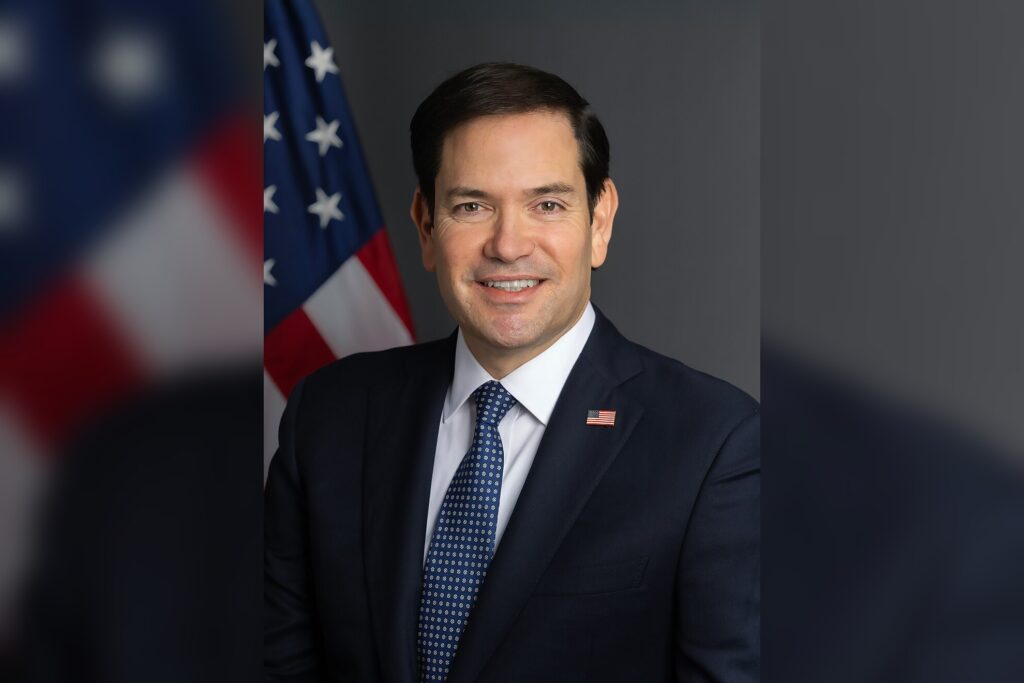
Marco Rubio was standing next to Donald Trump at Mar-a-Lago when US special forces swept into Venezuela on a Friday night in early January 2026 and captured Nicolás Maduro. Trump watched the raid unfold from the de-facto Situation Room his Florida estate had become, and his secretary of state, who also serves as national security adviser, was one of the few people at his side.
Hours later Trump said he was tasking Rubio, along with other key officials in the room, to help “run” Venezuela. CNN called the pronouncement vague, one that raised more questions than it answered but underscored how central Rubio had become.
A small circle
For Rubio, the son of Cuban immigrants whose career grew out of South Florida, home to thousands of Venezuelans who fled Maduro’s rule, it was a moment years in the making. Sources told CNN he had long had Maduro in his sights. In the months before the operation he huddled at the White House with Stephen Miller, Trump’s deputy chief of staff, to draft the strategy.
The day-after planning took place largely in Miller’s office, an odd home for it given his domestic focus. Sources said it was chosen because of Miller’s close bond with Rubio and the wish to keep the circle small in an administration wary of leaks.
The two men had not always agreed. Miller first saw Venezuela as a place to send deportees, while Rubio pushed economic, political and eventually military pressure. Miller came around once the case against Maduro was framed as a drug trafficker propping up a criminal cartel apparatus. Sources said both men have Trump’s full trust and kept arguing for escalation.
Richard Grenell, who started on the portfolio as an envoy, has been out of the policy work for months, US officials said. Many senior State Department officials have been left out too, and career officials have been largely isolated from the process.
Who is in charge
Neither man has said who the United States wants leading Venezuela long term. Asked about the day-to-day job, Miller said Rubio is the lead. White House press secretary Karoline Leavitt said Rubio is “a team player and everyone loves working with him in the West Wing.”
Rubio spoke by phone with Delcy Rodriguez, the Maduro acolyte now serving as interim president, after the capture, Trump said, and a White House official said there had been several more conversations since. Trump told NBC the two speak Spanish.
The framework Trump and Rubio have described is economic coercion built on choking off oil revenue. “That’s a tremendous amount of leverage that will continue to be in place,” Rubio said on Sunday of the oil quarantine, “until we see changes that not just further the national interest of the United States, which is No. 1, but also that lead to a better future for the people of Venezuela.” The stated priorities are migration, drugs, oil and removing adversaries’ influence. A democratic transition comes later.
Former officials were blunt about the risks. “There’s a lot about Venezuela that is not easily governed,” one former senior diplomat told CNN. “Trying to impose order on a place that’s larger than Iraq, it’s not an easy thing.” Todd Robinson, the former acting US ambassador to Venezuela, said he hoped the administration had planned it out, then added that “that has not been, I don’t think, anybody’s history with this administration.”
Another former diplomat said the policy process of earlier presidents “doesn’t exist.” No US diplomats are on the ground in Venezuela, though a senior State Department official said the department is preparing for a possible reopening of its embassy if Trump decides to do it. Robinson noted that the dismantling of USAID during Rubio’s tenure leaves no development professionals to call on. The former diplomat said Rubio “is going to have to delegate.”
Criticism at home
Rubio now faces sharp criticism from lawmakers who say he told them the administration was not pursuing regime change or strikes inside Venezuela. He had been the administration’s point man with Congress, leading the briefings on the deadly boat strikes in the Caribbean, and on Monday he briefed key lawmakers on the Maduro operation, which has drawn accusations of violating international law. “Rubio usually does the bulk of the talking,” one congressional aide said. Another called him “competent, polished” and noted that, unlike Defense Secretary Pete Hegseth, who often reads from a paper, he speaks without a script.
As a senator, Rubio regularly called Maduro a “narco-dictator” and urged tougher sanctions. Representative Carlos Giménez, a Florida Republican, tied that to Rubio’s roots: “About 100% of the people in Miami that either come from Cuba or Venezuela or Nicaragua, they’re all looking for freedom.” CNN also reported one shift, with Rubio increasingly distancing himself from the Venezuelan opposition.




