
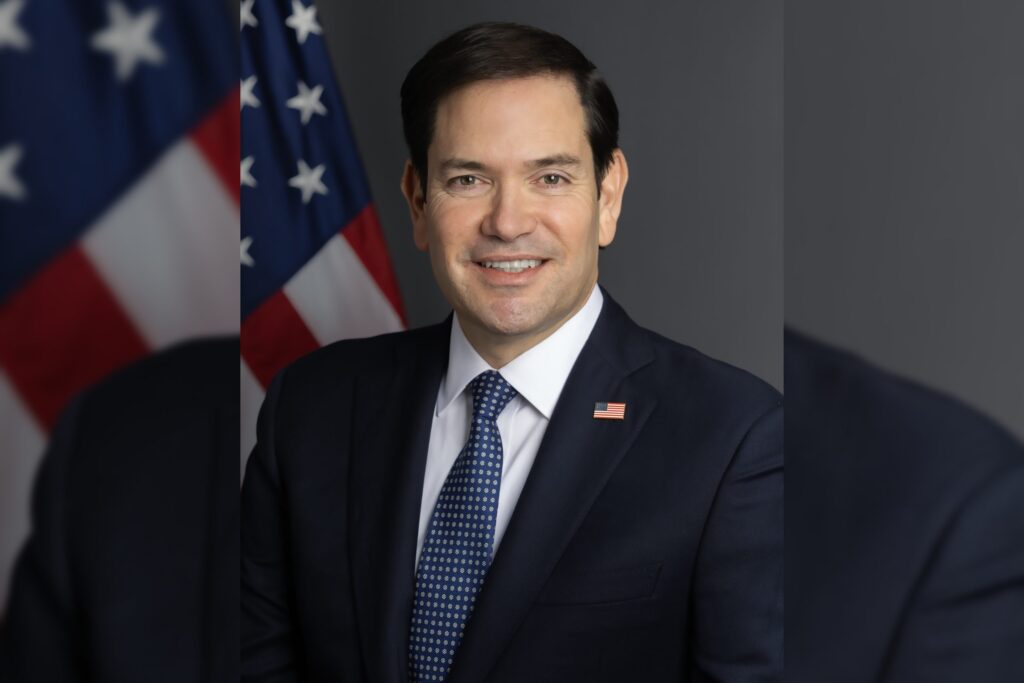
“THE BIGGEST OIL DEAL IN WORLD HISTORY.” That was how President Donald Trump described, on Truth Social late on a Friday in August 2026, an agreement he said puts more than 65 billion barrels of proven Venezuelan reserves under majority US control, “at no cost to the American Taxpayer.”
Trump said Secretary of State Marco Rubio and Defense Secretary Pete Hegseth negotiated it with Venezuela’s interim president, Delcy Rodríguez, and private-sector partners. Rubio called it a win for both countries: steadier, cheaper oil for the United States and billions in private investment for Venezuela. Rodríguez said developing the fields could raise output substantially and help rebuild a battered industry.
How the deal is built
According to the Associated Press, the agreement covers 17 oil fields. A US official told the AP that Washington would partner with a private operator to form a new company holding 100-year development rights. Between an ownership stake and a right to buy oil at cost, the United States would get an effective 55 percent share of the company’s output. Reuters reported that the fields lie in the Orinoco Belt and the Lake Maracaibo region.
Other accounts of the structure fill in the pieces. The Pentagon’s Office of Strategic Capital holds 35% of the new venture, and the United States can buy 20% of output at cost, with the State Department running that arrangement. Venezuela’s interim authorities gave the company, called NABEP, 100-year concessions on 17 fields. Its private owner, Venezuelan businessman Alejandro Betancourt, has agreed to put $100 billion into new oil infrastructure. Betancourt has worked in Venezuelan oil for more than 15 years.
Venezuela says the projects could draw roughly $100 billion in investment and produce more than $209 billion in taxes for the country.
Energy experts quoted in the coverage called the idea of the US government becoming a shareholder in such a venture “extremely unusual.” Unlike Saudi Arabia with Saudi Aramco or Mexico with Pemex, the United States has no national oil company, so it is not clear who would run operations on the ground.
The numbers behind the pitch
The US Energy Information Administration put American proved reserves at roughly 46 billion barrels at the end of 2024. If Trump’s description holds, the Venezuelan volume would exceed that. Venezuela itself holds an estimated 303 billion barrels, about 17 percent of the world’s total, much of it extra-heavy crude that is costly to extract. Yet the country produces only about 1.25 million barrels a day.
The oil would partly refill the Strategic Petroleum Reserve, which has dropped to about 290 million barrels, its lowest since 1982, and supply the US military. Trump is under pressure from high gasoline prices as the midterms approach, with the war with Iran in its sixth month by late August. AAA reported regular gasoline in Maine at $4.12 a gallon, against roughly $3.13 a year earlier.
Cuba, China and Russia
The deal also redraws Venezuela’s customer list. After the capture of Nicolás Maduro in January 2026, Venezuela stopped sending about 35,000 barrels a day to Cuba under barter agreements, and the new framework makes that cut permanent, with the administration citing the Monroe Doctrine. China had bought roughly 470,000 barrels a day from Venezuela during 2025, according to Vortexa, and the arrangement aims to steer that crude to the United States instead. Russia’s Rozneftegazzarubezh, which claimed Venezuelan assets once held by Rosneft, is being sidelined.
Skeptics and critics
Representative María Elvira Salazar of Florida first criticized the deal, calling Rodríguez “the wrong person to sign it” and saying Venezuela was “only buying time.” She later called it “a great deal for the United States and the Venezuelan people,” provided free elections are held. Other analysts compared the plan to a century-old era of colonial-style dealmaking with local oilmen and politicians.
The official text has not been released, and Reuters reported that analysts are asking whether a US-controlled arrangement of this size fits Venezuela’s constitution and recently revised hydrocarbons laws. Administration officials reject the criticism, saying the deal ends a corrupt system that benefited China and Cuba and that stronger economic results will leave an eventual elected government a working country.
Analysts also caution that new output will take years. Infrastructure must be repaired, power and transport capacity expanded, and companies need to be convinced the legal climate is stable enough for billions of dollars.
Sources
- Trump and Rubio Secure Sweeping U.S.-Venezuela Oil Deal — 65 Billion Barrels, Pentagon Equity Stake, and a Geopolitical Bet Against Cuba, China, and Russia
- Trump Announces Sweeping Venezuela Oil Deal, Claims U.S. Will Control More Than 65 Billion Barrels




