
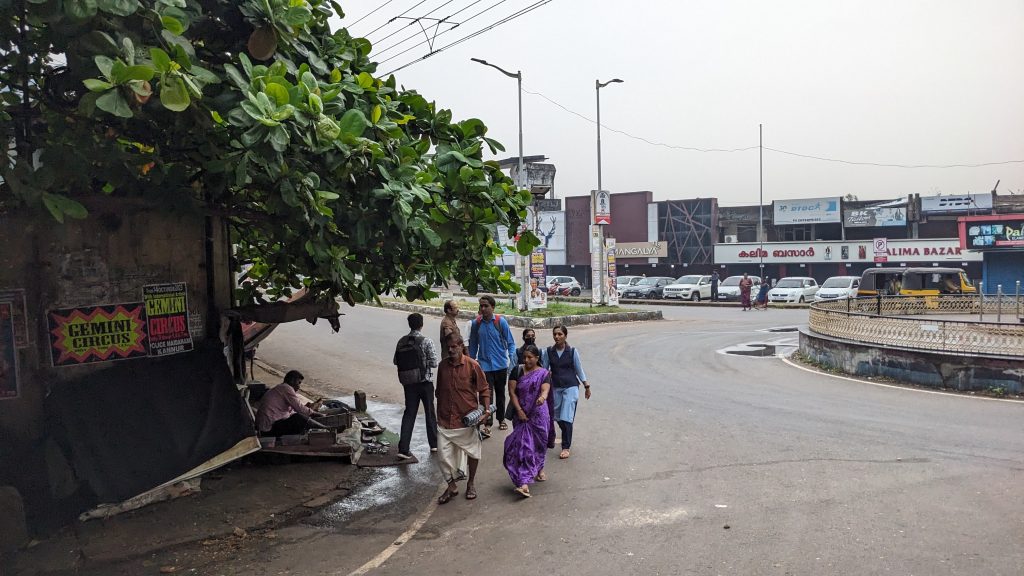
A father in India lost his five-year-old son while walking him to school. The case that followed, a motor accident compensation claim, ended with the Supreme Court declaring something much larger: a fundamental right to walk.
A bench of Justices PS Narasimha and AS Chandurkar ruled on Friday that the right to walk on a demarcated footpath is a fundamental right under Article 19(1)(d) of the Constitution. That right, the court said, is primary and takes priority over movement by motorised vehicles.
The bench read the right as part of the freedom of movement, together with Article 19(1)(a), (b) and (c) and Article 21. “The fundamental right to walk will take within its sweep the right to demarcated footpaths,” it said.
Walkers pushed aside
The judges described how walking lost ground. Wheeled machines were once for the rich, they said, but as economies grew and cheaper vehicles arrived, motor traffic took over the roads and pushed walkers aside, to the point that drivers treat them as a nuisance and routinely run over them and their footpaths. “This should stop from now on,” the bench said.
It also criticized the Motor Vehicles Act, 1988. The act, the court said, has never been the law that recognises the right to walk, and has in many ways undermined walkers’ rights. The lack of safe, comfortable footpaths, and their subjugation to motor transport even where they exist, was called “a civilizational problem.” What the right demands, the bench added, is a comfortable space for an easy and carefree walk.
Who has to build them
The judgment puts the duty on local bodies. Urban development authorities, municipal corporations, municipalities and panchayats must demarcate, construct, maintain and safeguard footpaths and other pedestrian infrastructure, according to Live Law’s account of the ruling. “If the road exists, there is a duty to ensure that there are demarcated and well-maintained footpaths for walkers,” the court held.
Citizens can seek remedies when the right is violated. They may invoke constitutional and legal remedies against those responsible for restitution and compensation, and that route is independent of anything available under the Motor Vehicles Act.
Orders in the case
The court raised the compensation awarded in the accident claim, set aside a high court order that had reduced it, and told that the money be paid to the boy’s father within two months.
It directed its registry to send the judgment to the central ministries and the law commission so a legal framework can be started. The registry was also told to register a separate case titled “Re: Fundamental Right to Walk and Footpath.” The Centre, through the Ministries of Housing and Urban Affairs, Rural Development, and Road Transport and Highways, was made a party. The court asked Additional Solicitor General KM Nataraj to assist.




