
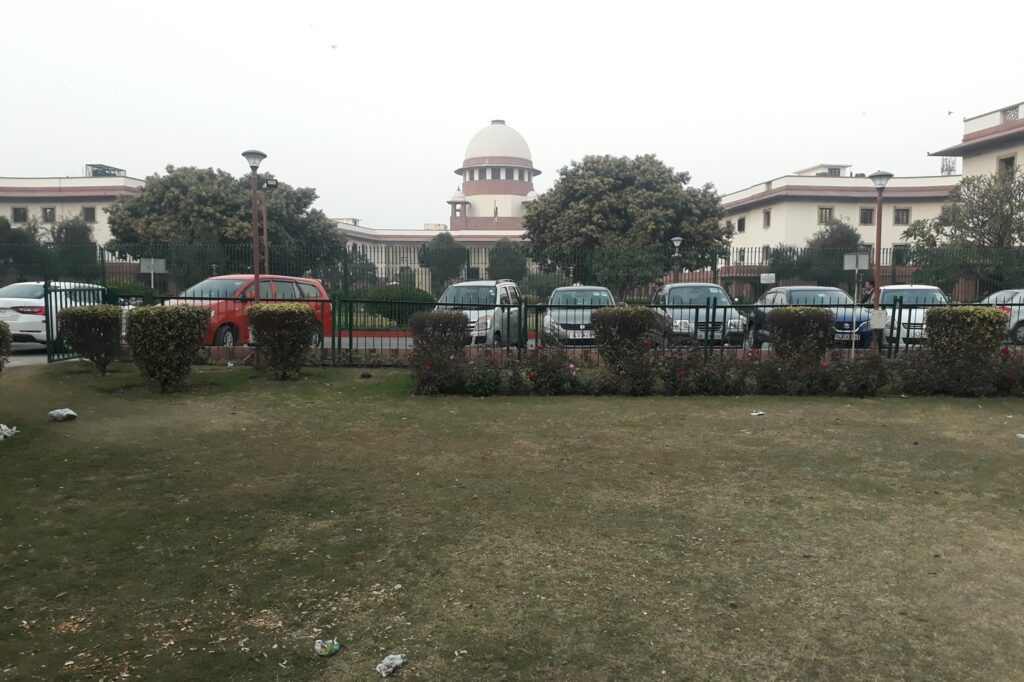
“We have no hesitation in saying that the right to access and use the internet is a fundamental right of every individual.” So held a Supreme Court Bench of Justices J.B. Pardiwala and Vinod K. Chandran, placing the right under Article 21 read with Article 19(1)(a) of the Constitution. Children, the order added, enjoy the same rights irrespective of their age, and to deny them altogether “would be as absurd” as saying people below a certain age have no conscience worth protecting or speech worth expressing.
The judges did not stop at the principle. Safety and freedom, they said, are not at odds. “Our children are entitled to both.”
Why a blanket ban fails
For all the noise around children and screens, the salient point is a practical one. Ban them and they do not leave; they simply go elsewhere. “They continue to use the same, albeit without the knowledge of their parents or the authorities,” the Bench said. “They move to other platforms and websites that are unregulated and even more unsafe.”
There is a second worry. A child who fears punishment for being online is a child less likely to tell a parent, guardian or trusted adult when someone threatens or lures them. That, the court said, would weaken the aims of the POCSO Act. It also doubted that keeping children off social media would, by any stretch, cut the abuse cases that fill the news.
Blanket restrictions, in the Bench’s words, are “nothing more than unproven measures of proven disproportionality”. No jurisdiction has shown that children are safer for them. The court was equally blunt that bans are no substitute for work by intermediaries, law enforcement, the Ministry of Electronics and Information Technology and the courts themselves.
Nor is this a licence for a free-for-all. The Bench said it was not against age-based limits on online access, and accepted that “some form of safeguards” is needed, along with moderation of what reaches children’s screens. It issued directions on protective mechanisms, restrictions drawn from other jurisdictions and grievance channels.
The school behind the petition
The case began with a public interest petition under Article 32, brought by Emerald Heights International School in Indore and its director of academics, Siddharth Singh Girnar. The school, a CBSE-affiliated day-cum-boarding institution, says it has about 4,115 students and stands “in the position of a guardian” to them. It asked the court to direct the Centre to frame an enforceable child-safety regime for social media. Advocates Khusbhu Jain, Mayank Singh Rawat and Zaid Ahmed drew the petition; Advocate-on-Record Vaibhav Choudhary filed it.
Its central complaint was one of inconsistency. Under the IT Rules, 2021, OTT platforms must verify age before showing adult content, and online games face age checks too. Social media does not. “A child cannot lawfully buy liquor, tobacco or acid,” the petition says, yet the same child can open an account with no verification and be contacted by any stranger.
The petition also points to a mismatch in the numbers. The Digital Personal Data Protection Act, 2023 treats anyone under 18 as a child. Platforms, by contrast, work to a self-declared minimum of 13. The school said it sees the effects in its own classrooms and hostels: children arriving sleep-deprived, distracted and unable to concentrate, and some contacted by strangers.
The petitioners asked the court, among other things, to order a dedicated and enforceable regulatory framework for children on social media. The alternative they offered was age-based restrictions on opening and using accounts on designated platforms.
Sources
- Social Media Ban For Children Under 13? Indore School Moves Supreme Court For Age Verification And Parental Consent Rules | Social Media Ban For Children Under 13? Indore School Moves Supreme Court For Age Verification And Parental Consent Rules
- Child Online Safety: Why Internet Freedom Needs Safeguards
- Children have fundamental right to access and use internet: Supreme Court – United States
Photo: Pinakpani (CC BY-SA 4.0)




