
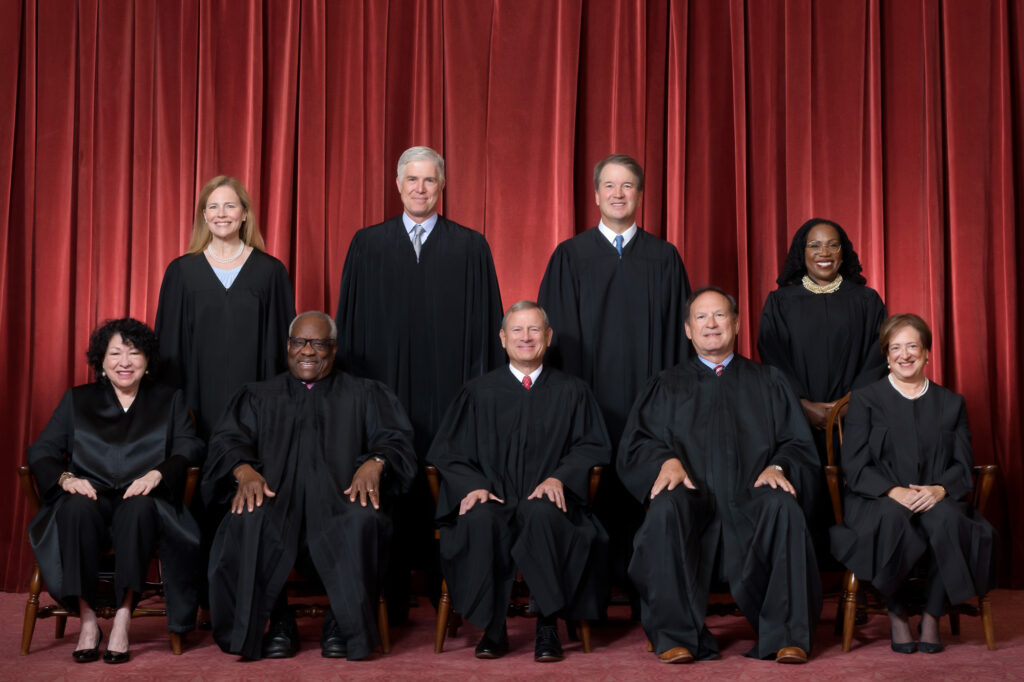
The Supreme Court’s decision in United States v. Texas, No. 24-123, reaffirms the constitutional guarantee of birthright citizenship, a ruling that directly touches the lives of roughly 4 million U.S.-born children of undocumented immigrants. That number, drawn from 2023 estimates, reflects current citizens, not future projections.
These children, who are citizens by virtue of being born on American soil, retain access to key federal benefits including Social Security, education, and healthcare. The Court’s action prevents disruptions that could have placed these families in legal limbo, particularly where one or both parents lack legal status while their children hold full citizenship.
The Ruling and Its Immediate Impact
The case, decided under the Citizenship Clause of the Fourteenth Amendment, turned on the principle that birth on U.S. soil confers citizenship, a doctrine that has stood since the post-Civil War era. Importantly, the administration had not directly challenged that principle in this litigation.
Instead, the Court’s interpretation locks in a legal framework that protects the status of an estimated 4 million children today. These children now face no new threat of separation from their parents or loss of citizenship rights, a stability that extends to mixed-status families where one parent holds citizenship and the other does not. The ruling also clears the path for federal agencies to continue administering benefit programs—Social Security, education funding, and healthcare—without the disruption a different decision might have triggered.
Economic and Social Dimensions
Beyond the immediate legal implications, the decision has significant economic consequences. Undocumented immigrants collectively contribute billions to state and local tax revenues.
A 2020 study by the Center for American Progress estimated that undocumented immigrants pay $11.64 billion in state and local taxes each year. Their U.S.-born children, as they grow into adulthood and join the labor force, add further tax contributions. This fiscal picture remains intact under the ruling.
The 4 million citizen children represent a cohort that will eventually work, pay taxes, and strengthen the broader economy—contributions that would have been compromised had the Court allowed challenges to birthright citizenship to succeed.
Constitutional Foundation and Future Debates
The Fourteenth Amendment’s Citizenship Clause, ratified after the Civil War, has long served as the bedrock of U.S. nationality law. It grants citizenship to all persons born or naturalized in the country, a doctrine that has anchored legal and social stability for generations of Americans. The current case touches on that enduring question of national identity and legal belonging, especially for families where members hold different immigration statuses.
While the Court’s decision settles the constitutional question for now, the broader political debate continues. Congress may consider legislation on birthright citizenship, and federal agencies will face the task of implementing the ruling across benefit programs.
The United States, formed after the Thirteen Colonies declared independence in 1776, expanded through settlement, purchase, and conflict, eventually uniting a vast territory under a single constitution. The Civil War preserved the Union and abolished slavery, leading to the Fourteenth Amendment. This history underscores the weight of a ruling that reaffirms a foundational principle: that birth on U.S. soil confers citizenship, regardless of parents’ status. For the 4 million children and their families, the decision means protections remain in place, securing their access to benefits and their place in the nation’s civic fabric.




