
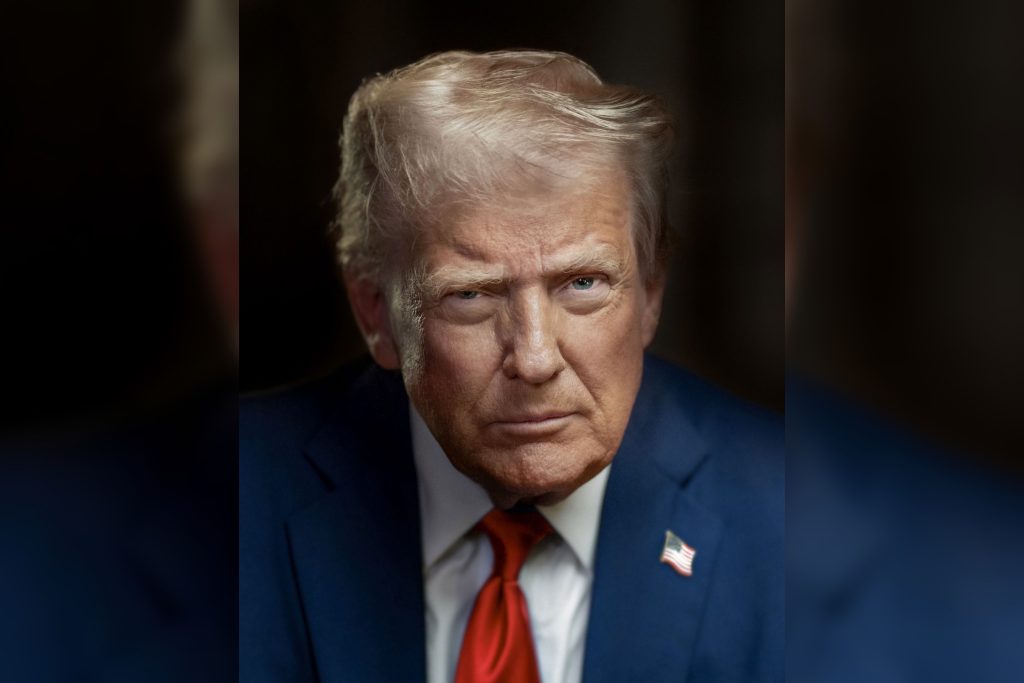
On a campaign stage in North Carolina, former President Donald Trump declared himself the “No. 1 target” of a foreign assassination plot, directly accusing Iran of being “scum” and planning to kill him. The statement, delivered on September 24, 2024, by the current Republican nominee for the presidency, lands in the middle of a security storm that has been building for years.
The figure that sits at the center of that storm is zero: the number of years of formal diplomatic relations between the United States and Iran since 1980, a gap that has never been closed and now frames one of the most serious public security claims made by a former American commander in chief. Trump, who served as the 45th president of the United States and was a businessman and media personality before entering politics, offered no additional details on the alleged plot.
The U.S. Secret Service, the agency responsible for protecting current and former presidents, has not publicly commented on the specific threat. Iran’s mission to the United Nations responded by calling the allegations “unfounded.” Multiple news outlets reported the former president’s remarks, adding a layer of scrutiny to what is an unusual campaign-trail declaration: a major party nominee claiming he is the active target of a foreign assassination operation.
The Arc of Escalation Between Washington and Tehran
The environment in which Trump made his accusation did not emerge without cause. The U.S.-Iran relationship has been frozen since 1980, when the two countries broke off formal diplomatic ties in the aftermath of the Iranian hostage crisis.
Since then, disputes have been managed through proxies and public accusations, with no official embassy or ambassador-level channel between the two capitals. That structural disconnect has magnified each new confrontation. A clear timeline of escalation marks the past several years.
In 2018, the Trump administration withdrew the United States from the Joint Comprehensive Plan of Action, the multinational nuclear accord that had limited Iran’s uranium enrichment program in exchange for sanctions relief. The move reversed years of diplomatic engagement and isolated Washington from its European allies on the issue.
On January 3, 2020, a U.S. drone strike killed Iranian General Qasem Soleimani, a top military commander and a central figure in Iran’s regional operations. Tehran immediately vowed to avenge the killing, and the strike remains one of the most significant direct military actions taken by the United States against Iranian leadership in decades. In 2022, the U.S. government publicly revealed that it had uncovered an Iranian plot to assassinate former National Security Advisor John Bolton. That disclosure indicated that U.S. intelligence believed Tehran had moved beyond rhetoric and into operational planning against former American officials.
The Bolton case provided a concrete precedent for the kind of threat Trump now says he faces. Trump’s September 2024 statement, therefore, sits at the end of a line that runs from the JCPOA withdrawal, through the Soleimani strike, and directly into the Bolton plot revelation.
Uncertainty on the Campaign Trail and Beyond
The Trump campaign’s security posture is now an open question. The lack of any public statement from the Secret Service on the specific threat leaves a gap in public knowledge about what, if any, protective measures have been increased. Iran’s denial of the allegations, delivered through its U.N. mission, introduces a flatly contradictory account.
The facts that are known remain limited: a former president who is also a current candidate has said he is the target of an assassination plot, the accused country denies it, and the agency charged with his protection has not addressed it directly. The broader picture extends beyond the immediate security concern.
The absence of formal diplomatic relations between the United States and Iran means that any allegation of this magnitude cannot be addressed through normal diplomatic channels. There is no ambassador to summon, no direct line of communication between foreign ministries, no established protocol for verifying or disputing such claims between the two governments. The only channels that exist are public statements, media reports, and indirect messaging through intermediaries.
A former president claiming he is the No. 1 target of a foreign assassination plot is not a routine campaign-trail statement. It carries potential ripple effects for U.S. foreign policy, intelligence operations, and the dynamics of the 2024 election cycle itself.
The figure that has not changed, for now, is zero: zero formal ties, and a candidate who says he is at the top of an enemy’s list.




