
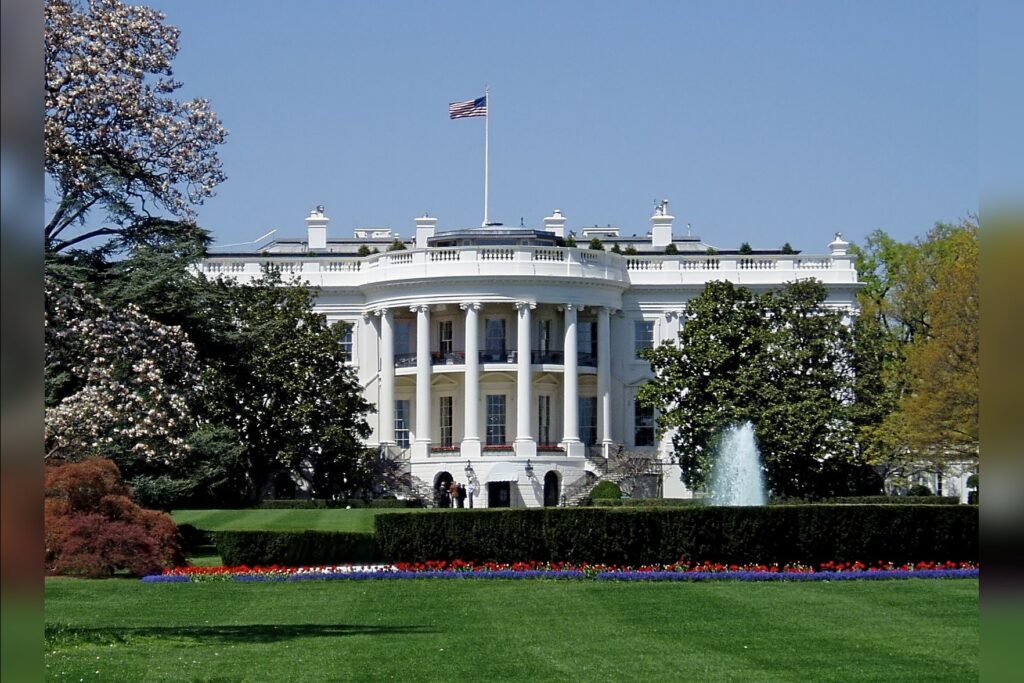
“Some of these things are out of our control,” House Speaker Mike Johnson told reporters last week. The Louisiana Republican had been asked whether the political frenzy around President Trump would hurt his party in November.
The Associated Press described a midterm cycle that looks nothing like it did at the start. Back then the U.S. was not at war with Iran, the East Wing of the White House was still standing, and the Kennedy Center was not threatened with demolition. AI data centers were not yet shorthand for tech excess in both parties. Democratic socialists sat on the edge of the conversation. Nobody was questioning the name of Lake Ontario.
It is the final midterm of Trump’s presidency, and the map is moving too. Texas, California and Florida are among the states that have redrawn congressional districts. In Missouri, the Republican attorney general is appealing a ruling from last week that blocked a Trump-backed map.
What could still shift
The AP listed several variables. The fallout from Trump’s tariffs on Canada could worsen as the election nears. His push to limit mail ballots could add confusion just as those ballots go out in states like North Carolina, home to a critical Senate race. And the president is sitting on more than $400 million that could shape the outcome.
Money is also complicating the Senate. A federal filing released this summer showed Trump took in $1.2 billion from his crypto businesses last year, and that has put a bipartisan crypto regulation bill at risk. Democrats want a stronger ethics provision. “We’ve watched this president enrich himself,” said Sen. Angela Alsobrooks of Maryland, a key Democratic vote who said she would not back the bill without tougher language.
Both parties say it is about Trump
On one point the parties agree. Asked to rank the top issues, Ari Fleischer, press secretary under President George W. Bush, answered: “No. 1, President Trump.” Rep. Suzan DelBene of Washington, who chairs the Democratic Congressional Campaign Committee, said, “People are feeling the pain from Trump.”
History favors the party out of power. Democrats flipped 40 House seats in Trump’s last midterm, in 2018, and 31 in 2006. A July AP-NORC poll found just a third of U.S. adults approve of how Trump is handling the presidency, down from 37 percent in June and 42 percent when he took office. Majorities disapprove of his work on the economy and immigration. Partisan redistricting, though, has cut the number of truly competitive seats.
Democrats say they need only a handful of seats to take the House. A Senate path exists if they hold Georgia, Michigan and New Hampshire and win Republican-held seats in places like Maine, Texas, Iowa or Ohio. They are also spending on governors’ races in Georgia, Ohio, Iowa and Nevada. Kentucky Gov. Andy Beshear, who chairs the Democratic Governors Association, said he is “bullish that we are going to pick up several seats.” The association has put $5 million behind Rob Sand in Iowa, which has not elected a Democratic governor in 20 years.
Arizona is harder. Beshear called the race between Gov. Katie Hobbs and Republican Andy Biggs a “tough race.” In Minnesota, Republican Lisa Demuth is running against Amy Klobuchar with a pitch aimed at anti-incumbent voters. “She is a 30-year politician,” Demuth said.
Several Republicans have warned the federal government against meddling in elections. Wyoming Gov. Mark Gordon called the conduct of Justice Department officials who watched poll workers and voters “a bit aggressive” and “irregular.” Oklahoma Gov. Kevin Stitt told the AP in July, “I don’t think that we should federalize the elections at all.”




