
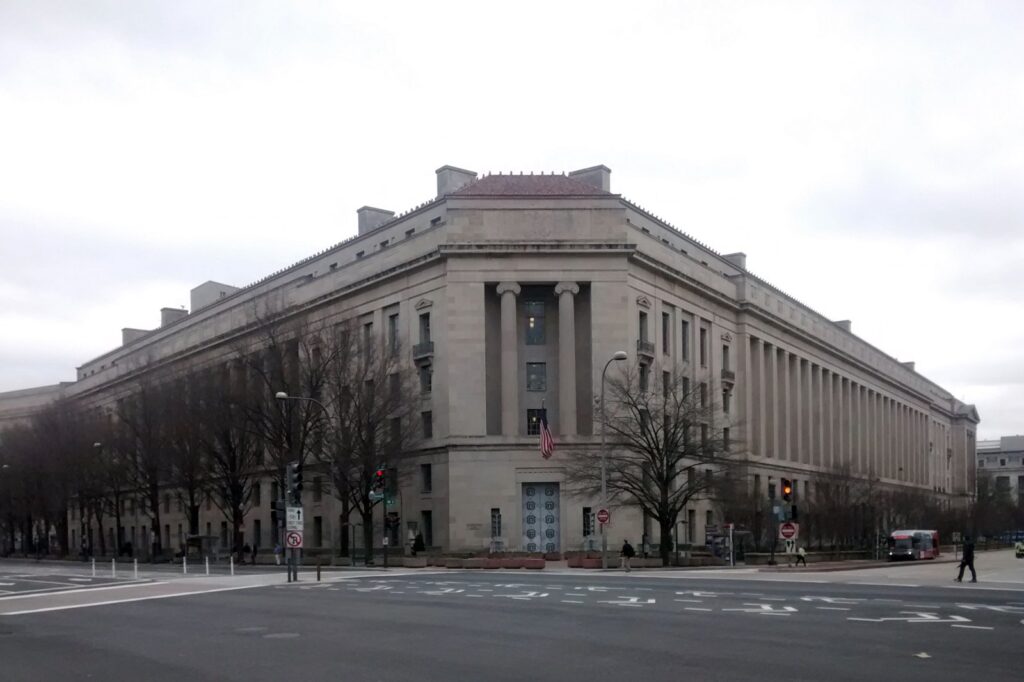
WASHINGTON, D.C., October 19, 2026 — The Department of Justice has aggressively inserted itself into the final weeks of the 2026 midterm elections, breaking with its historical role as a neutral arbiter. According to The Guardian, federal agents raided the home of Minnesota Representative Ilhan Omar as part of an immigration fraud investigation, while the DOJ pressured California election officials to investigate the citizenship of 20,000 people, suing the state upon refusal.
DOJ’s Shift from Neutrality to Political Participation
The DOJ’s actions mark a sharp departure from its traditional practice of avoiding steps that could influence elections. Stacey Young, a former DOJ attorney now leading Justice Connection, told The Guardian that the department has historically recognized the threat to election integrity when perceived as favoring one party. However, this administration has sidelined experts in the public integrity section, replacing them with political appointees loyal to the president.
Specific Interventions Targeting Political Opponents
In recent weeks, the DOJ has taken several high-profile actions. Federal agents raided Representative Omar’s home, an outspoken critic of President Trump, amid her re-election campaign. The FBI also published a video criticizing Michigan Senate candidate Abdul El-Sayed, drawing criticism from watchdogs. Additionally, the Attorney General has actively campaigned for Republican candidates, further blurring the line between law enforcement and politics.
Erosion of Expertise and Rise of Political Appointees
The department’s internal dynamics have shifted dramatically. Experts who once guided case-by-case analyses of election-related actions have been pushed out, according to Young. Employees now seek guidance from political appointees, raising concerns about the DOJ’s independence. This shift aligns with broader patterns of the Trump administration testing the boundaries of executive power, including recent attempts to mandate state election rules, which were blocked by the Supreme Court.
Legal and Constitutional Implications
The DOJ’s actions appear to bypass its own blackout window for investigative steps before elections, though a department official claims no formal rule prohibits such actions. The DOJ manual explicitly warns against taking steps to affect an election or advantage a political party. Legal experts argue these interventions undermine the separation of powers, a concern heightened by the administration’s challenge to the Presidential Records Act, which a federal judge recently ruled against.
Broader Pattern of Executive Branch Overreach
Strategically, these moves signal a broader calculus by the Trump administration to reshape the executive branch’s role in elections and governance. From challenging state authority over elections to reinterpreting post-Watergate statutes, the administration is testing constitutional limits. What this signals for the midterms—and beyond—is a DOJ increasingly aligned with political objectives, raising questions about the future of American electoral integrity and the rule of law.
DOJ’s Willingness to Subvert Election Outcomes
The Department of Justice’s recent activities have sparked concerns regarding its potential role in future electoral disputes. According to The Guardian, the department’s aggressive intervention in the midterm cycle leaves little doubt about its willingness to assist should the president attempt to subvert elections in states where his party is forecasted to lose seats and control of Congress. This represents a significant shift from the department’s historical mandate to maintain political neutrality.
Beyond specific raids and lawsuits, the department has actively touted criminal charges and arrests of non-citizens accused of voter fraud. While a department official stated that no formal rule or policy bars the DOJ from taking action close to an election, the department’s own manual explicitly warns against taking investigative steps or criminal measures for the purpose of affecting an election or providing an advantage to a political party. Furthermore, the manual directs that the department should avoid overt criminal investigative measures in matters involving alleged ballot fraud until the election results have been certified and all recounts concluded.
Sources
- How Trump’s justice department is shattering practice of political neutrality as midterms loom
- 2026 midterm election FAQs
- Do Americans own the president's papers? Appeals court to weigh in
Photo: Gunnar Klack (CC BY-SA 4.0)




