
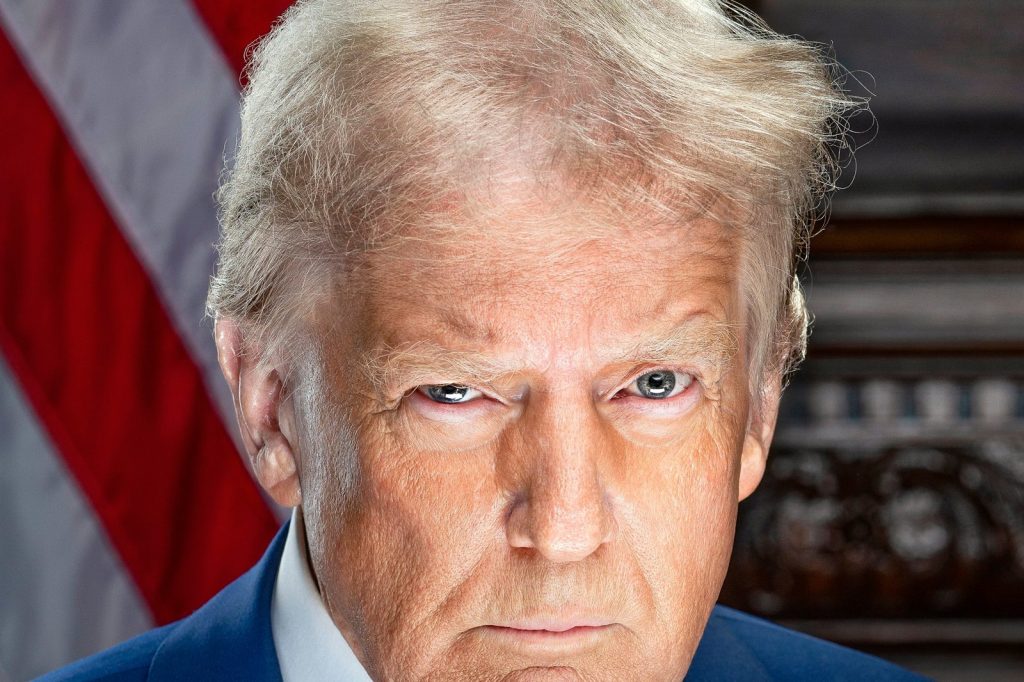
“My fellow Americans, this is Liberation Day,” President Donald Trump told a Rose Garden audience on April 2, 2025, and then signed an order declaring the U.S. trade deficit a national emergency.
The order, Executive Order 14257, invokes the International Emergency Economic Powers Act (IEEPA) to authorize tariffs on foreign imports. Trump set a baseline duty of 10% on every trading partner. On top of that, he announced what he called “kind reciprocal” rates for the countries he blamed most for the imbalance, including China, the European Union and Taiwan.
“We will charge them approximately half of what they are and have been charging us,” he said. “This is not full reciprocal. This is kind reciprocal.”
The numbers on the chart
Trump held up a chart of countries and their new rates. China sat at the top with 34%, which Trump said answered a 67% charge on U.S. goods. Navarro, his senior counselor for trade, said the new rate stacked on a 20% tariff already in place, for a total of 54%. For the EU the chart paired 39% with 20%. Myanmar, still reeling from a devastating earthquake, drew 44% against a claimed 88%.
The 10% baseline began April 5. The higher country rates were set for 12:01 a.m. on April 9 and would reach roughly 60 countries, White House officials said. Trade analysts rejected the “reciprocal” label, since the rates often exceeded what other countries charge and also reached countries where the U.S. runs a trade surplus. Economists called the formula behind the rates overly simplistic, with little connection to real trade barriers.
Trump framed the move as a rescue. “April 2, 2025, will forever be remembered as the day American industry was reborn,” he said. He called chronic trade deficits “a national emergency that threatens our security and our very way of life.”
Reaction at home and abroad
China’s Commerce Ministry urged the U.S. to “immediately cancel its unilateral tariff measures.” Canada vowed retaliatory tariffs, Mexico said it would respond later in the week, and the EU said it had a “strong plan to retaliate.”
The Senate voted 51-48 the same day on a resolution to challenge Trump’s emergency declaration against Canada. The House was unlikely to take it up, and the vote fell far short of what would be needed to override a veto.
Republican leaders asked for patience. “It may be rocky in the beginning but I think this will make sense for Americans,” House Speaker Mike Johnson said. Senate Minority Leader Chuck Schumer said, “Trump’s done a lot of bad things. This is way up there.”
An Associated Press-NORC poll published the Monday before found 58% of Americans disapproved of Trump’s handling of the economy, and 60% disapproved of his approach to trade negotiations.
What came after
The announcement was followed by a stock market crash, and the White House suspended the April 9 increases to allow time for talks. On May 28, 2025, the Court of International Trade ruled that Trump had overstepped his authority under IEEPA. The Federal Circuit upheld that on August 29. In February 2026, in Learning Resources, Inc. v. Trump, the Supreme Court affirmed that the emergency-powers tariffs were not legal.
Sources
- Liberation Day tariffs – Wikipedia
- Trump rolls out sweeping tariffs as he deems deficits a 'national emergency'




