
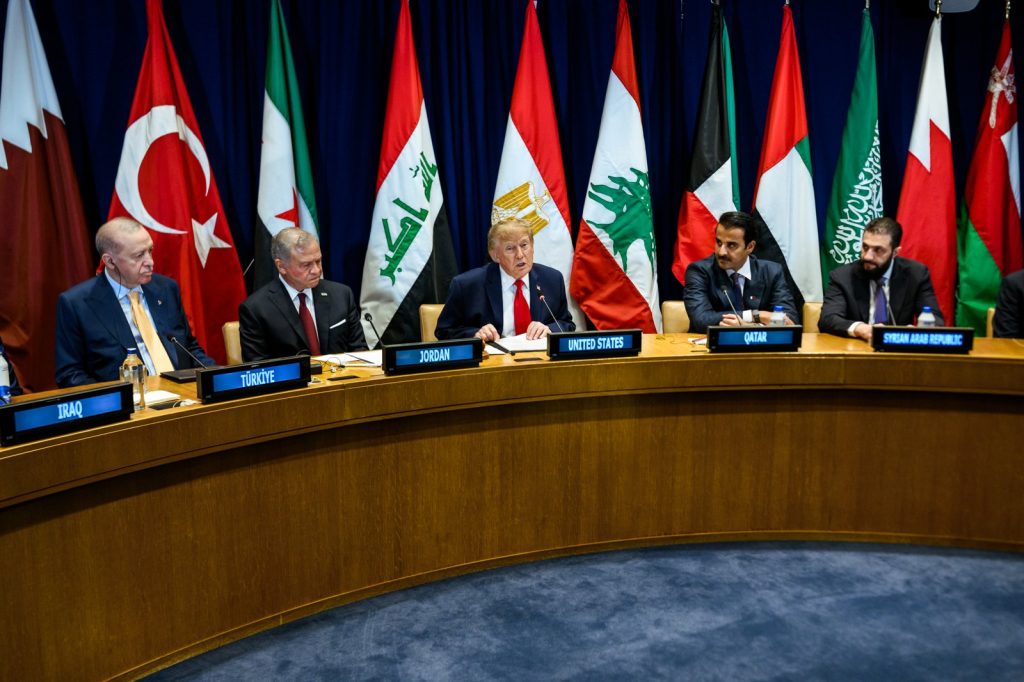
NEW YORK — President Donald Trump is expected to sit down with Gulf leaders in New York during the United Nations General Assembly, with the Iran war and its aftermath at the top of the agenda, according to multiple reports. The meetings are expected next week, as the war nears a possible end. Axios first reported the planned talks, with follow-up coverage from The Jerusalem Post, Anadolu Ajansı, KTSA and the New York Post.
The reports do not specify which Gulf leaders will attend, nor the exact date or location beyond New York during the General Assembly. Strategically, the calculus here is not complicated.
Gulf capitals have spent the war watching two risks at once.
Two Fears in the Room
CNN reported that Gulf leaders are meeting Trump with two fears: more war and less U.S. protection. That framing captures the broader stakes. The same governments that want the Iran conflict wound down also want to know what Washington’s security commitment looks like once the shooting stops — and whether a postwar settlement leaves them exposed rather than reassured.
Trump has claimed direct talks with Iran, saying the United States is hopefully toward the end of its war with Iran and that he has directly spoken to officials in Tehran. That raises the prospect of renewed diplomacy, though no details of those contacts have been confirmed.
The president also said Iran’s energy hub of Kharg Island is being “blown to smithereens” — a one-line social media statement on Sunday, August 30, for which he gave no details, according to Reuters reporters Phil Stewart and David Lawder.
A Wider Chessboard
The New York talks do not unfold in isolation. Russian President Vladimir Putin arrived in the Indian capital on Friday ahead of an eleven-member BRICS summit set to be dominated by the wars in the Middle East and Ukraine, as well as economic challenges. Moscow’s positioning matters to Gulf states weighing their options.
Energy is the other thread. A report on how Gulf insecurity fuels U.S. energy dominance noted that Trump celebrated on Truth Social what he called the biggest oil deal in history — a hundred-year concession on seventeen oil fields in Venezuela.
What this signals is a White House trying to convert a war’s endgame into a durable regional order, with Washington at the center of it. The key figures are Trump, the Gulf leaders and Iranian officials in Tehran. The central issues are the trajectory of the Iran war, postwar strategy for the region, and Gulf states’ concerns about continued U.S. security commitments.
No specific outcomes, agreements or further details have been reported. The story is developing, and the exact participants, agenda and results of the talks have not been confirmed beyond the initial reports.
Watch the attendance list first. Which Gulf leaders show up — and at what level — will tell Washington more about the region’s confidence in its postwar guarantees than any communiqué issued afterward.




