
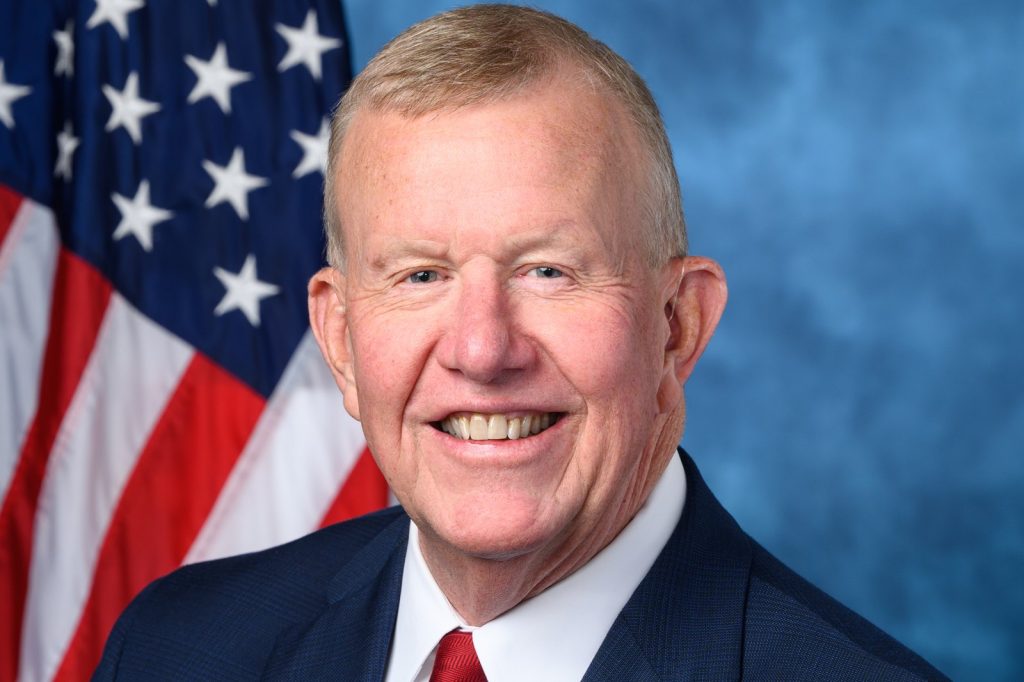
GULFPORT, September 23 — An independent challenger in Mississippi’s 4th Congressional District has filed a complaint with the Federal Election Commission against Republican Representative Mike Ezell, accusing the incumbent of violating multiple campaign finance laws through contributions tied to the owners of two Gulf Coast shipbuilding firms. Carl Boyanton filed the complaint in September, according to the filing, and it centers on donations linked to the owners of Bollinger Shipyards and Edison Chouest Offshore, a shipbuilding company owned by the Chouest family.
The allegations land weeks before the November 3 general election, where Ezell, Boyanton and Democratic nominee Jeffrey Hulum will compete for the seat.
The Allegations
Boyanton alleges three primary violations. First, he claims a subsequent transfer of $47,625.12 from the Ezell Victory Fund — a joint fundraising account with the National Republican Congressional Committee — back to Ezell’s main campaign account effectively bypassed legal individual contribution limits. Second, he argues the donations breached laws barring federal contractors who receive money from Congress from donating directly to political candidates.
Third, he contends the campaign accepted coordinated or reimbursed donations masked through individual donors, known as conduit contributions. According to the filing, seven members of the Chouest family each made maximum individual contributions to Ezell’s campaign while simultaneously injecting $25,000 into his Leadership PAC and $150,000 into the Ezell Victory Fund.
The strategic dimension here is not lost on anyone watching the race. Ezell chairs the Subcommittee on Coast Guard and Maritime Transportation, a role that intersects directly with the maritime industry donors at the center of the complaint.
The Campaign’s Response
The Ezell campaign strongly denies the allegations. Spokesperson Josh Gregory stated that the campaign is in total compliance with federal law and dismissed the complaint as a “political stunt.” Gregory also threatened legal recourse, saying, “Making a false statement to a federal agency, such as the FEC, is illegal and we will be reporting him for doing that.” He further noted that voters will defeat Boyanton “for the fourth time” in the upcoming election.
Legal experts point out that the validity of the claims remains unverified, as joint fundraising committee disclosures do not explicitly track donor-by-donor breakdowns when transferring lump sums. Furthermore, federal law does not prevent individuals with ownership stakes in contracting companies from making personal donations.
Even if an infraction occurred, a hobbled FEC currently lacks the confirmed quorum required to meet and vote on complaints. That procedural reality means the complaint may sit unresolved well past Election Day. What this signals for the broader stakes is a familiar pattern in American politics: a down-ballot race in a deep-red district suddenly drawing scrutiny over the intersection of campaign cash and committee power.
The calculus for Ezell is straightforward — the complaint is unlikely to be adjudicated before voters cast ballots, but it hands his opponents a talking point in the final stretch. For Boyanton, a perennial candidate facing his fourth defeat according to the Ezell camp, the FEC filing may be less about winning the seat than about forcing the incumbent to spend political capital defending his financial record.
Watch whether the FEC takes any procedural step on the complaint before November 3, and whether the issue surfaces in the campaign’s closing days.




