
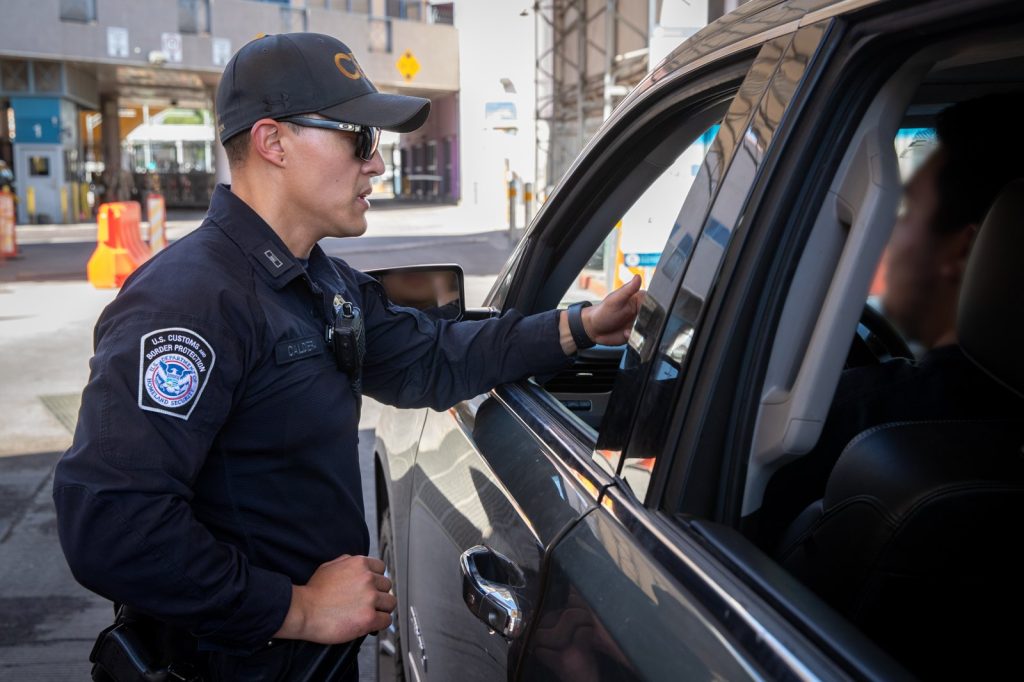
WASHINGTON, July 21 — U.S. Customs and Border Protection, the federal law enforcement agency under the Department of Homeland Security, operates on a vast scale. With more than 58,000 employees, it is the largest federal law enforcement agency in the United States, charged with regulating international trade, collecting import duties, and enforcing immigration and customs laws. Its headquarters sit in Washington, D.C., but its reach extends to 328 ports of entry and 14 pre-clearance locations.
The numbers under the hood
The workforce breakdown reflects deep specialisation. Roughly 33,300 CBP officers inspect passengers and cargo at ports of entry. Another 2,200 agriculture specialists work to stop harmful pests and diseases from crossing the border.
About 21,000 Border Patrol agents cover 1,900 miles of border with Mexico and 5,000 miles of border with Canada. Air and marine interdiction agents — about 1,000 of them — prevent illegal entry by air and water.
Then there are the revenue positions: roughly 2,500 employees who collect over $30 billion annually in entry duties and taxes through enforcement of trade and tariff laws, and who also appraise and classify imported merchandise. CBP’s Canine Program is the largest working-dog operation of any federal law enforcement agency. K-9 teams are assigned to 73 commercial ports and 74 Border Patrol stations.
Technology and pre-screening
At the ports, speed and risk assessment drive the technology. An agreement with Canada enables CBP to target, screen, and examine rail shipments headed to the United States before they cross the border. For air travel, CBP assesses every passenger flying into the U.S. for terrorist risk.
It does this through systems including the Advance Passenger Information System, US-VISIT, and SEVIS, and in coordination with the Joint Terrorism Task Force. The agency also works with the Food and Drug Administration to screen high-risk imported food shipments.
Global reach: the Container Security Initiative
CBP administers the Container Security Initiative (CSI), which identifies and inspects foreign cargo in its country of origin before it ships to the U.S. The program is implemented at 20 of the largest ports globally — a total of 58 ports worldwide. Legally, CBP has authority to conduct some activities up to 100 miles inward from any land or sea border, including operating interior checkpoints. The agency’s primary focus remains the physical border.
With 328 officially designated ports of entry and the pre-clearance locations, the entry points themselves are a network of chokepoints through which both legitimate trade and illicit traffic must pass. The agency’s revenue staff enforce tariff laws, classify goods, and collect the duties that fund the federal treasury.
The $30 billion-plus figure is the annual yield from that enforcement — not a tax but a levy on imported goods, collected at the border under a detailed tariff schedule.




