
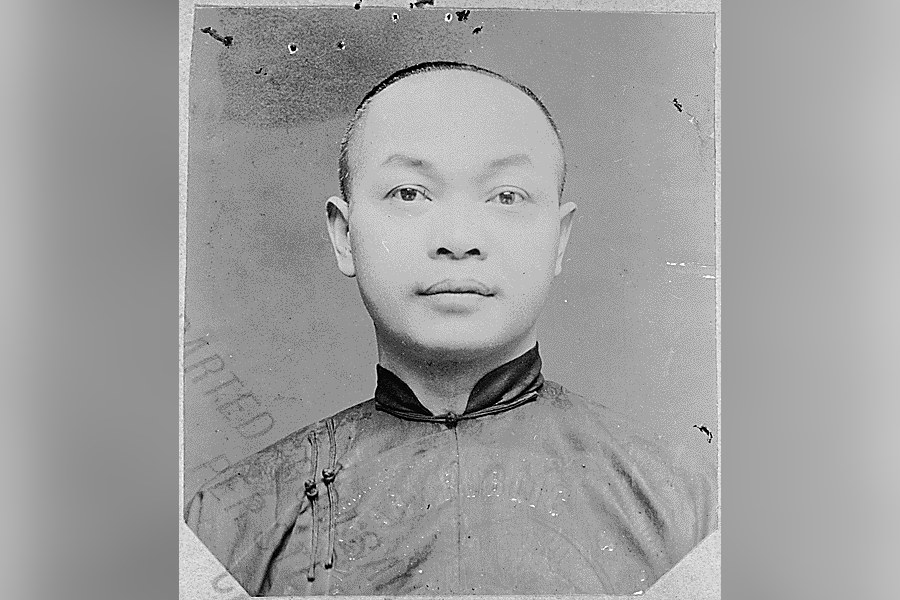
Wong Kim Ark was born in San Francisco to Chinese immigrant parents. After a trip abroad he was refused re-entry, and the government argued he was not a citizen because his parents were ineligible for citizenship under the Chinese Exclusion Act. In 1898 the Supreme Court disagreed, 6-2.
That ruling, United States v. Wong Kim Ark, is the precedent at the center of today’s fight over birthright citizenship. It has stood for more than 125 years and has never been overruled.
What the amendment says
The 14th Amendment was introduced in 1866 and ratified in 1868, to secure the rights of newly freed slaves. Its Citizenship Clause reads: “All persons born or naturalized in the United States, and subject to the jurisdiction thereof, are citizens of the United States and of the State wherein they reside.” It overrode the 1857 Dred Scott decision, which held that African Americans could not be citizens, free or enslaved.
Wong Kim Ark gave the clause its meaning for the children of immigrants. The Court read “subject to the jurisdiction thereof” to cover anyone born on American soil, except children of foreign diplomats and enemy soldiers. It dismissed the claim that allegiance to a parent’s nationality cancels that jurisdiction. The result placed the United States with the countries that follow jus soli, citizenship by place of birth, rather than jus sanguinis, citizenship by descent.
The current case
On January 20, 2025, President Trump signed an executive order meant to end birthright citizenship for two groups, including children of temporary visa holders such as H-1B workers, F-1 students and tourists. Every federal court that reviewed the order blocked it. The administration appealed, and the Supreme Court took up the case as Trump v. Barbara, No. 25-365.
The administration’s position is that “subject to the jurisdiction” requires a parent to be permanently domiciled in the United States. No lower court has accepted that reading. Oral argument took place on April 1, 2026, and a decision was expected by late June or early July 2026.
Opponents say the amendment’s text and the 1898 ruling draw no such line. Until the Court rules, birthright citizenship stays in force, and a child born in the United States to parents on H-1B, L-1 or F-1 status is a citizen. Ellis, an immigration services firm, noted that changing the rule outright would take a constitutional amendment, which needs two-thirds of both houses of Congress and ratification by 38 states.




