Afghan and Ukrainian parolees are losing legal status and work authorization as re-parole applications stall and legislative fixes remain blocked in Congress. The expiration of two-year humanitarian authorizations is pushing thousands into a bureaucratic limbo with no clear exit.
The Expiration Clock
Maryna Korbet and her 15-year-old daughter, Anya, entered the United States under the Uniting for Ukraine program in 2024. Their parole eligibility expires in late November 2026, two days before Christmas, according to the Coastal Observer. Although both hold valid Employment Authorization Documents, those permits will become invalid the moment their parole status lapses. “No working. No money. Go home,” Maryna Korbet said. Her husband, Pavlo, remains in Ukraine flying fighter jets for the Ukrainian air force.
The Korbets submitted fingerprints for renewal last year but never received a response. “Many people are waiting for approval or ICE,” Maryna said, referring to U.S. Immigration and Customs Enforcement. The family’s situation mirrors a broader crisis: more than 100,000 Ukrainians rely on temporary protections set to expire October 19, 2026, according to U.S. Citizenship and Immigration Services data cited by the National Catholic Reporter.
Detention While Pending
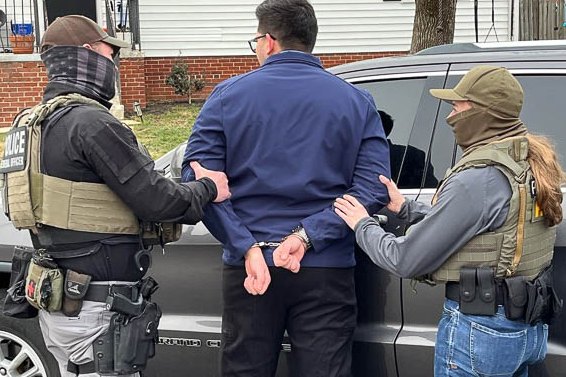
The risk of detention while a renewal is pending is no longer theoretical. Sasha Horiachok, a Ukrainian national who entered via Uniting for Ukraine in 2023, was detained by ICE during a road trip after his permission to remain expired while his renewal application was still pending, according to The S&B. An immigration judge in Eloy, Arizona, granted him voluntary departure on November 5 to avoid a deportation order that could have sent him back to the front lines in Ukraine. His attorney, Dana R. Bucin, warned that other Ukrainians in the same circumstances could meet a similar fate. “It doesn’t mean that Sasha did anything wrong. It doesn’t mean that these Ukrainians are doing anything wrong,” she said.
The pattern extends beyond Ukrainians. A Venezuelan family that entered legally via humanitarian parole was detained at the Dilley, Texas, family detention center after the Department of Homeland Security said they failed to leave when their authorization expired, according to 10News. Their 7-year-old daughter, Charlotte, has been held for nearly a month alongside dozens of other children, some beyond the 20-day limit established by the Flores settlement.
The Paperwork Bottleneck
The mechanism for extension is Form I-131, Application for Travel Document. A December 2025 Government Accountability Office report found that Uniting for Ukraine parolees alone had filed about 117,000 re-parole applications as of March 2025, according to Immigration Analytics. USCIS estimates 341,083 Form I-131 filings annually across all categories, including reentry permits, refugee travel documents, advance parole, and parole requests.
Starting December 21, 2026, USCIS will accept only the new edition of Form I-131 dated 04/22/26, rejecting the January 2025 version. The new edition likely removes Part 9, the checkbox that allowed re-parole applicants to request a work permit simultaneously, according to a Paperwork Reduction Act notice and reporting by CiberCuba. If confirmed, re-parolees would face a second filing, a second fee, and a second wait for Form I-765 under category (c)(11) after re-parole is granted. The Korbets already face a $1,000 re-parole fee per person under H.R. 1, the “One Big Beautiful Bill Act,” not including separate work permit fees that could exceed $6,000.
Legislative Stalemate
A bipartisan bill introduced in the House on October 5, 2026, would extend Temporary Protected Status for eligible Ukrainians by redesignating protections until July 1, 2029, according to the National Catholic Reporter. That bill has not been enacted. The administration had until October 19 to renew or terminate TPS for Ukraine; some lawmakers considered a six-month automatic extension if the White House failed to act, but no action has been confirmed.
Archbishop Borys Gudziak of the Ukrainian Catholic Archeparchy of Philadelphia warned that without policy changes, parolees may be “constrained to leave the country” or face deportation. “Many of them have no home to go back to,” he told Catholic News Service. The United Nations Office for the Coordination of Humanitarian Affairs reports that Russian forces continue to attack civilians and critical infrastructure, making return untenable for many.
Sources
- Refugees and Other Humanitarian Immigrants Sue to Stop Unlawful Medicaid Cuts – National Health Law Program
- COASTAL OBSERVER
- Detained Ukrainian Grinnell resident to leave U.S. for France
- Temporary protections for Ukrainians in US set to expire, trigger deportation, archbishop says
- Detained families cast new scrutiny on ICE lockup in sworn statements
- Form I-131 New Edition Becomes Mandatory Dec. 21, USCIS Says
Photo: usicegov (Public domain)