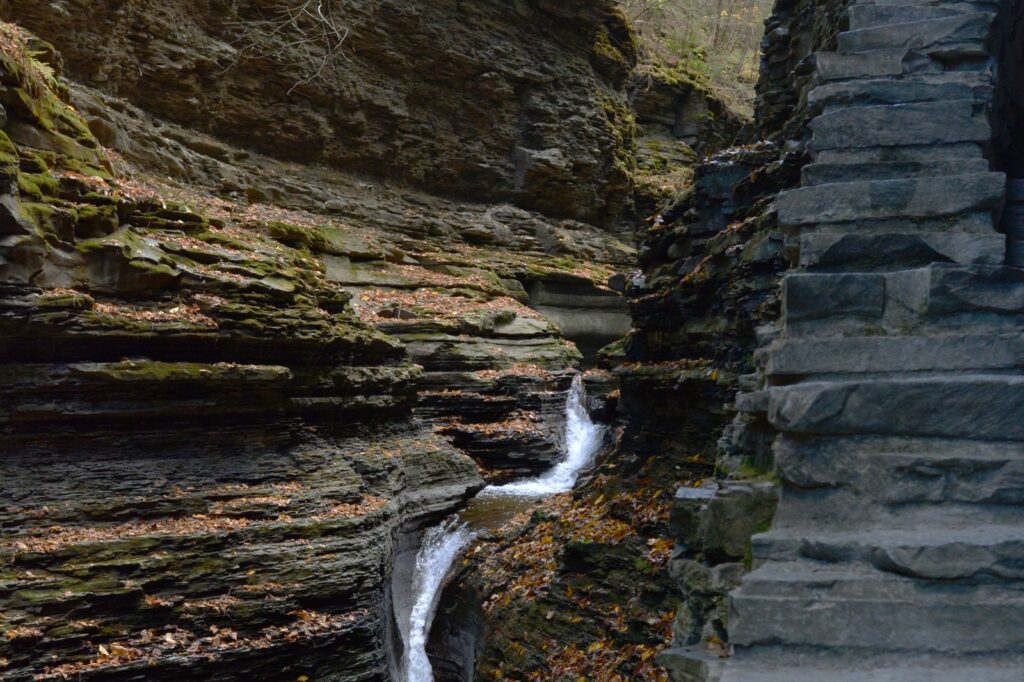
The U.S. Senate unanimously approved the Finger Lakes National Heritage Area Act on Thursday, sending the measure to the House where Rep. Claudia Tenney has introduced a companion bill. The vote advances a decade-long effort to secure federal recognition for a 14-county region stretching from Rochester and Syracuse to the Southern Tier.
What the Designation Authorizes
The legislation, sponsored by Sen. Kirsten Gillibrand, would establish a National Heritage Area encompassing Cayuga, Chemung, Cortland, Livingston, Monroe, Onondaga, Ontario, Schuyler, Seneca, Steuben, Tioga, Tompkins, Wayne and Yates counties. The designation does not create a national park. It establishes a framework for federal financial assistance and regional collaboration through a local coordinating entity, while explicitly protecting private property rights and local zoning authority. The National Park Service provides technical and financial support, but local organizations oversee planning and implementation.
Funding Mechanism and Federal Match
Federal funding for heritage areas typically matches local contributions up to $1 million annually, subject to congressional appropriations. A Congressional Budget Office analysis estimates implementing the legislation would cost the federal government approximately $2 million through 2031. In 2026, Congress appropriated $157,500 for each newly established heritage area and $500,000 for most areas with completed management plans, offering a baseline for what the Finger Lakes could expect.
Decade-Long Path to Senate Passage
Gillibrand began pursuing the designation in 2015. Congress authorized a National Park Service feasibility study in 2019. The NPS released its findings in 2023, confirming the region met all 10 evaluation criteria for national heritage areas. The study consulted local governments, businesses, nonprofits, Indigenous nations and residents. It examined the region’s geological history, agricultural traditions, role in the women’s rights movement, abolitionism and the development of American democracy. The study also identified opportunities to build upon existing tourism infrastructure rather than create entirely new systems.
Tourism Strategy: Coordination Over Creation
The Finger Lakes region contains 11 glacial lakes, including Seneca Lake at 618 feet deep and 38.1 miles long, and Cayuga Lake at 435 feet deep. The region straddles the Northern Allegheny Plateau and Ontario Lowlands ecoregions. The heritage area framework aims to connect historic sites, vineyards, working farms, downtown business districts and parks across dozens of municipalities through coordinated marketing, educational programs, historic preservation and recreational opportunities. Private investment is already active; Open Road Resorts acquired the Finger Lakes RV Resort in Hector along the Seneca Lake Wine Trail in November 2026, providing access to Watkins Glen State Park, Seneca Lake and Watkins Glen International.
Sources
- Finger Lakes moves closer to national heritage designation | Fingerlakes1.com
- Finger Lakes
- Finger Lakes Legend Grabowski Finds Diamond in the Rough With Kentucky Oaks Hopeful Dotsy
- Finger Lakes cyclists gear up for next year's Tour de Cure
- Open Road Resorts Expands Into New York And Georgia With Two Acquisitions
Photo: Photo by Joe Mabel (CC BY-SA 4.0)