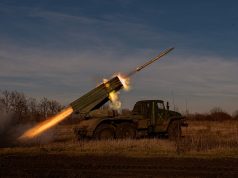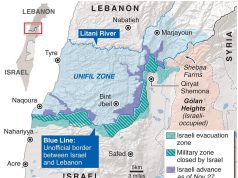
For every barrel of crude that trades on global markets, there is now a two-front war playing out — one fought with missiles and drones in the Middle East, the other fought with statements and signals in Washington.
On Tuesday, the second front won.
Oil prices fell sharply after President Donald Trump moved to convince markets that a deal with Tehran was close, even as Israeli and Iranian forces exchanged strikes through the week. The decline surprised traders who had braced for a spike following the barrage of attacks. Instead, prices dropped.
What is at stake is not merely the price at the pump. It is the stability of an energy market that underpins the global economy. A sustained spike in crude prices would ripple through supply chains, raise costs for manufacturers, and squeeze consumers already feeling inflation. Central banks watching interest rate decisions would face fresh pressure. The White House knows this.
The violence between Israel and Iran this week escalated tensions to a level that, under normal circumstances, would send oil prices climbing. Traders typically price in a risk premium when major producers or their proxies exchange fire. But Trump’s signal of a pending deal with Tehran appears to have overridden that calculus — at least for now.
The president suggested an agreement was within reach. His administration has been working to persuade markets that a resolution is near. The message is clear: the diplomatic track, however fragile, is still alive.
But the context is volatile. The U.S. relationship with Iran has been strained for years. The recent violence has only deepened that strain. Israel and Iran engaged in a series of strikes that raised the temperature across the region. The potential for further escalation remains high. Any miscalculation — a strike on the wrong target, a retaliation that goes too far — could collapse the diplomatic window and send prices soaring.
For now, the market is betting on Trump’s ability to deliver. That bet carries its own risk. A deal with Iran would need to address the nuclear program and other longstanding issues. Negotiations of that scale do not happen overnight. If the talks stall or collapse, the same traders who sold on Tuesday could buy back in, driving prices up fast.
The violence is not abstract. It involves real strikes, real casualties, real military assets. The situation in the Middle East remains volatile. The White House is trying to manage two realities at once: a conflict that could widen and a diplomatic process that could narrow that conflict. The market is watching both.
The sharp decline in oil prices Tuesday is a snapshot of that tension. It reflects not calm, but a calculated pause — a moment in which traders accepted Trump’s word over the evidence of missiles. That pause could break at any time.
What happens next depends on whether the deal materializes or the violence deepens. The two forces are now locked in a race. One drives prices down. The other drives them up. The global economy is caught in the middle.