Cancer patients losing dangerous amounts of weight have long had few medical options. A monoclonal antibody called ponsegromab might change that.
Pfizer released phase 2 trial data on September 15 showing the drug produced real body weight gains in people with lung, pancreatic, and colorectal cancers. These are the cancers most likely to trigger cachexia — the wasting syndrome that kills roughly 20 percent of cancer patients directly. Not the tumor. The wasting.
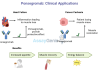
Ponsegromab works by blocking GDF-15, a protein that goes haywire in cachexia. High levels of GDF-15 suppress appetite and ramp up energy expenditure. The body essentially burns itself alive. Patients lose skeletal muscle. They lose fat. They become too weak for chemotherapy. The drug is designed to interrupt that process at its source.
This is a phase 2 trial, not a final answer. But phase 2 is where drugs either show promise or die. Ponsegromab showed promise. Patients got heavier. That matters because cachexia is notoriously hard to treat. Appetite stimulants exist. They put on fat, not muscle. They do not improve survival. Ponsegromab targets a different mechanism entirely.
The trial enrolled patients with non-small cell lung cancer, pancreatic cancer, and colorectal cancer. All three carry high cachexia risk. Pancreatic cancer in particular — roughly 80 percent of patients develop wasting. The drug, also called PF-06946860, is a GDF-15 inhibitor. That designation places it in a relatively new class of cancer supportive-care drugs.
Pfizer is betting that treating cachexia directly will improve not just weight but quality of life and overall prognosis. The logic is straightforward. Patients who maintain their weight tolerate chemotherapy better. They stay on treatment longer. They have more strength for daily life. Cachexia is not a cosmetic problem. It is a physiological crisis that accelerates death.
The medical community is watching closely. Cachexia has no FDA-approved drugs in the United States. Nothing. Doctors prescribe off-label medications with limited evidence. A targeted biologic like ponsegromab would represent a genuine advance if phase 3 trials confirm the phase 2 results.
Phase 2 data are not definitive. The sample sizes are modest. The trial was designed to detect a signal, not to prove survival benefit. But the signal was clear enough that Pfizer moved forward. The company has not announced phase 3 plans publicly, but the trajectory is obvious. You do not run a phase 2 trial on a novel mechanism and stop there if the data look good.
GDF-15 is not a new discovery. Scientists have known for years that the protein spikes during illness and injury. Cancer cachexia is one of the most extreme examples. Levels of GDF-15 can increase a hundredfold. The body enters a state that resembles starvation but cannot be reversed by feeding. Patients eat and still lose weight. That is the puzzle ponsegromab tries to solve.
Pfizer has experience with difficult supportive-care drugs. The company developed the first approved treatment for chemotherapy-induced nausea. It has also worked on cancer pain and fatigue. Ponsegromab fits that pattern — addressing a side effect of cancer that is itself life-threatening.
Cachexia research has produced more failures than successes. Drugs that worked in animal models failed in humans. Drugs that increased weight did not improve survival. The GDF-15 pathway is different. It is more fundamental to the wasting process than the appetite pathways targeted by earlier drugs. That may explain why the phase 2 data look cleaner.
Further research is needed. That is always true at this stage. But the need is acute. Cachexia patients are not hypothetical. They are the people who cannot get out of bed, who cannot finish a meal, who die not from their tumors but from their own bodies consuming themselves. A drug that stops that process would change how cancer is managed. Ponsegromab is not there yet. It is closer than anything else.