
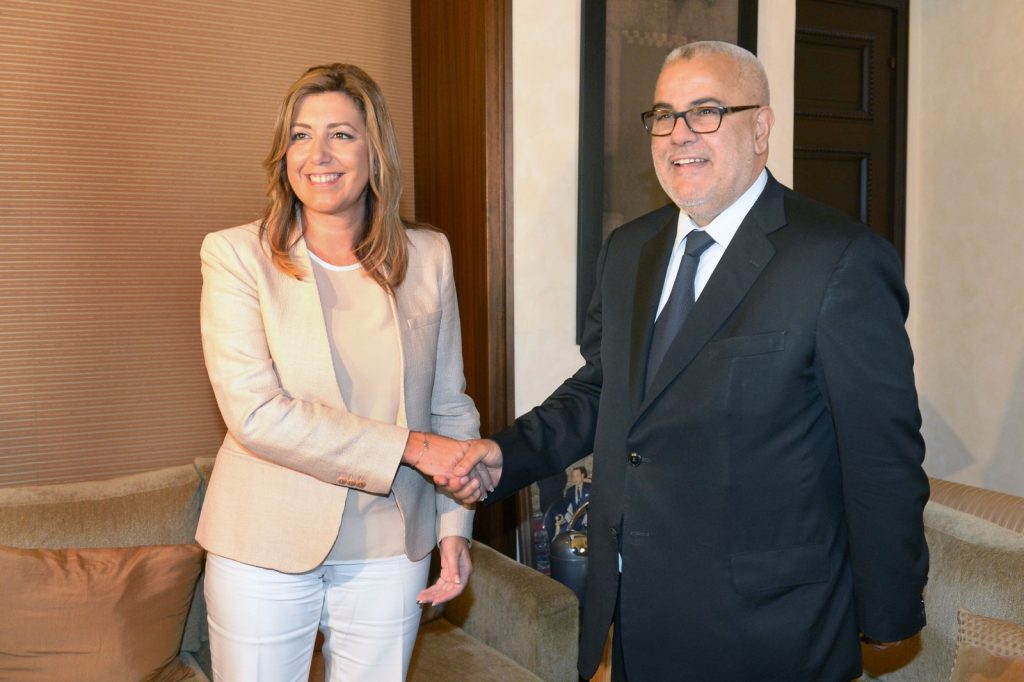
Thirteen seats out of 395. That was all the Justice and Development Party kept in Morocco’s parliament after the September 2021 election, down 112 from five years earlier. Now the PJD is trying to climb back, and the man steering it is the one who first brought it to power: Abdelilah Benkirane, head of government from 2012 to 2017.
From 107 seats to 13
The party’s rise followed the protests of 2011, which demanded political reform, accountability and a more responsive government. In the November 2011 election the PJD took 107 seats and Benkirane became head of government. The constitutional changes that year widened the formal powers of Parliament and government, but the monarchy kept significant authority. The king picks the head of government from whichever party comes first in the House of Representatives, and he chairs the Council of Ministers, where the strategic orientations of state policy are considered.
In 2016 the PJD grew to 125 seats. Benkirane then spent months failing to put together a governing coalition. In March 2017 King Mohammed VI ended his mandate and named Saadeddine Othmani in his place. The party stayed in government until 2021, when it fell from 125 seats to 13. The National Rally of Independents won 102 seats and became the largest party.
A personal brand, and its limits
Benkirane is still one of the best-known faces in Moroccan politics. An Al Jazeera Studies analysis recently described him as a political “brand”: a long public career, a constant media presence and a direct way of speaking have given him a profile that can work as electoral capital for the party. The analysis asked whether that visibility and personal appeal can help the PJD rebuild.
His return alone does not prove the party has won its support back, though. The task is to turn attention paid to the leader into votes for the party.
The programme
The PJD’s 2026 programme runs to 467 measures in five areas: identity and family, political and institutional reform, public services and social protection, the economy and employment, and foreign policy. It asks for more transparency in public procurement, rules on conflicts of interest and illicit enrichment, and better public services. Housing, social protection, and food, water and energy sovereignty also feature. The emphasis falls on prices, jobs, schools, hospitals and corruption.
Saad al-Sabahi, 38, who works with the party’s regional secretariat in Casablanca-Settat, told Al Jazeera the programme grew out of studies, consultation meetings and proposals sent through an online platform. “These commitments cover a range of sectors and areas affecting the lives of the Moroccan people,” he said, pointing to political participation, anti-corruption work, public education, healthcare, employment and economic sovereignty.




