
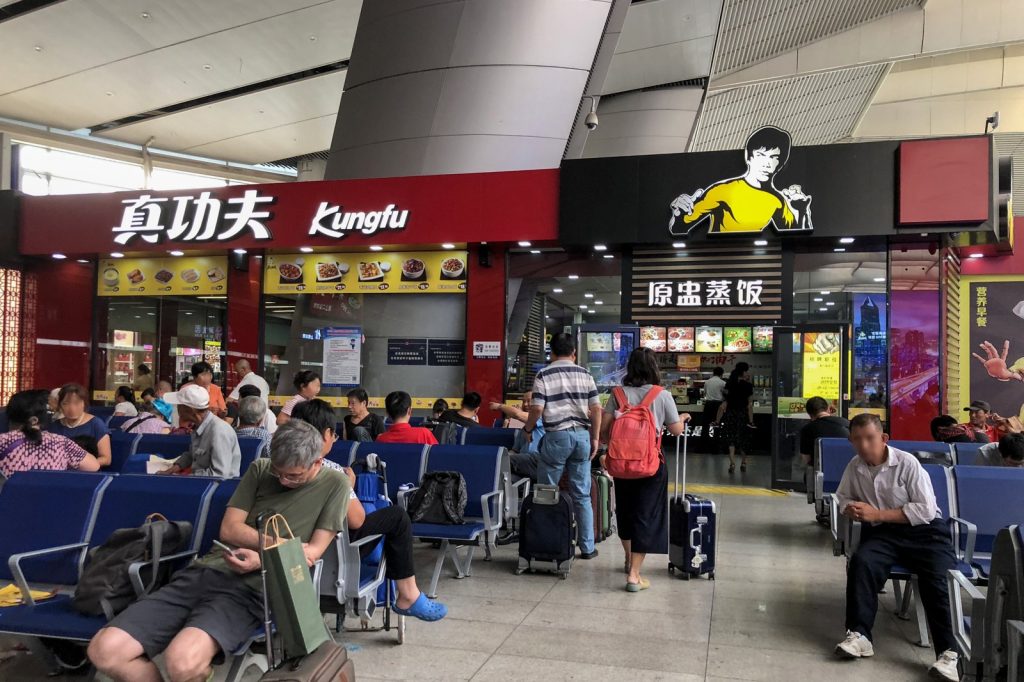
Real Kungfu, a popular Chinese fast-food chain, is being sued by Shannon Lee’s Bruce Lee Enterprises for using the image of the late martial arts star as its logo. The lawsuit was filed in a Shanghai court by Bruce Lee’s daughter who accuses the restaurant of using her father’s image for 15 years without paying intellectual property rights. Accordingly, Shannon wants the fast-food chain to immediately stop using the image aside from her request to get compensated with an amount of 210 million yuan (US$30 million).
Bruce Lee Enterprises, as stated in its website, is responsible for merchandising and licensing of all the famed martial artist’s images. Shannon, who took over the company from her mother, has been actively involved in keeping her father’s legacy alive.
Meanwhile, the defendant said it was puzzled with the allegations and stressed that the logo used in their restaurants for more than a decade now was legally permitted by Chinese authorities. “We’re confused that we are prosecuted many years later. We’re actively studying the case and preparing to respond,” the company said in a statement.
Founded in 1990, the Guangzhou-based fast-food chain began using a logo bearing similarities to the famed actor in 2004. The logo features a black-haired, yellow-clad man striking a kung fu pose.
Real Kungfu is hailed by the China Cuisine Association as one of the top 10 fast-food companies in China, with more than 600 stores operating nationwide. The use of celebrity images and likenesses in advertising and branding is a common practice in the fast-food industry, but it can also be a complex and sensitive issue, particularly when it involves the intellectual property rights of deceased individuals.
In many countries, the rights to a person’s image, name, and likeness are protected by law, and companies must obtain permission or pay royalties to use these elements in their marketing and branding efforts. This is especially true for iconic figures like Bruce Lee, whose image and legacy continue to be widely recognized and revered around the world. The concept of intellectual property rights has become increasingly important in China in recent years, as the country has sought to strengthen its laws and regulations in this area.
The case involving Real Kungfu and Bruce Lee Enterprises is likely to be closely watched, as it highlights the challenges and complexities of navigating intellectual property rights. Bruce Lee Enterprises, which is responsible for merchandising and licensing of all the famed martial artist’s images, has filed a lawsuit against Real Kungfu for using the image of the late martial arts star as its logo without paying intellectual property rights.
The significance of this case extends beyond the specific dispute between Real Kungfu and Bruce Lee Enterprises, as it also raises broader questions about the use of cultural icons and historical figures in advertising and branding. The image of Bruce Lee is not only a valuable commercial asset, but also an important cultural symbol, and its use can be seen as a way of tapping into a rich cultural heritage.
Real Kungfu has been using a logo bearing similarities to the famed actor, which features a black-haired, yellow-clad man striking a kung fu pose. The outcome of this case is likely to have implications for the fast-food industry and other companies that use celebrity images and likenesses in their branding and marketing efforts.
If the court rules in favor of Bruce Lee Enterprises, it could set a precedent for other companies to obtain permission or pay royalties to use similar images and likenesses. Bruce Lee Enterprises is seeking compensation of 210 million yuan and wants the fast-food chain to immediately stop using the image. Real Kungfu said it was puzzled with the allegations and stressed that the logo used in their restaurants was legally permitted by Chinese authorities.




