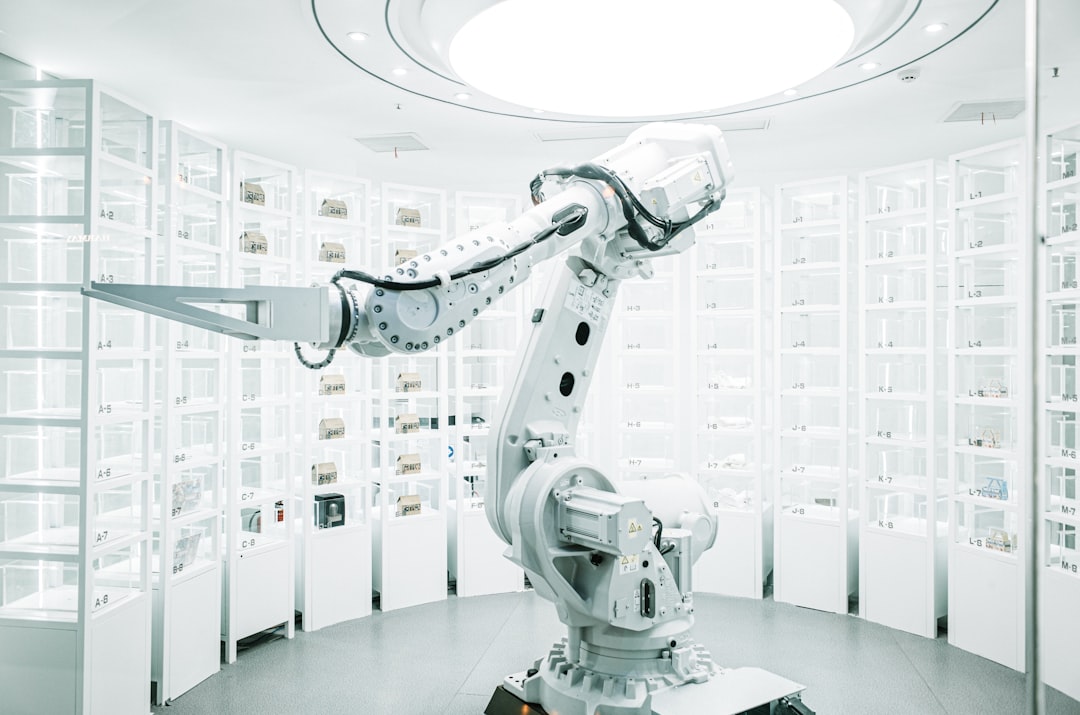
BEIJING — The mechanical arm moves with a quiet, steady hum. A grid of infrared sensors maps the customer’s skull, ear placement, and jawline in under a minute. Then the clippers start.
In several Chinese cities, these kiosks are now live. The price is 60 yuan — about eight dollars. That matches the low end of a budget barbershop. But the barber is a machine.
The system works in three stages. First, a sensor array 3D-scans the head — shape, facial geometry, hair type. Then the customer picks a style from a digital menu. The AI calculates a cutting path tailored to that specific head. Finally, a robotic arm trims, monitoring hair length in real time to keep everything even. Developers say the precision is millimeter-level.
That precision is the core claim. It is also the core risk.
A human barber can feel a cowlick, adjust for a scar, talk through what looks good. A robot reads geometry. It does not know if the customer is nervous. It does not flinch if the customer sneezes. The safety question is not abstract — it is about a blade near a temple, controlled by software.
Developers argue the trade-off is worth it. The kiosks reduce wait times. They cut operating costs. No rent for chairs, no wages for stylists, no downtime between customers. The price stays low. The speed stays high.
For the customer, the appeal is blunt: cheap, fast, no small talk. For the barbering industry, the implications are harder. If a machine can cut hair for eight dollars with millimeter accuracy, what happens to the neighborhood shop that charges fifteen and takes forty minutes?
The rollout in multiple Chinese cities suggests the technology is past the prototype stage. It is not a lab demo. It is a commercial service, open to walk-ins, accepting payment, delivering haircuts. That makes it a real test of public appetite for robotic personal care.
Reactions are mixed. Some customers reportedly appreciate the speed and consistency. Others are uneasy letting a machine hold clippers near their ears. The report notes that questions about safety, reliability, and customer acceptance remain open. That is not a hedge — it is the honest state of play.
This is not the first robot service in China. Robotic arms flip burgers in some kitchens. Drones deliver packages. But hair is personal. It grows back, but slowly. A bad robot haircut is not a burned burger — it is a scar you wear for weeks.
Developers are betting that the benefits — lower cost, faster service, consistent results — will outweigh the wariness. They point to the three-stage process as a safeguard: scan, plan, cut. The real-time monitoring is meant to catch errors before they become disasters.
Whether that is enough depends on how many people walk up, pay 60 yuan, and sit still while the arm swings in.
The kiosks are running. The public is deciding. The barbering industry is watching. This is not a distant possibility — it is happening now, in several cities, one haircut at a time.